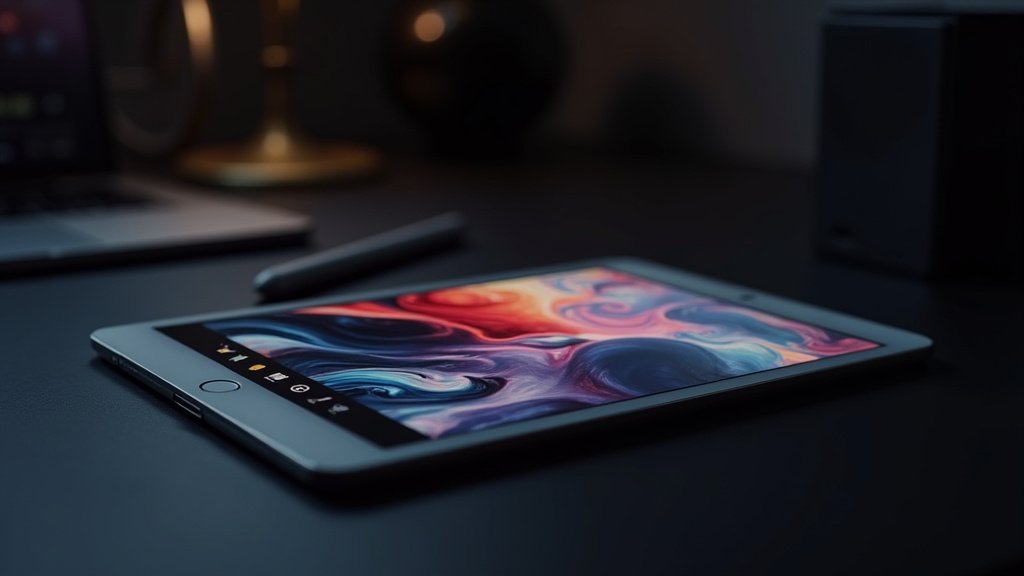
Apple has officially redefined the small-form-factor tablet market with the most significant update in the iPad mini’s history. By integrating an 8.5-inch OLED display and the formidable A20 Pro chip, the tech giant has bridged the gap between a portable media device and a true, enterprise-grade productivity workstation, signaling a major shift in Apple’s approach to the compact tablet segment.
Key Highlights
- 8.5-inch OLED display providing superior color accuracy, deeper blacks, and enhanced power efficiency compared to previous LCD models.
- A20 Pro chip integration, resulting in a verified 4.5x improvement in performance for AI-intensive tasks, such as neural processing and real-time machine learning.
- Newly introduced water and dust resistance, significantly increasing the device’s durability for field work and outdoor use.
- Redesigned thermal architecture to maintain peak performance in a compact chassis.
The Evolution of the Pocket-Sized Pro
The announcement of this latest iPad mini represents a pivotal moment for Apple’s tablet lineup. For years, the ‘mini’ was often relegated to the status of an e-reader or casual media consumption device. With this refresh, that narrative changes entirely. The inclusion of the A20 Pro chip—the same architecture typically reserved for Apple’s flagship mobile devices—positions this tablet as a serious tool for creative professionals, engineers, and developers who require high computing power without the bulk of a larger tablet or laptop.
Unleashing the A20 Pro
The headline feature is undoubtedly the silicon upgrade. The A20 Pro is not merely an incremental speed bump; it represents a fundamental change in how the iPad mini handles computational workflows. By specifically optimizing for AI-intensive tasks—delivering a 4.5x performance boost—Apple is leaning heavily into the future of generative AI. Whether it is real-time photo editing, complex data synthesis, or advanced code compilation, the new mini is designed to handle tasks that were previously only possible on larger ‘Pro’ devices.
This shift highlights a secondary angle: the democratization of high-end performance. As AI tools become standard in productivity suites, the demand for local on-device processing power grows. By packing this capability into the 8.5-inch form factor, Apple is creating an ecosystem where professional-grade AI workflows are no longer tethered to a desktop or a 13-inch tablet.
The OLED Visual Revolution
Transitioning to an 8.5-inch OLED display is perhaps the most requested update from users and critics alike. The move to OLED provides a transformative viewing experience. Unlike traditional LCDs, OLED pixels are self-emissive, meaning they can turn off completely to produce true blacks. For creatives, this means infinite contrast ratios and more vibrant, accurate color reproduction. This change is not just cosmetic; it is functional. Professionals who rely on visual fidelity—photographers grading images on the go, or designers reviewing prototypes—can now trust the screen in ways they never could with previous mini iterations.
Building for the Field: Durability Upgrades
Perhaps the most practical improvement is the enhanced durability. The addition of water and dust resistance addresses the primary concern of field technicians, researchers, and active travelers who previously avoided the mini due to its vulnerability in harsh environments. This upgrade transforms the iPad mini into a viable tool for industrial applications, site inspections, and outdoor data collection. The internal sealings and structural reinforcement ensure that the device can survive more than just a coffee spill, making it a reliable partner for those whose workspace is not a desk.
Historical Context: The Mini’s Long Road
The history of the iPad mini has been one of compromise. Launched in 2012, it was initially a downsized version of the full-sized iPad, often shipping with older processors and reduced functionality. This latest refresh finally breaks that mold. By equipping the device with the absolute best silicon available, Apple has signaled that they no longer view the mini as a ‘secondary’ device, but as a tier-one product in its own right. This reflects a broader economic strategy: capture the high-end compact market by offering a ‘Pro’ experience that cannot be found elsewhere.
The Future of Compact Computing
As we look ahead, this hardware update sets the stage for a new wave of software optimization. With the A20 Pro, Apple is providing developers with the headroom to build more complex, AI-driven applications for the iPad mini. We can expect to see augmented reality apps, professional-grade audio workstations, and advanced video editing suites that were previously limited by thermal and processing constraints on the mini chassis. The iPad mini is no longer just a companion; it is a capable, independent command center.
FAQ: People Also Ask
1. What is the screen size of the new iPad mini?
The new iPad mini features an 8.5-inch OLED display, providing deeper blacks and better contrast than previous models.
2. Does the A20 Pro chip make a big difference in speed?
Yes, the A20 Pro offers a 4.5x increase in performance for AI-intensive tasks, making it significantly faster for neural processing and machine learning workflows compared to previous iterations.
3. Is the new iPad mini waterproof?
The new model features enhanced durability with dedicated water and dust resistance, making it much more resilient for outdoor and field-based professional tasks.
4. Who is this device aimed at?
While great for casual users, this update is heavily targeted at professionals and creatives who need ‘Pro’ performance in a compact, highly portable form factor.