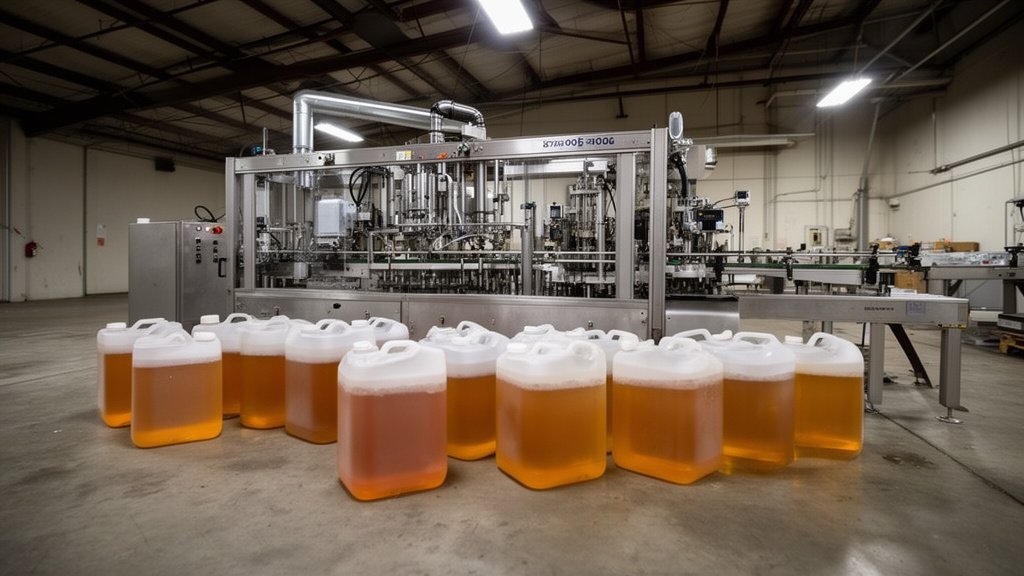
In a significant blow to the regional black market, federal and local law enforcement have dismantled a large-scale THC vape manufacturing facility in Medford, Oregon. The operation, led by the DEA’s Medford Resident Office in conjunction with the Illegal Marijuana Enforcement Team (IMET), resulted in the seizure of 880 pounds of THC oil. Perhaps more concerning to investigators than the volume of raw product is the specialized industrial filling equipment recovered at the scene—machinery capable of producing an estimated 4,000 cartridges per hour. This bust underscores the evolving nature of illicit drug manufacturing in the Pacific Northwest, where the market has shifted from raw flower distribution to the high-volume production of concentrated, unregulated vaping products.
Key Highlights
- Massive Seizure: Law enforcement confiscated 880 pounds of THC vape oil during a coordinated raid in Medford.
- Industrial Capability: The seized filling machinery is designed to produce approximately 4,000 cartridges per hour, indicating a high-level commercial operation.
- Collaborative Enforcement: The operation was executed by the DEA’s Medford Resident Office and the Illegal Marijuana Enforcement Team (IMET).
- Regulatory Risk: The raid highlights ongoing concerns regarding the safety and purity of black-market vape products flooding the Southern Oregon area.
The Industrialization of the Black Market
The seizure in Medford marks a turning point in how law enforcement views the illicit marijuana trade in Oregon. For years, the focus of drug enforcement in the state was predominantly on outdoor illegal grows and distribution hubs. However, the discovery of 880 pounds of oil alongside automated, high-output filling stations reveals a pivot toward manufacturing efficiency. This is not a hobbyist operation; it is a sophisticated, supply-chain-focused business model.
The capacity to fill 4,000 cartridges per hour translates to a staggering output. When run on a standard shift schedule, this single facility could theoretically flood the regional market with tens of thousands of units daily. These cartridges, often packaged to mimic legitimate, state-licensed brands, present a significant challenge for consumers and law enforcement alike, as the lines between legal and illicit goods become increasingly blurred. The specialized equipment suggests that the operators were investing heavily in the infrastructure required to bypass legal testing standards and tax oversight, effectively undercutting the regulated industry.
The Health Crisis in the Clouds
Beyond the criminal implications of the raid, there is a profound public health concern. Legally sold THC cartridges in Oregon are subject to rigorous testing protocols administered by the Oregon Liquor and Cannabis Commission (OLCC), which screen for pesticides, heavy metals, residual solvents, and microbial contaminants. Black-market products are produced in environments devoid of such oversight.
When consumers purchase products from illicit sources, they are often unknowingly inhaling concentrates extracted with toxic solvents or thinned with dangerous additives like Vitamin E acetate, which was linked to the EVALI (E-cigarette or Vaping Use-Associated Lung Injury) crisis. The sheer volume of oil seized—880 pounds—represents a massive potential for harm had these products reached store shelves or street corners. Law enforcement officials emphasize that these seizures are a critical component of public health strategy, removing hazardous materials from the community before they can cause acute medical issues.
The Geography of the Enforcement Flashpoint
Medford has emerged as a distinct flashpoint in the regional illicit drug trade. The area’s geographic position in Southern Oregon, combined with relatively affordable land prices and a history of agricultural infrastructure, has historically attracted illicit actors looking to hide in plain sight.
The cooperation between federal agencies like the DEA and state-level task forces like IMET reflects the complexity of the problem. IMET, which was formed specifically to tackle the explosion of illegal marijuana grows in Jackson and Josephine counties, serves as a bridge between local law enforcement and federal resources. This collaborative model is essential because the scale of these operations often transcends county jurisdiction. The Medford DEA office provides the federal authority to pursue trafficking networks that operate across state lines, while IMET provides the on-the-ground intelligence and tactical capacity to execute raids in rural or industrial settings. This synergy has been vital in the state’s multi-year effort to reclaim the region from criminal syndicates that operate with total disregard for environmental regulations or community safety.
Economic and Regulatory Implications
The economic impact of such a massive bust is multi-faceted. On one hand, it represents a loss of illicit capital, hindering the ability of these criminal networks to reinvest in further production. However, it also highlights the difficulty of policing an industry that can be established in a garage or warehouse with relatively anonymous equipment.
The presence of this industrial machinery suggests that the black market is attempting to mimic the professionalism and scale of the legal industry. This puts immense pressure on state regulators to close loopholes that allow for the diversion of product. The ongoing effort to regulate the supply chain—tracking marijuana from seed to sale—is designed to prevent the exact type of production found in this raid. When large quantities of illicit product are seized, it is often a byproduct of tracing failures within the broader system. As law enforcement continues to tighten the net, operations like this are becoming riskier, yet the potential profit margins of vape oils—which are easier to transport and conceal than raw plant material—continue to drive this illicit activity.
FAQ: People Also Ask
Q: What is the significance of the 4,000 cartridges per hour statistic?
A: This figure represents the industrial scale of the operation. It highlights that the facility was not a small-time setup but an automated production line designed to churn out mass quantities of product quickly, which increases the likelihood of contaminated or dangerous goods entering the local market.
Q: Who are the Illegal Marijuana Enforcement Team (IMET)?
A: IMET is a specialized task force created in Southern Oregon to address the proliferation of illegal marijuana operations. They coordinate between state and local law enforcement agencies to investigate, dismantle, and prosecute large-scale illegal cultivation and processing sites.
Q: Why are THC vape oils considered more dangerous in the black market?
A: Unlike regulated products, black-market vape oils are not lab-tested. They often contain high levels of pesticides, heavy metals, and residual chemicals from the extraction process, and they lack clear labeling regarding potency and ingredients, posing severe health risks to consumers.
Q: Will there be further arrests related to this seizure?
A: While the DEA and IMET have not disclosed specific ongoing targets to protect the integrity of the investigation, such seizures of equipment and inventory usually generate significant intelligence that leads to further inquiries into supply chains and distribution networks.