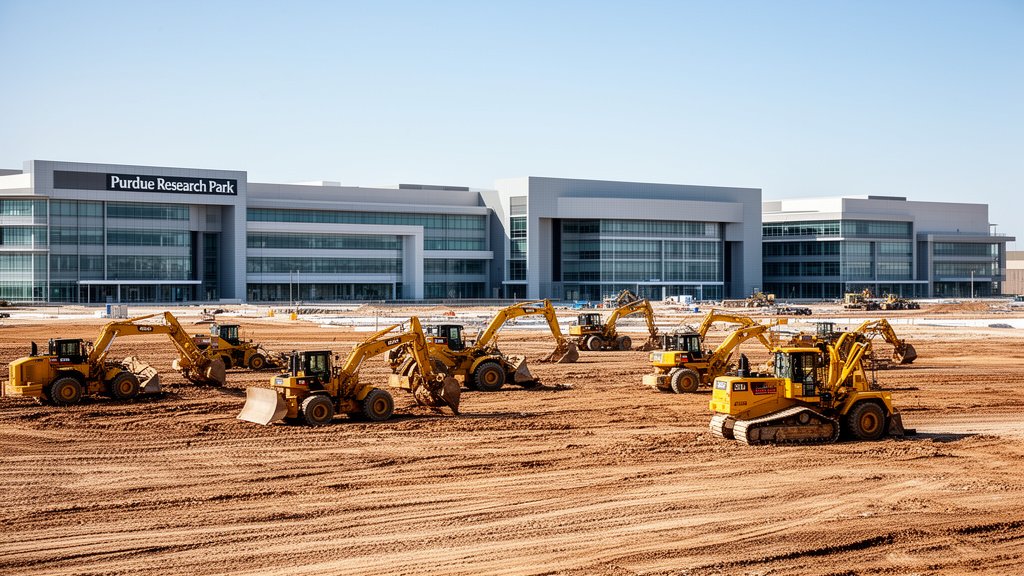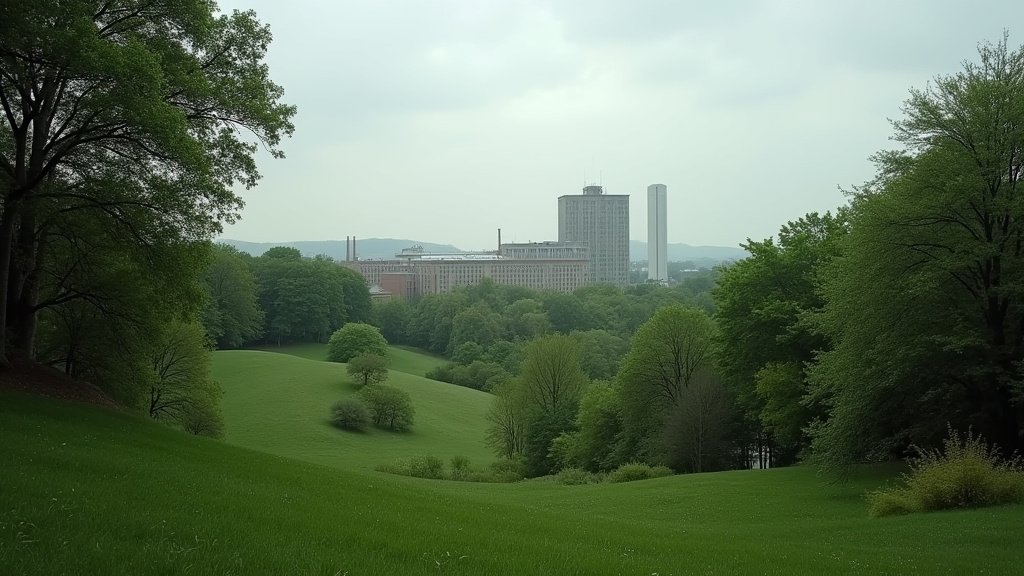
The quiet suburbs of East Fishkill, New York, have become an unlikely frontline in the escalating war between local quality-of-life concerns and the insatiable physical demands of the AI infrastructure boom. For decades, the town took pride in its identity as a technological hub, hosting a massive IBM campus that served as an economic engine for the region. However, a recent surge in proposals for large-scale data centers has prompted the Town Board to enact a three-year moratorium, effectively pausing the industry’s expansion in the area. This legislative cooling-off period underscores a growing national friction: how does a community built on the legacy of the computer age reconcile with the colossal energy and space requirements of the Artificial Intelligence era?
The Historical Paradox: From Mainframes to Megawatts
For nearly half a century, the mention of East Fishkill was synonymous with IBM. The “Big Blue” campus was not just a workplace; it was a defining cultural marker for Dutchess County. This makes the recent pushback against modern data centers particularly ironic—and significant. Residents are quick to emphasize that their opposition is not rooted in a Luddite-style aversion to progress. As the consensus among local advocates suggests, “This is not an anti-tech town.”
Instead, the objection is structural. Modern data centers—often spanning hundreds of thousands of square feet—are functionally different from the manufacturing and semiconductor facilities of the 20th century. While the IBM plants brought jobs and community investment, the new breed of data centers, designed primarily to house the GPU clusters that power Large Language Models (LLMs), operate differently. They are “lights out” facilities, requiring massive amounts of power, sophisticated cooling systems, and extensive land, yet they offer relatively minimal local employment compared to their footprint.
The Anatomy of the Backlash
What triggered the three-year moratorium in East Fishkill? The residents’ concerns are multifaceted, focusing on three core pillars: noise, energy consumption, and aesthetic impact. The cooling fans required to keep thousands of AI-focused servers running 24/7 create a persistent, low-frequency drone that can permeate residential neighborhoods. Unlike a traditional office or factory, these buildings are essentially giant refrigerators, and the ambient noise pollution has become a flashpoint for suburban homeowners who value peace and quiet.
Furthermore, the energy demands of these facilities have raised alarms regarding the stability of local electrical grids. As utility companies scramble to provide gigawatt-scale power to server farms, residents fear that the cost burden and infrastructure strain will fall on local rate-payers rather than the tech giants. The zoning board and town council were ultimately swayed by this unified front of residents who successfully argued that the town’s land use must reflect the community’s long-term environmental and fiscal health rather than the speculative needs of the tech sector.
The Wider Implications: A National Blueprint?
East Fishkill is not an outlier; it is a bellwether. From Virginia’s Data Center Alley to the sprawling complexes in the American West, communities across the United States are grappling with the “NIMBY” (Not In My Backyard) challenge regarding AI infrastructure. The moratorium in East Fishkill serves as a case study for municipal governance in the age of generative AI. By implementing a three-year pause, the town has bought itself time to study the specific impacts of these facilities and develop zoning codes that are sophisticated enough to manage high-tech land use without sacrificing suburban residential character.
This is a critical moment for urban planners and tech investors alike. The “IBM legacy” towns are uniquely positioned to understand the value of technology, but they are also uniquely sensitive to the erosion of community character. If the industry wants to continue its rapid expansion, it will need to move beyond the “growth at any cost” model and toward a strategy of co-existence. This involves better sound-mitigation technology, more transparent energy-sharing agreements, and a willingness to engage with local populations as stakeholders rather than obstacles.
Can Technology and Community Coexist?
The central question remains: is a middle ground possible? As the three-year clock starts ticking on the East Fishkill moratorium, the town is expected to conduct a comprehensive impact study. This process could offer a template for other municipalities. If developers can prove that a data center can operate within strict noise ordinances, contribute positively to the tax base, and minimize its environmental footprint, then the “anti-tech” label can be fully discarded.
However, if the industry fails to adapt its design and operational standards to fit within the constraints of suburban life, East Fishkill will likely continue to lead the charge in shutting these projects down. The tension here is not about the merits of AI—it is about the physical realities of the hardware required to run it. Until the industry acknowledges that server farms are industrial sites, not passive office buildings, the friction between the digital future and the physical town square is likely to persist.
FAQ: People Also Ask
Why are data centers being built in suburbs instead of industrial zones?
Data centers require proximity to major electrical substations and fiber-optic backbones. Often, the large, flat, and relatively cheap land available near major highways in suburbs is more attractive to developers than dense urban industrial zones, which are often costly and geographically constrained.
Does the East Fishkill moratorium stop all technology investment?
No. The moratorium specifically targets large-scale, heavy-infrastructure data centers. It does not affect other types of technological, commercial, or light-industrial development that fit within the current zoning guidelines and do not impose the same excessive noise and energy requirements.
What happens after the three-year moratorium ends?
During the three years, the town is expected to draft and pass new zoning amendments. These laws will likely mandate stricter buffer zones, sound-dampening requirements, and energy impact studies, ensuring that any future projects meet the community’s updated standards before they are approved.