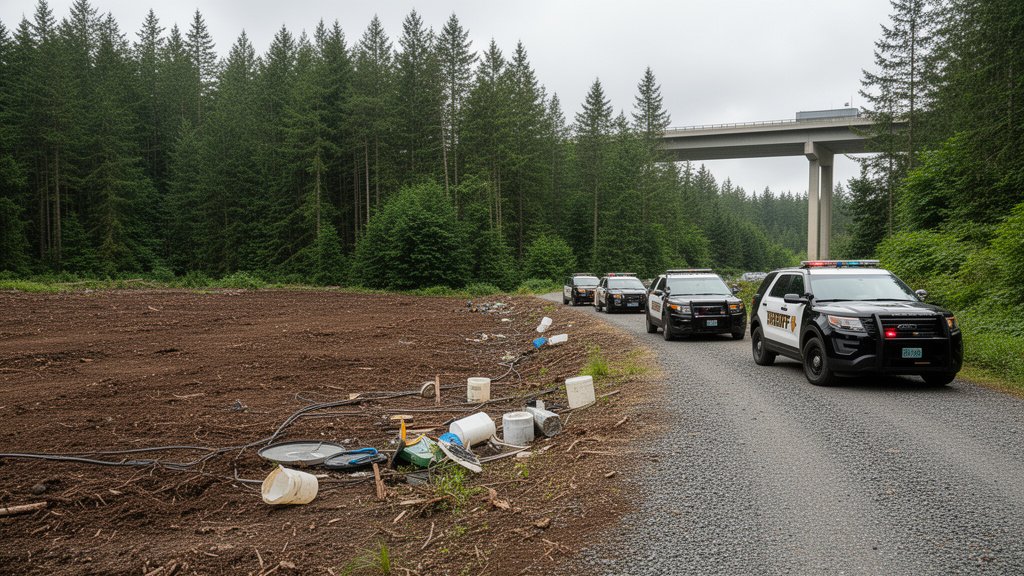
In a significant enforcement action aimed at addressing public safety and regulatory compliance, Clark County Sheriff’s deputies recently discovered a large-scale, illicit marijuana cultivation operation situated within a transient encampment located near the Highway 99 corridor. The discovery, which involved nearly 100 mature plants, highlights the ongoing complexities of law enforcement efforts in public spaces and the intersection of homelessness with illicit agricultural activity.
The Operational Scope of Livability Patrols
The discovery of the grow operation was not a random occurrence but rather the result of a coordinated patrol specifically focused on “livability issues.” In recent years, Clark County, like many jurisdictions across Washington State, has seen an increase in the establishment of transient camps on public and private lands. These encampments often present significant public health and safety challenges, ranging from sanitation issues and fire hazards to the localized concentration of criminal activity.
During this specific sweep, deputies aimed to address code violations and unauthorized structures. Upon entering the vicinity near Highway 99, officials encountered a sophisticated setup that deviated from typical encampment findings. The presence of nearly 100 mature marijuana plants suggests a level of organization and intent to distribute that goes beyond personal use or small-scale subsistence. By working in tandem with the Washington State Liquor and Cannabis Board (LCB), the Sheriff’s office ensured that the investigation met the necessary regulatory standards required to charge the individuals involved with possession with intent to distribute, a felony under state law.
The Legal Landscape: Navigating Cannabis Regulation in Washington
While Washington State has a robust and regulated legal cannabis industry, that legality is strictly bound by compliance measures, licensing, and zoning regulations. The existence of these plants in an unauthorized, transient setting creates a significant legal distinction. Unlicensed cultivation of this magnitude is a serious breach of the Controlled Substances Act within the state context.
Key to this enforcement is the involvement of the LCB. The Board provides the specialized expertise necessary to differentiate between compliant cultivation—which must adhere to strict environmental, electrical, and security standards—and illicit grows that operate outside the taxation and regulatory framework. The plants seized in this raid likely lacked the required tracking tags and environmental safety mitigations mandated for commercial operations, raising concerns about potential pesticide use, water diversion, and the lack of proper disposal methods for hazardous materials associated with large-scale grows.
The Intersection of Vulnerability and Illicit Activity
One of the most complex aspects of this incident is the exploitation of vulnerable populations within transient camps. Law enforcement officials have often noted that criminal elements sometimes co-opt or intimidate residents within homeless encampments to facilitate illegal operations, knowing that these areas can be difficult to patrol and police. The presence of such a large grow operation in a camp setting raises questions about the coercion of transient individuals and the broader public safety implications for those residing in these environments.
Authorities are now investigating the extent to which these two individuals were acting independently or as part of a larger distribution network that utilizes the obscurity of transient encampments to hide their illicit activities. This incident underscores a growing trend where law enforcement must balance humanitarian concerns regarding homelessness with the necessity of enforcing state laws against drug manufacturing and distribution.
Resource Allocation and Future Deterrence
For the Clark County Sheriff’s Office, these patrols represent a heavy resource commitment. The logistics of dismantling a grow of this size involve not just the deputies on the ground, but also the environmental assessment team and state-level regulatory support. As the region continues to address the housing and public safety crisis, operations like this serve as a deterrent, signaling that public lands, regardless of their status as transient camp locations, remain subject to the rule of law. The success of this operation, marked by two arrests, will likely lead to further scrutiny of similar encampments across the Highway 99 corridor to ensure that public safety remains the priority, preventing these sites from becoming safe harbors for illicit enterprises.
FAQ: People Also Ask
Why is growing 100 marijuana plants illegal in Washington even though it is legal to use?
While personal possession and use are legal in Washington, cultivation is strictly regulated. Growing large quantities of cannabis without a state-issued commercial license is illegal. It violates state agricultural and controlled substance laws regarding the production, processing, and distribution of marijuana.
What are the legal consequences for possession with intent to distribute?
Possession with intent to distribute is a felony in Washington State. It carries significant penalties, including potential imprisonment, heavy fines, and the creation of a permanent criminal record. The specific sentencing depends on the quantity of plants and the defendant’s prior criminal history.
How does the Washington State Liquor and Cannabis Board support Sheriff’s deputies?
The LCB provides the subject matter expertise required to determine if a grow operation is licensed or illegal. They assist in identifying regulatory violations, assessing the scale of the operation, and ensuring that evidence is collected in a manner that will hold up in a court of law during prosecution.