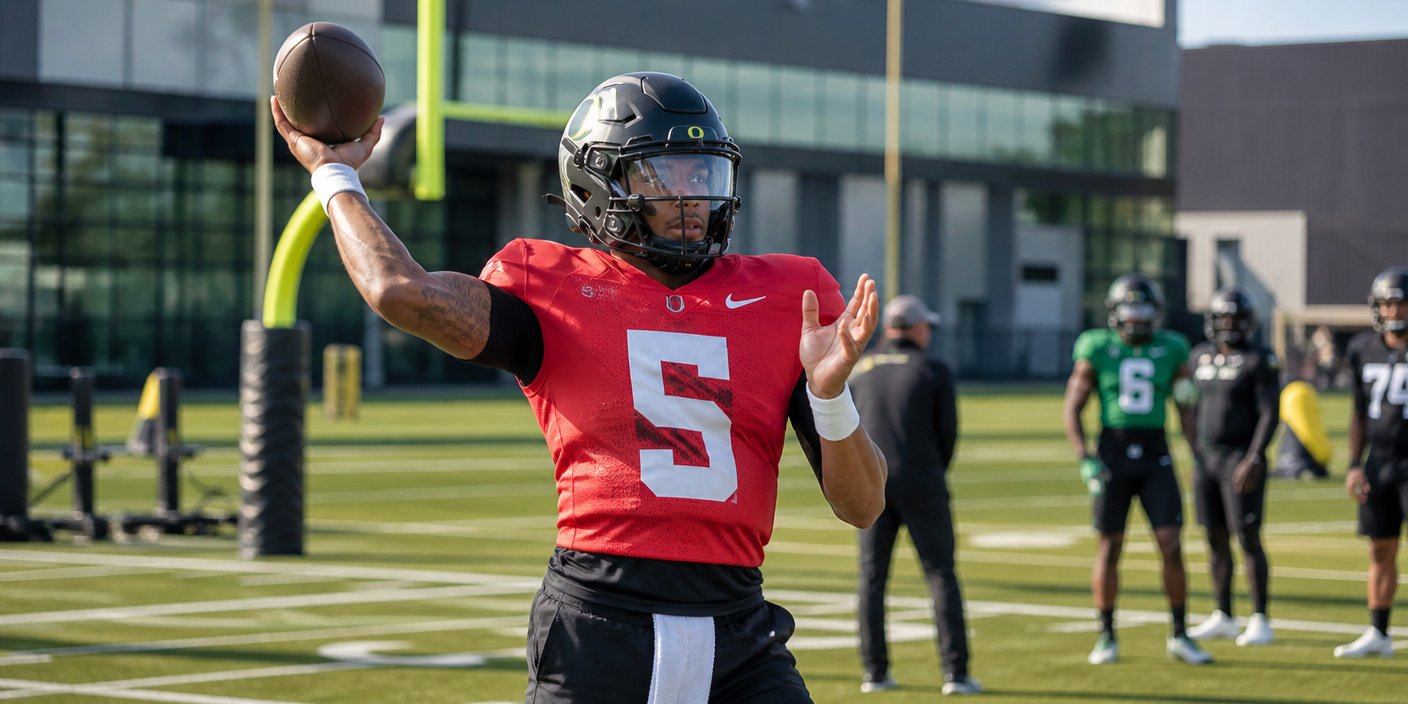
Dante Moore has taken the first significant step in his recovery process, returning to the practice field in a limited capacity for the Oregon Ducks. This development follows a period of absence after the quarterback sustained a concussion during the team’s pivotal victory over USC on September 26. While head coach Dan Lanning has confirmed that Moore participated in specific drills—notably wearing a helmet and shoulder pads and successfully throwing the football—the quarterback’s availability for the upcoming high-stakes matchup against UCLA remains uncertain as the medical staff continues to monitor his progress through rigorous concussion protocols.
Key Highlights
- Practice Status: Dante Moore has officially returned to practice in a limited capacity, marking a positive shift in his recovery timeline.
- Confirmed Activity: Head coach Dan Lanning verified that Moore participated in throwing drills while wearing full practice gear, including a helmet and shoulder pads.
- Injury Background: The injury occurred during the September 26 victory over the USC Trojans, necessitating immediate sideline evaluation and subsequent medical protocol adherence.
- Game Status: Despite the promising return to the field, Moore’s active status for the Saturday showdown against UCLA is currently unconfirmed, pending final medical clearance.
Navigating the Protocol: The Path to Clearance
The return of Dante Moore to the practice facility is a welcome sight for Oregon fans and coaching staff alike, but it is merely the opening phase of a multi-step medical return-to-play protocol. In the modern landscape of NCAA football, concussion management has shifted toward an ultra-conservative, health-first model. Moore’s participation in limited drills—throwing the football while suited in helmet and shoulder pads—suggests he has cleared the initial physical exertion hurdles, which typically involve light aerobic exercise, non-contact football-specific activity, and cognitive rest.
However, the gap between ‘limited participant’ and ‘game-ready starter’ is significant. The medical staff at the University of Oregon, led by their specialized team of athletic trainers and neuro-consultants, must now evaluate how Moore responds to increased heart rate, contact simulation, and the high-pressure environment of team drills. This careful calibration ensures that the athlete is not only physically capable of executing the playbook but also cognitively resilient enough to handle the rapid decision-making required in a Big Ten offensive scheme.
Tactical Implications for Dan Lanning
For head coach Dan Lanning, the uncertainty surrounding Moore’s status creates a complex week of preparation. Lanning has consistently prioritized player long-term health, a philosophy that often dictates a ‘wait-and-see’ approach rather than rushing a quarterback back into the fray. The Ducks’ offensive strategy relies heavily on the rhythm and accuracy of the signal-caller. If Moore is deemed unfit for contact, the coaching staff must pivot to their contingency plans, ensuring that backup options have received the necessary first-team reps throughout the week.
This situation highlights the precarious nature of college quarterback depth. The transition to the Big Ten has intensified the physical demands on every player on the roster, and the USC game served as a stark reminder of that reality. Lanning’s ability to maintain a ‘next-man-up’ mentality while simultaneously managing the recovery of a key talent like Moore will be a defining factor in Oregon’s season trajectory.
The Historical and Narrative Context: Facing UCLA
The timing of this injury update is particularly poignant given the opponent: the UCLA Bruins. For many players, facing a former team or a historic conference rival adds an extra layer of competitive tension. While Moore’s focus is undoubtedly on health and recovery, the narrative of his potential return against UCLA provides a compelling subplot to the weekend’s festivities. Historically, these matchups have defined conference standings and bowl game positioning, making the availability of a primary quarterback not just a matter of personnel, but of strategic dominance.
Furthermore, the evolution of Oregon’s offense under Lanning has been predicated on versatility. Moore represents a modern archetype of a dual-threat quarterback who can read defenses in real-time. Losing that specific skill set, even for one game, forces the Ducks to adjust their perimeter spacing and vertical passing game. Whether or not Moore takes the field on Saturday, the Oregon staff must prepare for a UCLA defense that is undoubtedly game-planning for multiple scenarios—a challenge that complicates the preparation for both coaching staffs involved.
Looking Ahead: Season Longevity
Beyond the immediate Saturday clash, there is the broader concern of season longevity. By approaching this injury with extreme caution, Oregon is signaling an investment in the long term. A concussion is not an injury to be managed for a single week; it requires a systematic approach to ensure that the athlete’s brain health remains the absolute priority. Fans should interpret the ‘limited capacity’ label not as a negative indicator, but as a deliberate, controlled progression. The ultimate goal remains positioning the Ducks for postseason success, a journey that necessitates a fully healthy Dante Moore in the closing stages of the year.
FAQ: People Also Ask
Q: What is the official status of Dante Moore for the upcoming game?
A: As of the latest update from head coach Dan Lanning, Dante Moore’s status for the Saturday showdown against UCLA remains unconfirmed. While he has returned to limited practice, final availability depends on medical clearance.
Q: When was Dante Moore injured?
A: Dante Moore sustained his concussion during the victory over the USC Trojans on September 26.
Q: What activities is Moore performing at practice?
A: Head coach Dan Lanning confirmed that Moore is participating in drills while wearing a helmet and shoulder pads, specifically engaging in throwing the football.
Q: How does Oregon handle concussion protocols?
A: Oregon, like all major NCAA programs, follows strict, evidence-based concussion protocols that involve a multi-stage progression from light aerobic exercise to full-contact, team-based practice, monitored closely by athletic medical staff.