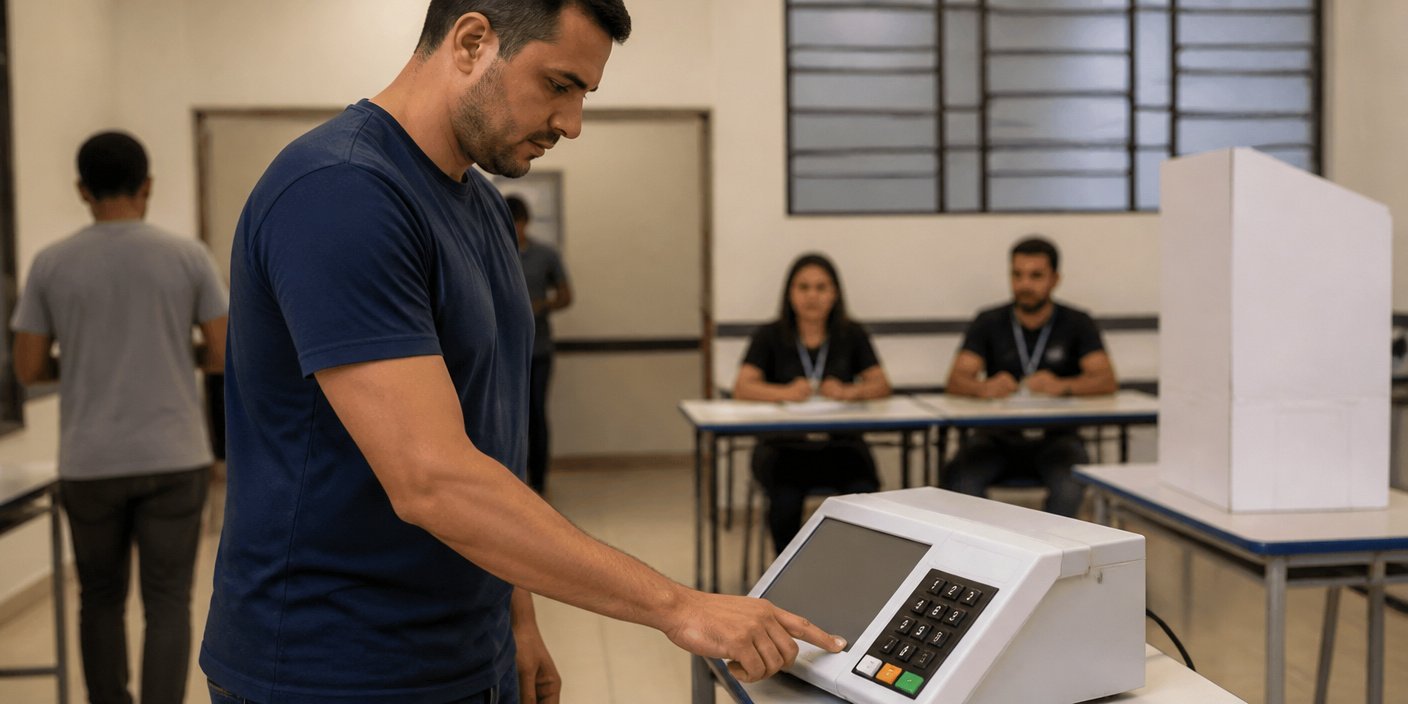
The Brazil presidential election takes center stage today, October 4, as 159 million voters cast their ballots in a defining moment for the South American powerhouse. The nation stands at a critical juncture, with citizens turning out in historic numbers to shape the trajectory of a country grappling with deep-seated divisions. This pivotal democratic exercise pits incumbent President Luiz Inácio Lula da Silva against Senator Flávio Bolsonaro, presenting two starkly different visions for the administration of the world’s fifth-largest democracy. As polling stations open across the country’s diverse landscape, the weight of these choices—spanning economic policy, environmental conservation, and social cohesion—is felt by every segment of Brazilian society.
Key Highlights
- Historic Turnout: An electorate of 159 million citizens is heading to the polls today, October 4, marking one of the largest democratic mobilizations in the region.
- Two Competing Visions: Voters are deciding between the incumbent, President Luiz Inácio Lula da Silva, and Senator Flávio Bolsonaro, reflecting a deeply polarized political environment.
- Institutional Oversight: The Superior Electoral Court (TSE) has implemented strict protocols to ensure the integrity of the process across thousands of voting centers.
- National Stakes: The election results are expected to dictate the future of Brazil’s domestic economic recovery and its stance on critical global issues, including Amazon rainforest preservation and international trade relations.
The Clash of Two Brazils: Navigating the October 4 Vote
The current Brazil presidential election represents more than a mere change in leadership; it is a referendum on the core values of the nation. For months, the campaign trail has been defined by fierce rhetoric and a clear divergence in ideologies. On one side, supporters of President Luiz Inácio Lula da Silva emphasize social welfare programs, poverty reduction, and a return to traditional diplomatic alliances. Conversely, the constituency backing Senator Flávio Bolsonaro points to conservative governance, deregulation, and a strong emphasis on national security and individual liberty as the keys to future prosperity. This ideological chasm has manifested in every major urban center and remote rural district, turning town squares and social media platforms into the primary battlegrounds for public opinion.
The Economic Divide and Public Policy
Economic recovery remains the most pressing concern for the average voter. In the lead-up to the election, both camps have presented distinct pathways for the economy. President Lula’s platform focuses on expanding social safety nets and government-led infrastructure projects intended to stimulate domestic demand. In contrast, Flávio Bolsonaro’s agenda prioritizes market-friendly reforms, tax simplification, and attracting foreign investment to alleviate the pressures of inflation. Analysts suggest that the chosen path will determine Brazil’s fiscal policy for the next four years, impacting everything from interest rates to the stability of the Brazilian Real.
Institutional Trust and the Electoral Process
At the heart of the election is the role of the Superior Electoral Court (TSE). As the governing body responsible for the oversight of the entire electoral process, the TSE has faced intense scrutiny and pressure. Ensuring the transparency of the 159 million votes cast is the court’s highest priority. The reliance on electronic voting systems has been a focal point of debate, with officials working around the clock to mitigate misinformation and ensure that the voting process remains secure. The resilience of these institutions will be a primary indicator of the health of Brazilian democracy following the closure of the polls.
Geopolitical and Environmental Consequences
Beyond the domestic borders, the international community is watching closely. Brazil, as a dominant economic force in the Southern Hemisphere, plays a crucial role in global environmental policy, particularly concerning the Amazon rainforest. The administration’s policy on environmental management is a major point of divergence between the two candidates. International stakeholders, including trading partners within Mercosur and global climate organizations, are analyzing the potential shifts in regulation and land-use policy that may follow the election. The outcomes of this vote could redefine Brazil’s role in the global climate change conversation and its standing within international trade agreements.
The Impact of Polarization on Social Cohesion
Perhaps the most significant challenge facing the winner will be the task of uniting a fractured nation. The intensity of the polarization has filtered down to the community level, impacting family relationships and neighborhood dynamics. Political analysts argue that the next administration must prioritize a strategy for national reconciliation to stabilize the country. Whether the government focuses on consensus-building or doubles down on ideological distinctiveness, the societal consequences will echo for years to come.
FAQ: People Also Ask
Q: How many people are eligible to vote in the Brazilian election?
A: There are approximately 159 million registered voters in Brazil eligible to participate in this election, making it one of the largest voting blocks in the Western Hemisphere.
Q: Who are the main candidates in the election?
A: The primary candidates are the incumbent President Luiz Inácio Lula da Silva and Senator Flávio Bolsonaro.
Q: What is the significance of the Superior Electoral Court (TSE) in this election?
A: The TSE is the constitutional body responsible for organizing and overseeing the electoral process, ensuring the technical integrity of the electronic voting system, and protecting the fairness of the democratic contest.
Q: Why is this election considered so polarized?
A: The polarization stems from fundamentally different views on economic development, social welfare, and the future of the Amazon, which have split the electorate into two distinct ideological camps.