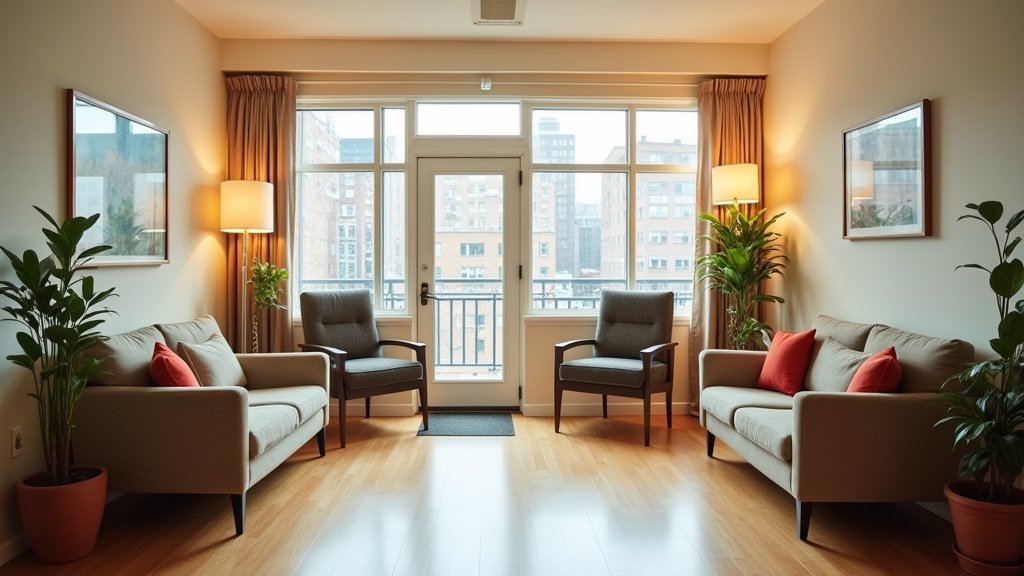
The ADAPT Community Network has officially opened a groundbreaking Smart Living Center in the Bronx, New York, establishing a unique environment that demonstrates how advanced, accessible, and adaptive technology can be seamlessly integrated into a residential home setting. Moving away from sterile, laboratory-like environments, this facility serves as a living, breathing blueprint for independence, specifically designed to help individuals with disabilities navigate daily life with greater autonomy and confidence. By bridging the gap between cutting-edge innovation and practical, everyday utility, the Smart Living Center provides a centralized hub where the potential of smart home ecosystems is not just theoretical, but physically realized.
Key Highlights
- Real-World Integration: The center operates as a functional home environment rather than a sterile lab, allowing users to experience adaptive technologies in context.
- Collaborative Ecosystem: It serves as a vital meeting point for technologists, families, individuals with disabilities, and policymakers to discuss the future of assistive living.
- Focus on Independence: The project prioritizes the application of Internet of Things (IoT) devices and universal design principles to solve real-world mobility and communication challenges.
- Innovation Pipeline: By facilitating feedback loops between users and developers, the center helps refine adaptive tools based on actual daily usage patterns.
Bridging the Gap: The Vision of the Smart Living Center
The fundamental premise behind the ADAPT Community Network’s Smart Living Center is that technology—when applied thoughtfully—can act as a profound equalizer. Too often, assistive technology is presented in fragmented, professional settings that do not reflect the nuance of a person’s actual living space. This facility changes that dynamic by replicating a standard home environment, where visitors can engage directly with voice-controlled lighting, automated appliances, and sophisticated environmental controls.
Redefining Independence Through IoT
At the heart of the center is the integration of the Internet of Things (IoT) within an accessible framework. By connecting various devices to a centralized, user-friendly hub, the center demonstrates how individuals with limited mobility can manage their environment with unprecedented ease. This includes smart locks, automated window blinds, and adaptive kitchen setups that adjust to user needs. These tools are no longer just ‘gadgets’; they are essential infrastructure for autonomy. The center highlights how universal design—creating spaces that are accessible to the greatest number of people without the need for adaptation—is the gold standard of modern construction. As the population ages and the prevalence of diverse disabilities continues to be recognized, the lessons learned in this Bronx-based model are expected to influence how home developers and urban planners approach residential projects nationwide.
The Collaborative Hub Model
The Smart Living Center acts as a multi-stakeholder ecosystem. Innovation in assistive technology often stalls when developers lack access to the people they intend to serve. By bringing policymakers, engineers, and end-users into a single room, ADAPT has created an environment where feedback is immediate and actionable. Policymakers can witness the tangible impact of accessible technology on quality of life, which in turn informs funding decisions and public policy. Meanwhile, innovators gain direct insight from families and individuals with disabilities, ensuring that the next generation of assistive products is not only functional but deeply aligned with the actual needs of the community. This collaborative approach is vital for scaling solutions; it transforms the center from a mere demonstration space into an incubator for social and technological progress.
Empowering Individuals and Families
Beyond the tech and the policy, the center serves a crucial human-centric purpose: empowerment. For many families supporting a member with a disability, the transition to greater independence can be daunting. The Smart Living Center provides a safe space for families to learn about available tools, see how they can be retrofitted into their own homes, and receive hands-on training. It demystifies the technology, removing the ‘fear factor’ associated with complex smart home systems. By showcasing what is possible today, the ADAPT Community Network is fostering a sense of agency, proving that with the right support and tools, individuals with disabilities can achieve a level of independence that was previously considered unattainable. The center’s success in its initial Bronx deployment suggests that this model could soon be replicated in other municipalities, scaling a powerful solution to one of the most pressing challenges in inclusive urban development.
FAQ: People Also Ask
1. How does the Smart Living Center differ from a traditional medical facility or showroom?
The Smart Living Center is explicitly designed to simulate a home environment, not a clinical one. It focuses on day-to-day living experiences—such as cooking, cleaning, and relaxing—rather than medical rehabilitation. This allows visitors to see how technology integrates into their daily rhythm, rather than observing it in a sterile, temporary lab setting.
2. Is the Smart Living Center open to the general public?
Yes, the center is designed to be a collaborative hub. It welcomes individuals with disabilities, their families, caregivers, as well as innovators, tech developers, and policymakers interested in the intersection of disability rights and modern housing technology.
3. What specific types of adaptive technology are featured at the center?
The center highlights a broad spectrum of tech, ranging from simple environmental controls like smart speakers and voice-activated lighting to more complex adaptive kitchen appliances, automated door systems, and integrated software platforms that manage these devices for enhanced accessibility.
4. How does the center assist in shaping public policy?
By demonstrating the effectiveness of accessible technology, the center provides empirical evidence for policymakers. When local government officials can physically see how smart home integration improves daily living, it makes the case for legislative support, universal design mandates, and funding for broader access initiatives much more compelling.