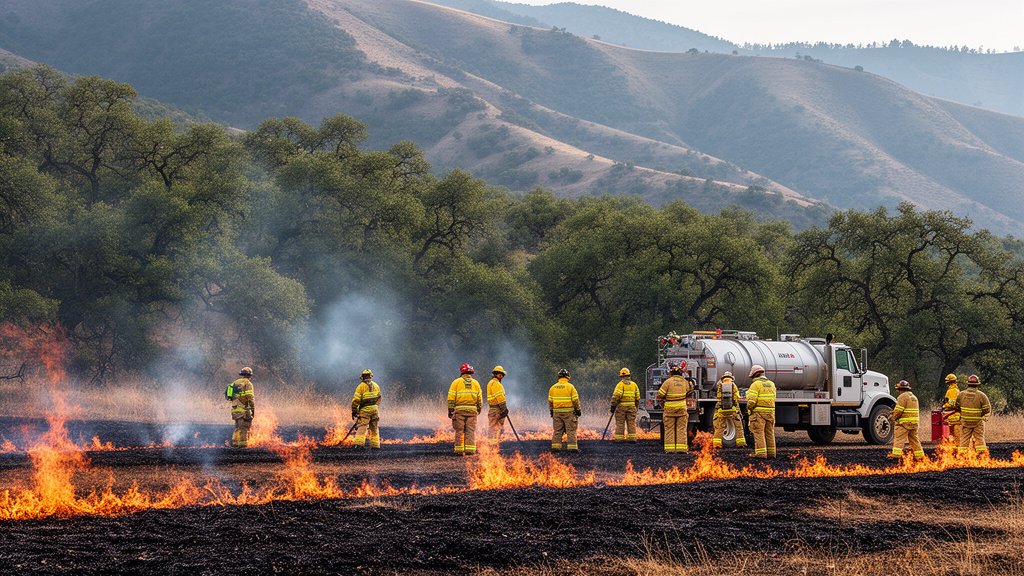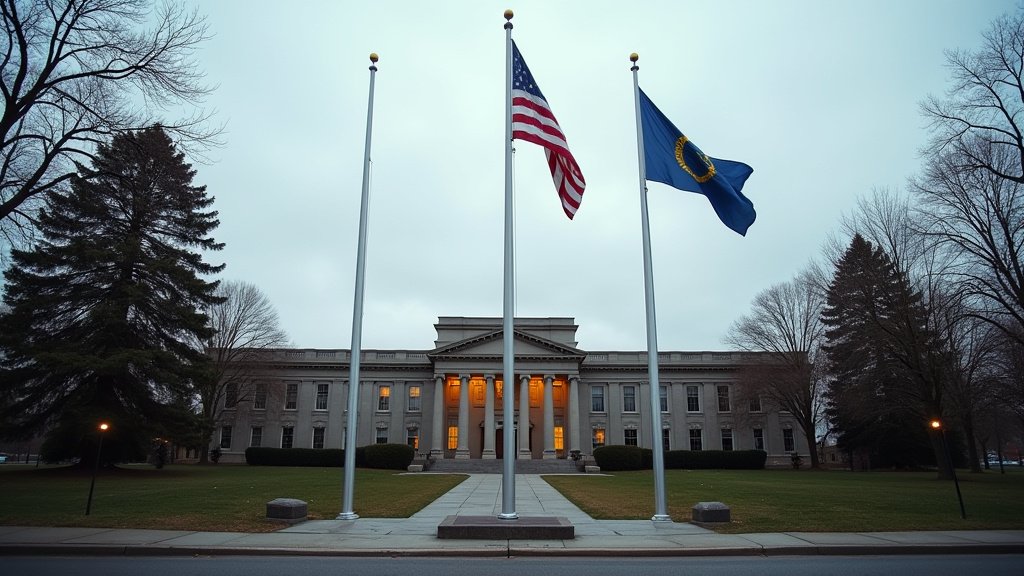
Oregon Governor Tina Kotek has issued a solemn executive directive, ordering all state flags to be flown at half-staff on September 22. This somber action serves as an official state tribute to the firefighter who tragically lost their life in the line of duty while battling the Austin Fire within the Mount Hood National Forest. The order underscores the profound risk taken by first responders and wildland crews as they defend the state’s forests, communities, and natural resources against increasingly volatile fire seasons.
Key Highlights
- Official Mourning: Governor Tina Kotek ordered all United States and Oregon state flags to be displayed at half-staff across the state on September 22.
- The Incident: The tribute honors the firefighter who died while combating the Austin Fire, a blaze that impacted the rugged terrain of the Mount Hood National Forest.
- Symbolic Respect: The half-staff order serves as a statewide recognition of the ultimate sacrifice made by the firefighter, highlighting the inherent dangers of wildland firefighting in the Pacific Northwest.
- Community Solidarity: The directive is intended to foster collective reflection across Oregon, acknowledging the bravery of fire crews who operate in high-stakes, unpredictable environments.
Honoring Sacrifice: The Toll of the Austin Fire
The proclamation from the Governor’s office is more than a bureaucratic formality; it is a manifestation of the state’s shared grief and respect for those who protect its landscapes. The Austin Fire, which occurred within the sprawling, complex ecosystem of the Mount Hood National Forest, represents a harrowing reminder of the high-intensity environments that firefighters face daily.
The Gravity of the Half-Staff Protocol
In the United States, lowering the flag to half-staff is reserved for significant periods of national or local mourning. When a Governor authorizes this action for an individual, it signals to the citizenry that the loss is not merely an incident, but a profound blow to the fabric of the community. For the family, friends, and colleagues of the fallen firefighter, the sight of flags across Oregon lowered to the midpoint serves as a visual acknowledgement of the weight of their loss. It transforms private grief into a public statement of gratitude, framing the firefighter’s service as a pillar of public duty.
Complexity of Mount Hood National Forest Operations
Mount Hood National Forest presents a unique set of challenges for fire management teams. Characterized by steep, treacherous topography, dense mixed-conifer forests, and rapidly shifting weather patterns, it is an environment where fire behavior can change in an instant. Fighting the Austin Fire required precise coordination, extreme physical endurance, and immense technical skill.
When incidents like the Austin Fire turn fatal, they force a re-evaluation of safety protocols. Fire managers in the Pacific Northwest have long prioritized the “LCES” system—Lookouts, Communications, Escape Routes, and Safety Zones. However, even with the most advanced training and suppression strategies, the erratic nature of wildland fires remains a persistent threat. The loss of a firefighter in such terrain brings into sharp focus the gap between safety theory and the chaotic, uncontrollable reality of nature.
The Broader Context of Fire Management in Oregon
Oregon has faced increasingly severe fire seasons over the last decade, driven by prolonged droughts, fuel accumulation in forests, and longer periods of extreme heat. This climatic shift has changed the nature of firefighting itself. Crews are no longer just fighting “forest fires”; they are often tasked with defending the Wildland-Urban Interface (WUI), where residential neighborhoods meet dense timber. The Austin Fire is part of this broader, ongoing struggle to contain flames that threaten both ecological stability and human settlement.
Experts in wildland firefighting note that the intensity of modern fires requires a specialized approach that taxes resources to the limit. When an incident results in a fatality, it impacts recruitment, morale, and long-term strategy. The state’s response—ordering flags to half-staff—is also a tacit recognition that the fight against these fires is unsustainable without deep, systemic support for those on the front lines.
Future Implications for Wildland Safety
Following this tragedy, stakeholders across the U.S. Forest Service and Oregon state agencies are likely to initiate thorough investigations. These “after-action reviews” are critical for organizational learning. By dissecting the specifics of the Austin Fire—wind patterns, fuel loads, and operational decisions—agencies can refine how they approach similar topography in the future. The goal is always to minimize risk, but this tragedy reinforces the harsh reality that some level of danger is inherent to the profession. As Oregon moves forward, the memory of this fallen firefighter will likely influence training curriculums, equipment procurement, and policy discussions about resource allocation for future fire seasons.
FAQ: People Also Ask
Q: Why are flags flown at half-staff for this specific incident?
A: Flags are flown at half-staff by order of the Governor to demonstrate public respect and to recognize the ultimate sacrifice of a first responder. It serves to unify the state in mourning the loss of a life dedicated to public safety.
Q: What is the Austin Fire?
A: The Austin Fire was a wildfire incident located within the Mount Hood National Forest. It required significant suppression efforts and serves as a critical case study for firefighters operating in high-elevation, complex forest terrain.
Q: How does the Governor decide when to order flags to half-staff?
A: Governors have the authority to issue these orders for deaths of prominent citizens, public officials, and in this case, emergency responders who die in the line of duty. It is a discretionary executive power used to commemorate specific events that touch the lives of Oregonians.
Q: Are there other measures being taken to support firefighters in Oregon?
A: Yes, following such incidents, there is typically a review of support systems, including mental health resources for fire crews, improvements in safety gear, and increased focus on forest management policies to reduce fire intensity in high-risk areas.