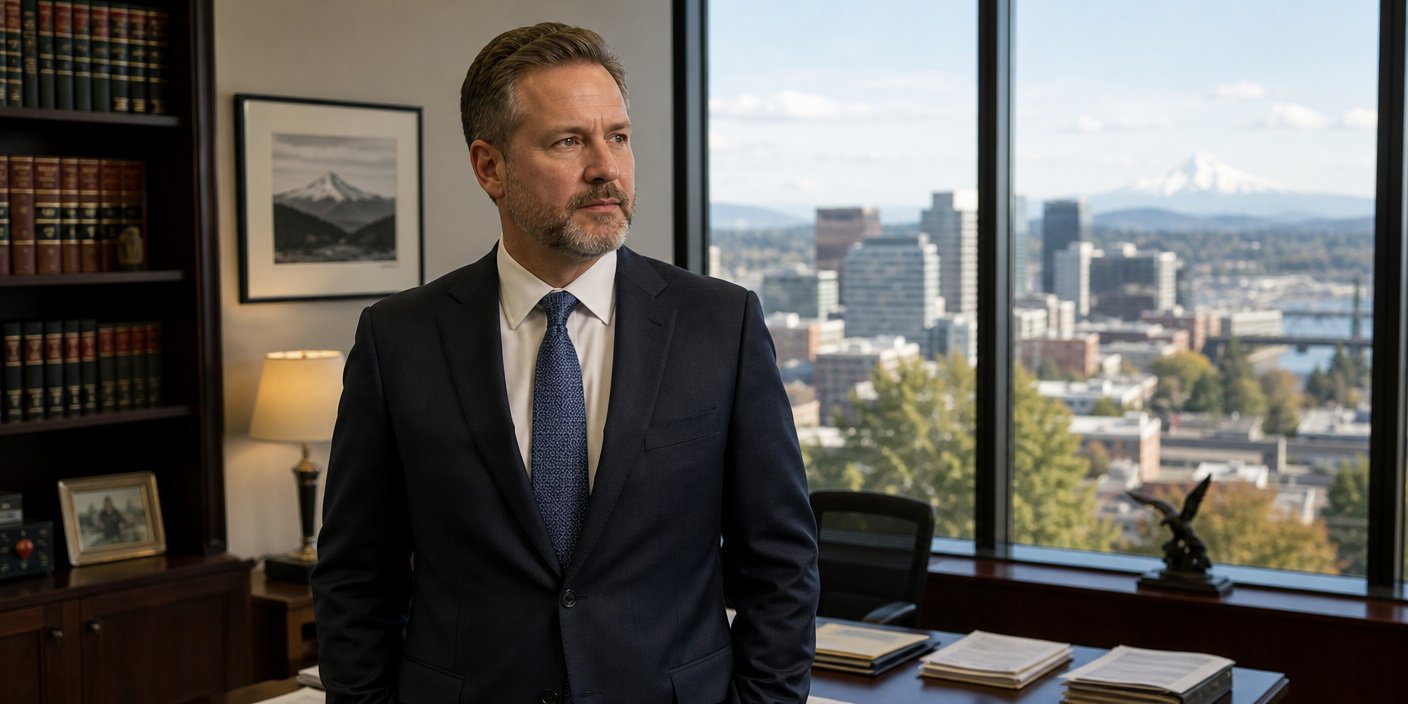
U.S. Attorney for the District of Oregon Scott Bradford finds himself navigating a complex judicial crossroads. Tasked with executing the Trump administration’s federal priorities—specifically regarding intensified immigration enforcement and heightened public safety initiatives—Bradford has signaled a commitment to aligning his office with these directives while strictly upholding established legal standards. The balance is delicate, requiring the integration of executive policy goals with the independent, fact-based nature of federal prosecution.
Key Highlights
- Strategic Alignment: Scott Bradford has confirmed his intent to prioritize Trump administration goals, particularly focused on immigration enforcement and public safety within the District of Oregon.
- Upholding Legal Integrity: Despite federal shifts, Bradford emphasizes the maintenance of traditional legal standards and the rule of law as non-negotiable cornerstones of his office.
- Interagency Cooperation: The U.S. Attorney’s office is prioritizing collaborations with local Oregon officials to balance federal mandates with state-level sensitivities.
- Federal vs. Local Tension: The office remains focused on resolving the inherent friction between federal policy execution and the unique legal culture of the Pacific Northwest.
Navigating the Federal Mandate and the Rule of Law
The role of a U.S. Attorney is inherently bifocal; they serve as the local representative of the Department of Justice while navigating the specific contours of the district they serve. For Scott Bradford, this dynamic is currently defined by the Trump administration’s aggressive policy platform. Federal prosecutors are expected to advance the administration’s agenda, which in the current climate, centers heavily on border integrity, immigration detention, and aggressive public safety crackdowns. Bradford has publicly addressed this, asserting that his office is prepared to bridge the gap between these federal expectations and the foundational mandates of the justice system.
The Intersection of Immigration and Enforcement
One of the most sensitive areas of this alignment involves federal immigration enforcement. The District of Oregon, like many jurisdictions, operates within a legal framework that often intersects with local statutes regarding cooperation with federal authorities. Bradford’s strategy involves a nuanced application of federal law that respects the boundaries of existing judicial precedents. By focusing on high-priority immigration cases—specifically those involving organized criminal enterprises and repeat offenders—his office aims to satisfy federal objectives without upending local partnerships. The challenge here is data-driven; prioritizing cases that offer the highest impact on public safety allows the office to justify federal intervention while maintaining a degree of deference to the local judicial environment.
Maintaining Independent Prosecutorial Standards
Despite the pressure to conform to executive directives, the autonomy of the U.S. Attorney’s office remains a vital discussion point. Bradford’s assertion that he can balance these priorities rests on the premise that policy execution is not synonymous with the erosion of the rule of law. Legal experts suggest that federal prosecutors have historically navigated administrations of varying political stripes by anchoring their decisions in case law rather than political rhetoric. For the District of Oregon, this means that even as priorities shift toward heightened enforcement, the procedural rigors—such as evidentiary standards, due process, and the burden of proof—remain static. The integrity of the prosecution depends on these standards, and Bradford’s ability to defend these procedures during high-pressure enforcement operations will be the ultimate test of his administration.
Collaboration in a Complex Climate
Public safety in Oregon requires a unique brand of cooperation. With federal, state, and municipal agencies often holding differing perspectives on policing and detention, the U.S. Attorney’s office occupies a precarious position. Bradford has emphasized a collaborative approach, seeking to engage with local officials rather than operating in a silo. By framing federal priorities as complementary to, rather than exclusionary of, local safety goals, he hopes to mitigate the friction that often arises when federal mandates conflict with local sentiment. This strategy involves high-level briefings with local law enforcement and a tactical approach to jurisdiction that respects the autonomy of local authorities where possible, provided they align with federal oversight requirements.
Secondary Angles: Future Outlook and Implications
1. The Evolution of Federal-State Relations: The long-term impact of this administration’s approach on Oregon’s federal-state cooperation remains a key metric. We are witnessing a shift where the U.S. Attorney is acting less as a silent administrator and more as a proactive policy partner.
2. Economic Impact of Litigation: The cost of increased federal litigation and detention efforts may place a strain on the district’s judicial resources, potentially delaying civil matters. Monitoring the budget allocations for the District of Oregon will be essential in the coming fiscal year.
3. Judicial Pushback: How the Ninth Circuit Court of Appeals reacts to the specific enforcement tactics championed by Bradford’s office will likely shape the legal landscape of the Pacific Northwest for years to come.
FAQ: People Also Ask
Q: What is the primary focus of U.S. Attorney Scott Bradford under the current administration?
A: Scott Bradford is focusing on aligning the District of Oregon’s federal prosecutions with the Trump administration’s priorities, primarily in the realms of immigration enforcement and public safety, while upholding standard legal practices.
Q: How does the U.S. Attorney balance federal policy with local Oregon laws?
A: He aims to achieve this balance through collaborative engagement with local law enforcement and by anchoring federal enforcement actions in established case law, ensuring that legal standards remain consistent even as policy priorities shift.
Q: Is there concern about the impact on local community relations?
A: Yes, there is ongoing discourse regarding how federal enforcement mandates will interact with Oregon’s existing local policies; Bradford’s stated goal is to frame these federal priorities as complementary to public safety to mitigate potential friction.