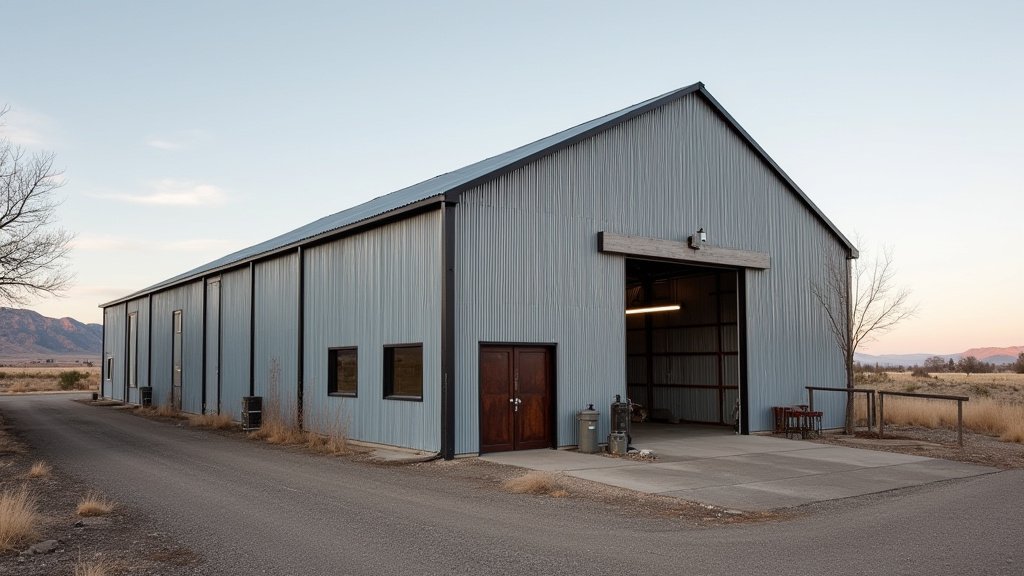
The landscape of Oregon’s celebrated craft beer industry is undergoing a period of painful but necessary recalibration. In the heart of Bend, Oregon—a city long synonymous with the American craft beer movement—six breweries are currently navigating turbulent waters, with properties listed for sale, lease, or planning strategic relocations. This movement signals a departure from the rapid, aggressive expansion seen in the last decade, as business owners grapple with a tightening economy and the realities of sustainable operations in a post-saturation market.
Simultaneously, the industry has been struck by the news that Boneyard Beer, a seminal name in the regional craft space, will officially close its Portland pub located on NE Division Street on October 11, 2026. This decision, while disruptive to the Portland footprint, underscores a broader strategic pivot: the company is choosing to consolidate its resources and sharpen its focus on its original, core production facility in Bend. This move highlights a dominant trend currently sweeping the Pacific Northwest, where breweries are retreating from satellite locations to protect the profitability of their central production hubs.
The Economic Pressure Cooker
The fundamental driver behind these shifts is the escalating cost of commercial real estate within Deschutes County. Bend, while retaining its status as a premier destination for craft beer tourism, has seen industrial and retail lease rates climb significantly over the last three fiscal years. For small to mid-sized breweries that operate on thin margins, the math has become increasingly difficult to justify.
When a brewery expands, it typically adds significant overhead through satellite taprooms or secondary distribution hubs. In an era of high interest rates and fluctuating consumer spending, these secondary locations are often the first to be pruned. The current situation involving six distinct brewery operations in the Bend area suggests a systemic reaction to these localized economic pressures. Property owners are finding that the premium once paid by the brewery industry for specialized industrial-zoned space is now being challenged by other sectors, forcing breweries to either relocate to less expensive fringes of the city or exit the market entirely to liquidate assets.
The Boneyard Strategy: Consolidate to Survive
Boneyard Beer’s closure of its Portland pub on NE Division Street is not merely a localized event; it serves as a bellwether for the entire regional industry. By shuttering a high-visibility location in the competitive Portland market, the brand is explicitly prioritizing its production facility in Bend.
This is a classic ‘flight to quality’ and ‘flight to core’ strategy. During the ‘growth-at-all-costs’ phase of the mid-2010s, breweries prioritized market share, expansion, and geographic reach. Today, that sentiment has reversed. The objective is now operational efficiency. By concentrating brewing activities in one location—where the expertise, equipment, and supply chain are already optimized—Boneyard is hedging against the risks of supply chain volatility and the high labor costs associated with operating multiple, geographically dispersed retail points. The October 11, 2026, closure date provides a clear timeline for this transition, signaling to investors and the public that the company is taking a long-term view of solvency over short-term market presence.
The ‘6 Breweries’ Phenomenon: A New Reality
Industry analysts have noted that the six breweries currently in the process of sale, lease, or relocation represent a cross-section of the Bend market. Some are legacy operations looking for an exit strategy after years of service; others are newer entrants that scaled too quickly and are now finding that the local taproom market has reached a saturation point.
This reshuffling is not necessarily a death knell for Bend’s beer culture, but it is a cooling period. The days of endless brewery expansion in the High Desert are being replaced by a period of professionalization. Breweries that survive this phase will likely be those that own their real estate, have diversified revenue streams (such as robust canning operations or event hosting), or have cultivated extreme local loyalty. For the six establishments currently in flux, the future likely holds one of three paths: acquisition by larger regional groups seeking entry into the Bend market, a forced pivot to contract brewing to pay the rent, or closure to avoid mounting debts in a high-interest rate environment.
Future Outlook: Sustainability Over Scale
The next 24 months will be crucial for determining the shape of Bend’s future craft industry. We are likely to see a shift where the ‘production-only’ model becomes more attractive than the ‘brewpub’ model for new market entrants, as the regulatory and physical overhead of running a full-scale restaurant and bar becomes increasingly burdensome. Consumers should expect fewer brand names, but potentially higher-quality, more consistent product lineups from the survivors. The consolidation currently underway is a natural correction to a market that arguably had too many players fighting for the same limited consumer discretionary income.
FAQ: People Also Ask
Q: Is the closure of Boneyard’s Portland pub a sign of the company’s financial failure?
A: Not necessarily. In the current economic climate, closing a remote satellite location to focus on a central production facility is often a strategic financial decision to protect the core business’s margins and long-term stability, rather than a sign of bankruptcy.
Q: Why are so many breweries in Bend specifically looking to sell or lease?
A: The primary factors are rising commercial lease rates in Deschutes County and the market saturation of craft beer in the region, which has made it harder for smaller breweries to maintain profitability in their current retail spaces.
Q: Does this mean Bend is losing its title as ‘Beer City USA’?
A: While the number of independent taprooms may decrease through this consolidation, the city remains a hub for production. It is not losing the title, but rather the industry is shifting from a ‘quantity-based’ growth model to a ‘quality-based’ sustainability model.
Q: What is happening to the employees of the Boneyard Portland pub?
A: The company has indicated that it is managing the transition as the October 11, 2026, closure date approaches, though specific severance or transfer details are typically internal human resources matters.