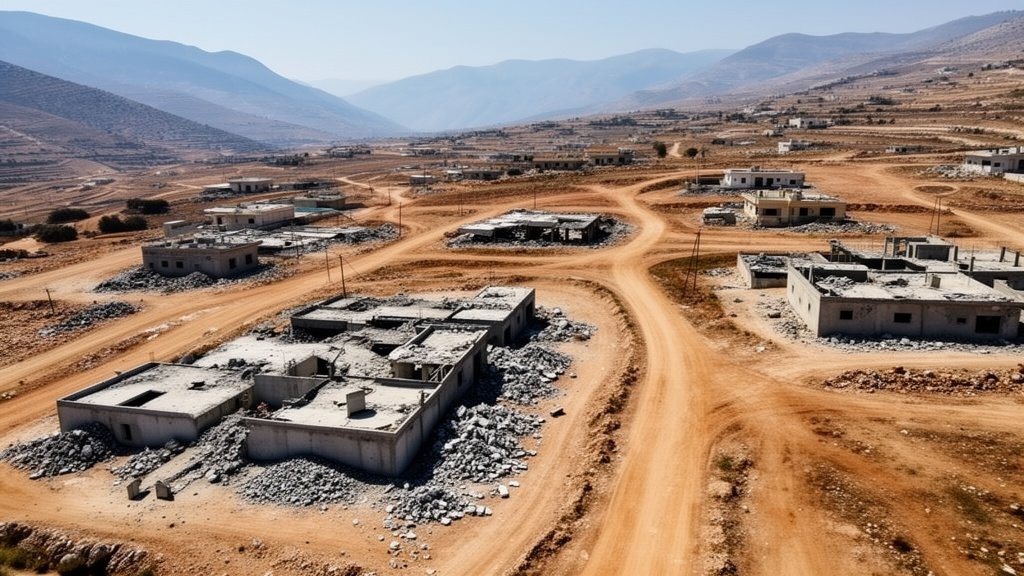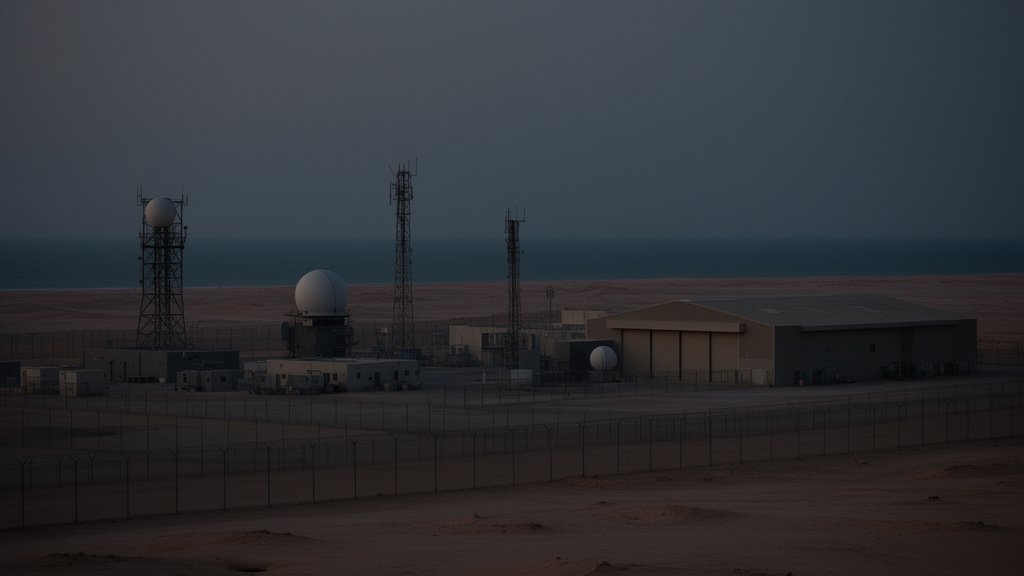
In a sharp escalation of regional tensions, Iran has executed a series of calculated missile and drone strikes targeting U.S.-linked military installations across Kuwait and the United Arab Emirates. This offensive represents a significant departure from previous containment strategies, with Iranian leadership explicitly characterizing the aggression as a pivot toward ‘asymmetrical warfare.’ The attacks follow a period of intensified U.S. economic pressure, which Tehran claims has crippled its domestic industry and necessitated this combative response to protect its sovereignty and regional standing.
Key Highlights
- Targeted Operations: Iran has launched coordinated missile and drone strikes against multiple U.S.-linked bases within Kuwait and the United Arab Emirates, marking a rare direct expansion of hostilites.
- Asymmetrical Pivot: Iranian leadership has officially termed this shift as ‘asymmetrical warfare,’ designed to utilize high-volume, low-cost drone technology to challenge conventional superior military forces.
- Economic Catalyst: The aggression is framed by Tehran as a retaliatory measure against prolonged U.S. economic sanctions and critical port blockades that have severely hampered Iranian trade.
- Regional Destabilization: The involvement of U.S.-linked assets in these nations threatens to draw neighboring GCC (Gulf Cooperation Council) members deeper into the friction between Washington and Tehran.
The Strategic Shift: Iran’s Asymmetrical Escalation
The recent strikes on Kuwait and the UAE are not isolated events but rather the culmination of a deteriorating relationship between Tehran and the West. By targeting installations with links to U.S. military interests, Iran is signaling that the ‘economic squeeze’ imposed by Washington will no longer be met with diplomatic restraint alone. The utilization of asymmetrical warfare—a strategy that relies on utilizing irregular military tactics, such as swarm drone attacks and precision ballistic strikes, to offset an adversary’s conventional superiority—indicates a shift in Iranian military doctrine.
The Mechanics of the Strikes
According to intelligence reports and regional observers, the attacks involved a mix of long-range ballistic missiles and Unmanned Aerial Vehicles (UAVs), commonly referred to as ‘suicide drones.’ This specific combination allows for saturation tactics, overwhelming local air defense systems such as the Patriot missile batteries often found at these U.S.-linked sites. By launching these from decentralized locations, the Iranian Revolutionary Guard Corps (IRGC) aims to maintain the element of surprise while minimizing the risk of a centralized counter-strike. The choice of targets—Kuwait and the UAE—is strategically significant. These countries host key U.S. CENTCOM (U.S. Central Command) assets, making them vital nodes for American power projection in the Middle East. By striking these locations, Tehran is not only attacking the U.S. military footprint but is also attempting to pressure regional governments to distance themselves from Washington’s ‘maximum pressure’ campaign.
Economic Drivers: The ‘Squeeze’
To understand the impetus behind this escalation, one must look at the dire economic conditions inside Iran. The ‘economic squeeze’ mentioned by Iranian leadership refers to a comprehensive suite of U.S.-led sanctions that have targeted every facet of the Iranian economy, from energy exports to financial transactions. Most damaging has been the blockade of key ports, which has effectively strangled Iran’s ability to export its primary revenue generator: oil. The Iranian Rial has faced historic devaluation, leading to rampant inflation and a scarcity of imported goods. This economic isolation has created domestic unrest, pushing the Iranian leadership to divert national attention toward external security threats. By framing the conflict as a struggle against foreign oppression, the government seeks to consolidate internal support while leveraging its military capabilities to force a reduction in the economic blockade.
Regional Geopolitical Ripples
The implications of these strikes extend far beyond the immediate damage to infrastructure. For Kuwait and the UAE, the attacks represent a terrifying realization: that their alliance with the United States could make them a primary target in a larger conflict. Both nations have spent decades building robust security ties with the U.S. to ensure regional stability. If those ties are now viewed as a liability by Tehran, these Gulf nations face a precarious future. The Gulf Cooperation Council (GCC) is now under immense pressure to mediate a de-escalation before these skirmishes evolve into a full-scale regional conflagration. The U.S. response, expected to be a mix of enhanced defense commitments and further sanctions, will be the next major variable. Observers warn that if the U.S. chooses to retaliate with kinetic force, the region could enter a cycle of reprisal that would jeopardize global energy supplies, given the proximity to the Strait of Hormuz—the world’s most important oil chokepoint.
Looking Toward the Future
As the dust settles on the initial wave of strikes, the question remains whether this is a finite attempt to force a diplomatic opening or the beginning of a prolonged ‘gray zone’ war. ‘Asymmetrical warfare’ is inherently sustainable for the aggressor because it does not require the mobilization of large, conventional armies. It is cheap, disruptive, and highly effective at creating political uncertainty. The U.S. and its partners must now develop counter-measures that go beyond traditional air defense, focusing on cyber warfare, economic counter-incentives, and clandestine intelligence operations. The path to resolution appears narrow, and the possibility of miscalculation remains high.
FAQ: People Also Ask
1. Why is Iran calling this ‘asymmetrical warfare’?
Asymmetrical warfare refers to conflict between belligerents whose relative military power, strategy, or tactics differ significantly. Iran is using low-cost drones and missiles to attack much more expensive and complex U.S.-linked assets, forcing the U.S. to expend significant resources to defend against relatively cheap attacks.
2. What is the connection between the economic squeeze and the strikes?
Iranian leadership claims that U.S. sanctions and port blockades are an act of economic warfare that has devastated their economy. They are using military strikes to demonstrate that if they cannot engage in normal international commerce, the U.S. and its regional partners will not be able to operate in the region with security.
3. Will this lead to an increase in oil prices?
Historically, any military escalation in the Persian Gulf region, particularly near the Strait of Hormuz, leads to immediate volatility in global energy markets. Traders typically price in a ‘risk premium’ for oil, fearing that conflict could interrupt supply chains, which often drives prices upward.
4. What are U.S.-linked bases in this context?
These are military installations in Kuwait and the UAE that provide logistics, support, or staging for U.S. CENTCOM operations. While they are sovereign facilities of those nations, they are key nodes for American military presence in the Middle East.