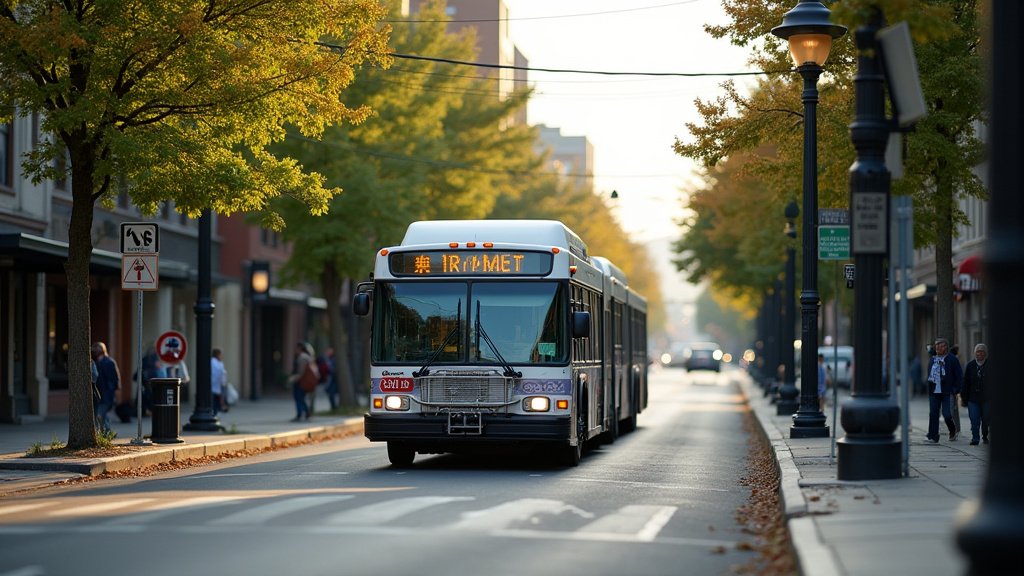
TriMet, the principal public transit agency serving the Portland metropolitan area, has announced a significant retrenchment of its transit network, with sweeping service cuts affecting 34 bus lines and the MAX Green Line set to take effect on August 23, 2026. This decision, driven by a projected $300 million budget deficit, marks a challenging turning point for Oregon’s largest transit provider, raising difficult questions about the long-term sustainability of public mobility in the region.
Key Highlights
- Effective Date: The service reductions are scheduled to be implemented on August 23, 2026.
- Scope of Impact: A total of 34 bus lines will face reduced service levels, alongside frequency adjustments on the MAX Green Line.
- Fiscal Driver: The cuts are a direct response to a massive $300 million budget shortfall currently facing the agency.
- Operational Strategy: TriMet officials have indicated these changes are necessary to balance the books without resorting to broader systemic insolvency.
Navigating the Fiscal Cliff: TriMet’s Austerity Measures Explained
The announcement from TriMet leadership regarding the upcoming service adjustments reflects a deepening crisis within American public transit systems. As the agency grapples with the $300 million deficit, the strategy is shifting from expansion and recovery to stabilization and preservation. For residents across the TriMet service district, this translates to a tangible reduction in transit reliability, which analysts warn could have cascading effects on regional economic activity and social equity.
The Mechanics of the Deficit
At the core of the issue is a structural mismatch between operational costs and revenue streams. TriMet, like many agencies, relies heavily on a payroll tax as its primary funding mechanism. Recent economic shifts, changes in commuting patterns, and the post-pandemic stabilization of the workforce have eroded the predictability of this revenue.
When expenditures—driven by inflation, labor costs, and aging infrastructure maintenance—outpace tax revenue, agencies are left with few levers to pull. The decision to cut 34 bus lines and throttle the MAX Green Line is a blunt instrument designed to stop the bleeding. It prioritizes the survival of the core network at the expense of frequency and coverage for thousands of daily riders.
Impact on the Commuter Landscape
Public transit is a critical utility for the Portland metropolitan area’s labor force. The reduction of service on 34 bus lines specifically targets areas where ridership patterns have evolved or where cost-per-rider metrics have become unsustainable. However, critics of the plan argue that these cuts disproportionately affect essential workers and low-income populations who rely on transit for non-traditional work hours.
The MAX Green Line, which serves as a vital artery connecting Clackamas Town Center to Portland State University and beyond, faces frequency adjustments. For a line that relies on consistent, high-frequency service to remain a viable alternative to personal vehicle ownership, a reduction in headway can lead to a ‘death spiral’—where fewer riders result in further revenue loss, leading to more cuts.
The Historical Context of Transit Funding
Historically, TriMet has navigated various economic cycles, but the 2026 fiscal environment represents a unique challenge. Unlike the Great Recession, which saw temporary dips, the current landscape involves a fundamental change in the ‘work from home’ paradigm. The historical reliance on payroll taxes means that when the commercial density of the city fluctuates, the transit budget fluctuates in lockstep. This vulnerability has led transit advocates to call for a more diversified funding model, perhaps involving state-level subsidies or broader regional tax cooperation, which currently remains a matter of intense legislative debate in Salem.
Secondary Angles: Future Implications
1. The Infrastructure Maintenance Debt: Beyond service cuts, deferred maintenance on rail lines and bus fleets remains a ‘silent’ cost. If budget shortfalls continue, the agency may be forced to choose between service frequency and system safety, a binary choice no city wants to make.
2. Urban Density and TOD: Transit-Oriented Development (TOD) projects, which have been a hallmark of Portland’s urban planning, rely on the promise of robust transit. If service reliability drops, the attractiveness of these high-density residential developments may diminish, potentially cooling the real estate market near key transit hubs.
3. The Role of Automation and Efficiency: TriMet is currently exploring internal efficiencies. Whether through route optimization software or renegotiated service contracts, the agency is under immense pressure to prove it can do more with less before the August 2026 deadline.
Ultimately, the August 2026 service cuts are not merely a logistical change; they are a fiscal symptom. How the agency manages this period will determine the public’s trust in the system for the next decade. For commuters, the message is clear: the era of abundant, high-frequency transit is facing a period of forced contraction, and the road to recovery remains uncertain.
FAQ: People Also Ask
1. Why specifically are these 34 lines being cut?
TriMet has evaluated lines based on ridership density, operational cost, and the availability of alternative transit options. The lines selected represent the highest cost-per-rider ratios relative to the current budget capacity.
2. Will there be any restoration of service in the future?
Agency officials have stated that service levels are subject to future budget reviews. However, restoration is contingent upon an increase in revenue or a significant change in the agency’s fiscal outlook, which is not currently projected for the immediate 2027 fiscal year.
3. How can riders stay updated on their specific bus routes?
TriMet recommends that riders utilize the official TriMet website and mobile app. All 34 affected bus lines and the MAX Green Line adjustments will be mapped out in the updated service schedules, which are expected to be published well in advance of the August 23, 2026, implementation date.
4. Is the budget shortfall related to a specific project?
No, the $300 million deficit is a structural operational issue stemming from a combination of lower-than-anticipated payroll tax revenue, inflationary cost pressures, and high operational maintenance expenses across the entire network.