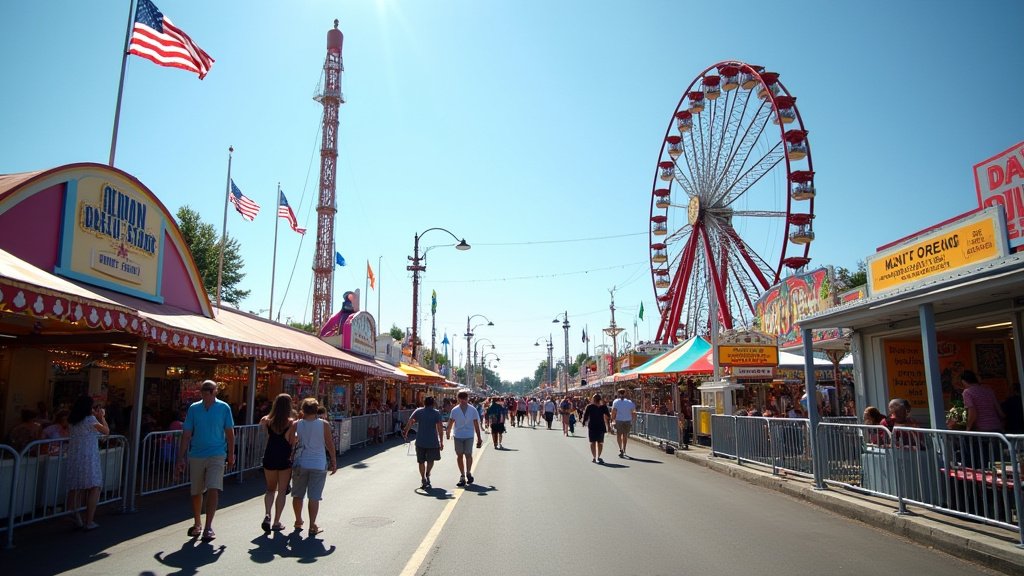
As the summer sun begins to wane, the rhythmic hum of the midway and the scent of deep-fried delicacies return to Salem, Oregon. The Oregon State Fair, an institution that has anchored the state’s cultural calendar since its inception in 1861, is officially set to open its gates on August 28, running through September 7. This year, the event promises to be a complex tapestry of traditional agricultural heritage and a forward-looking salute to the nation’s history, as the fairgrounds prepare to host a significant celebration centered on the America 250 initiative.
Key Highlights
- Dates: The fair runs from August 28 to September 7, encompassing 11 days of festivities.
- America 250 Live: Special programming will feature a major show dedicated to the countdown toward America’s 250th anniversary, combining history and performance.
- 4-H and Agriculture: A core focus remains on the Oregon 4-H Youth Development program, highlighting the next generation of agricultural leaders and livestock handlers.
- Entertainment: The event schedule includes a diverse array of live concerts, carnival rides, and midway attractions, catering to both thrill-seekers and families.
A Grand Tradition: Renewing Oregon’s Cultural Tapestry
For residents of the Pacific Northwest, the Oregon State Fair is more than just a seasonal attraction; it is a vital checkpoint in the annual cycle of community and agriculture. Located on the sprawling Oregon State Fairgrounds in Salem, this event serves as the primary gathering point for local farmers, 4-H members, and families from every corner of the state. As we approach the late-August kickoff, organizers have emphasized that this year’s iteration aims to strike a delicate balance between preserving the fair’s historical identity and embracing the patriotic spirit of the approaching national milestone.
The Impact of 4-H and Agricultural Excellence
At the heart of the Oregon State Fair lies its agricultural exhibition. While the Ferris wheel and cotton candy vendors often capture the headlines, the backbone of the event is the 4-H and Future Farmers of America (FFA) programming. These exhibits are not merely displays; they are the culmination of a year’s worth of hard work by Oregon’s youth. Participants in the 4-H program work closely with the Oregon State University Extension Service to master everything from animal husbandry to culinary arts and robotics. By showcasing these talents on a state-wide stage, the fair provides a crucial educational platform that fosters leadership and technical expertise in the next generation. The fairgrounds transform into a living laboratory where urban visitors can bridge the gap with rural life, understanding the intricate supply chains and hard work required to maintain Oregon’s robust agricultural sector.
America 250: A Milestone in Celebration
The most anticipated addition to this year’s roster is the “AMERICA 250 LIVE” show. As the United States prepares for its semiquincentennial in 2026, the Oregon State Fair has stepped up as a participant in the national conversation. This programming is designed to be immersive, focusing on the historical narrative of the United States while tying it to Oregon’s unique role in the American West. The show is expected to incorporate multimedia elements, live performance art, and storytelling to engage visitors of all ages. By centering this celebration, the fair organizers are shifting the focus from simple recreation to community reflection, encouraging attendees to consider the history that has shaped the region.
Economic and Community Significance
Beyond the entertainment and educational value, the fair plays a pivotal role in the economic health of Salem. Throughout its 11-day run, the event draws thousands of visitors, providing a significant boost to local hospitality, restaurants, and retail sectors. Small business vendors from across the Pacific Northwest use the fair as a primary sales venue, often deriving a substantial percentage of their annual revenue from the foot traffic generated during this specific window. Furthermore, the fair acts as a cultural aggregator, bringing together diverse demographics—from rural ranching families to urban professionals—into one space, which is increasingly rare in our segmented digital age. This cross-pollination of community members is perhaps the fair’s most important, though intangible, asset.
Evolving Entertainment and Logistics
The 2024 schedule is carefully curated to appeal to a multi-generational audience. The concert lineup, a perennial draw, is designed to span genres and decades, ensuring that whether one prefers classic rock, country, or contemporary pop, there is an anchor performance to attend. The midway remains the fair’s kinetic heart, with ride operators and game vendors preparing for thousands of attendees. Behind the scenes, the logistical operation is a feat of coordination. Managing the influx of people, the safety of the livestock, the integrity of the exhibitions, and the demands of large-scale entertainment requires months of planning, municipal coordination with Salem officials, and thousands of volunteer hours. As August 28 approaches, the focus is squarely on ensuring that this infrastructure holds, providing a seamless experience that feels spontaneous and joyous for the visitor, despite the immense operational rigor required to make it happen.
FAQ: People Also Ask
Q: What are the primary hours of operation for the Oregon State Fair?
A: While specific daily hours can fluctuate based on event scheduling, the fair generally opens its gates in the mid-morning and operates well into the evening to accommodate both the daytime agricultural exhibits and the nighttime concert and midway crowds. Visitors are encouraged to check the official website closer to the date for the most current schedule.
Q: Is the fair family-friendly?
A: Yes. The Oregon State Fair is designed as a family-oriented event. It includes specific “Kid Zone” areas, 4-H educational workshops, and age-appropriate carnival rides, alongside the more general concerts and shows.
Q: How do I purchase tickets for the ‘AMERICA 250 LIVE’ show?
A: Tickets for specific shows and general fair admission are typically sold through the official Oregon State Fair website. Given the popularity of the America 250 program, it is recommended to purchase these in advance to secure preferred seating and avoid day-of-event queues.
Q: Are there parking facilities available on-site?
A: The Oregon State Fairgrounds provides extensive parking options, though these fill up quickly during peak hours and weekends. There is often information regarding shuttle services or overflow parking posted on the official fair portal as the start date nears.
Q: How can I volunteer or participate in the 4-H exhibits?
A: Participation in the 4-H livestock and exhibition programs is generally managed through county-level 4-H chapters or the Oregon State University Extension Service. If you are looking to volunteer, the fair’s official website usually lists opportunities to assist in the weeks leading up to the opening.