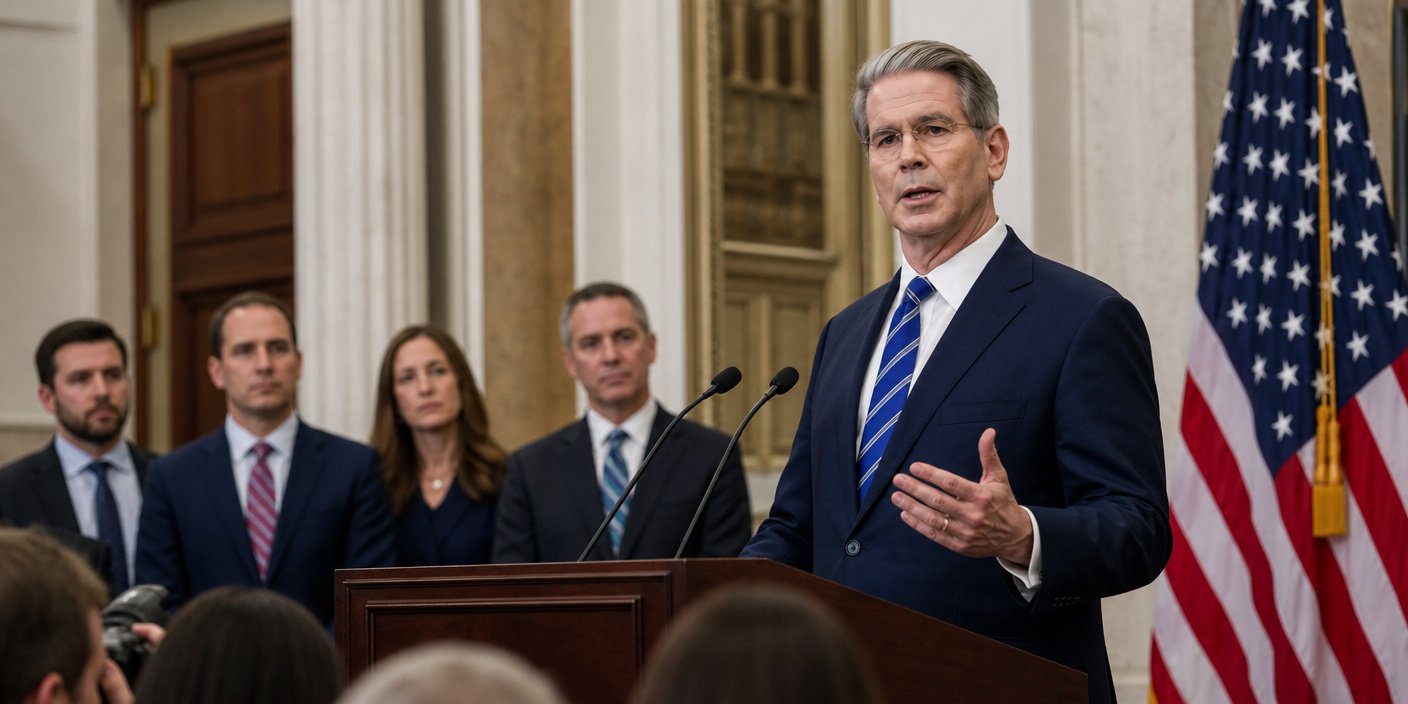
In a decisive pivot of American foreign policy, the U.S. Treasury Department has officially moved away from the threat of direct military combat, instead launching an unprecedented campaign of total economic isolation against Iran. Treasury Secretary Scott Bessent announced today that the administration will impose severe, non-negotiable penalties on any nation—ally or adversary—that continues to engage in trade with the Iranian government. This strategy represents a significant escalation in “maximum pressure” tactics, intended to collapse the economic capacity of the regime by severing its remaining arteries to global capital and trade markets, effectively enforcing a de facto international blockade without firing a single shot.
Key Highlights
- Strategic Pivot: The administration has officially deprioritized direct military strikes in favor of “total economic strangulation” as the primary tool for regime containment.
- Global Secondary Sanctions: Secretary Bessent confirmed that any nation, bank, or corporation facilitating trade with Iran will face immediate, severe financial penalties, including expulsion from the U.S. financial system.
- Economic Collapse Goal: The explicit objective of this policy is the systemic depletion of the Iranian government’s financial resources, aiming to force compliance through the degradation of its domestic economy.
- No Combat Requirement: The Treasury Department aims to achieve strategic goals via “financial warfare,” marking a departure from traditional kinetic military involvement.
The New Doctrine of Financial Warfare
The announcement by Secretary Scott Bessent signals a tectonic shift in how the United States approaches the Iran question. For decades, the debate surrounding Iran policy has fluctuated between diplomatic engagement—such as the 2015 JCPOA framework—and the credible threat of military intervention. The new Treasury directive bypasses both. By weaponizing the global financial architecture, the U.S. is effectively turning the Office of Foreign Assets Control (OFAC) into the tip of the spear. This is not merely a tightening of existing sanctions; it is a fundamental reconfiguration of the international trade ecosystem surrounding Iran.
The Mechanics of Secondary Sanctions
At the heart of this policy is the rigorous enforcement of secondary sanctions. Previously, many global entities operated under the assumption that they could maintain “de minimis” trade relations with Iran, provided they avoided U.S.-cleared transactions. Secretary Bessent’s new mandate removes this ambiguity. The “severe penalties” mentioned in the Treasury announcement imply that any entity—be it a shipping conglomerate in Asia or a national bank in the Middle East—found conducting trade with Tehran will be cut off from U.S. dollar-denominated transactions. Given that the U.S. dollar remains the world’s primary reserve currency, this ultimatum forces every global player into a binary choice: trade with the world, or trade with Iran.
Targeting the Economic Lifelines
To truly isolate the Iranian economy, the Treasury Department is focusing on three key vectors: the petroleum sector, the shipping logistics network, and the informal financial exchange markets. By monitoring oil tankers via satellite and leveraging international banking data, the Treasury intends to make it impossible for Iran to offload its crude. This directly targets the regime’s primary source of foreign currency. Analysts suggest that if effectively implemented, this could lead to hyperinflation and severe commodity shortages within Iran, theoretically forcing the leadership to reconsider its regional activities as a means of domestic survival.
The Global Ripple Effect: Risks and Rewards
The implementation of such a comprehensive sanctions regime is not without profound risks. The primary concern among geopolitical analysts is the potential for market volatility. Iran remains a significant player in global energy markets. A sudden, total blockade of Iranian exports could exert upward pressure on oil prices, affecting economies worldwide.
Geopolitical Strain and Alignment
This policy also tests the strength of existing U.S. alliances. Nations that rely heavily on Iranian energy may find themselves in a precarious position. Secretary Bessent’s announcement indicates that the U.S. is prepared to accept friction with international partners to ensure total compliance with the sanctions regime. This “compliance-or-consequence” approach marks the end of waivers for countries that previously held exemptions for energy purchases.
The Future of the Rial and Domestic Stability
Inside Iran, the immediate impact will likely be felt in the currency markets. With the Rial already under immense pressure, the inability to access foreign reserves or process international trade payments will exacerbate domestic inflation. The central question for the administration is whether this economic pressure will catalyze a change in Iranian state behavior or, conversely, harden the regime’s resolve. History suggests that sanctions regimes often create a “resistance economy” where the ruling elite consolidates power while the populace bears the brunt of the hardship. The Treasury’s bet is that this time, the scope of the isolation will be so total that the cost of persistence becomes untenable for the Iranian government.
FAQ: People Also Ask
Q: How does this sanction strategy differ from previous policies?
A: Previous policies often utilized targeted sanctions against specific individuals or industries. The new Treasury mandate is a broad-spectrum, total-isolation strategy that imposes severe penalties on any entity, regardless of nationality, for trading with Iran, essentially enforcing a global blockade.
Q: Will this lead to direct military conflict?
A: The explicit goal of the U.S. Treasury’s move is to avoid direct combat. By shifting the battlefield to the global financial system, the administration aims to achieve its objectives through economic attrition rather than kinetic military action.
Q: How will this affect global oil prices?
A: There is a significant risk that removing Iranian oil from the global supply could lead to increased energy prices. The U.S. administration is reportedly working with other key energy producers to mitigate this impact by stabilizing supply chains elsewhere.
Q: What happens if a foreign bank violates these sanctions?
A: According to the Treasury’s announcement, any foreign bank found facilitating prohibited trade will face immediate, severe financial penalties, which likely includes being banned from the U.S. financial system, effectively rendering them unable to conduct international business in dollars.