With Oregon’s unemployment rate currently at 5.2%—significantly trailing the national average of 4.1%—the state is recalibrating its land-use policies to prioritize industrial readiness over bureaucratic stagnation. As the Land Conservation and Development Commission (LCDC) prepares for its latest session, the central question is no longer just about where development should occur, but how quickly Oregon can pivot to make land truly ‘shovel-ready’ for target industries.
Key Highlights
- Unemployment Gap: Oregon’s 5.2% unemployment rate sits well above the 4.1% national average, signaling a structural mismatch in the state’s economic engine.
- The LCDC Pivot: The Land Conservation and Development Commission is sharpening its focus on identifying and expediting the release of industrial land to compete for high-value manufacturing and technology investments.
- Shovel-Ready Reality: The state is shifting from a passive approach to active site certification, aiming to remove the infrastructure and zoning bottlenecks that have historically slowed development.
- Policy Evolution: The discussions reflect a delicate balance between Oregon’s rigid historic land-use protections and the urgent, modern requirement for rapid industrial deployment.
Unlocking Oregon’s Industrial Potential: A Shift in Land Policy
For decades, Oregon has been defined by its stringent land-use policies, which have successfully preserved the state’s natural beauty and agricultural integrity. However, in the current economic landscape, these very protections are increasingly viewed by policymakers as friction points in the race to attract major employers. With a 5.2% unemployment rate—a figure that starkly contrasts with the 4.1% national average—the state government is under mounting pressure to modernize its industrial land strategy. The upcoming Land Conservation and Development Commission (LCDC) meeting marks a critical juncture in this evolution, as the state attempts to reconcile its environmental legacy with the immediate demands of a changing global economy.
The Employment Disconnect: Analyzing the 5.2% Reality
The gap between Oregon’s unemployment numbers and the national benchmark is not merely a statistical anomaly; it is a symptom of a broader economic disconnect. When businesses look to expand, they prioritize speed and predictability. In Oregon, the time-to-permit process and the availability of land that is fully serviced with water, power, and high-speed internet have often lagged behind neighboring states. This creates a scenario where companies pass over Oregon in favor of jurisdictions where ‘ready-to-go’ land is available within months, rather than years. The 5.2% unemployment rate is the human cost of this competitive disadvantage. To bring these numbers closer to the national average, the state must move beyond identifying potential industrial land and instead commit to a state-certified ‘ready-for-development’ program that minimizes the risks for investors.
The Role of LCDC and the Infrastructure Bottleneck
The Department of Land Conservation and Development (DLCD) and the LCDC are tasked with managing the state’s complex Urban Growth Boundaries (UGBs). Historically, expanding these boundaries to accommodate new industrial hubs was a laborious, multi-year affair. Now, the conversation is shifting toward ‘industrial site readiness.’ This concept encompasses more than just changing a zoning designation on a map. It requires significant upfront investment in infrastructure—sewer capacity, heavy electrical load capability, and multi-modal transportation access. Without these utilities, land is merely a plot on a map; with them, it becomes a competitive asset. The upcoming commission meetings will likely focus on how to finance these infrastructure requirements without compromising the integrity of Oregon’s foundational land-use goals.
Balancing Conservation with Modern Commerce
The tension between agricultural preservation and industrial expansion is the most enduring conflict in Oregon politics. The state’s reliance on its agricultural sector is profound, but the high-tech manufacturing sector, particularly in semiconductors and clean energy, requires a different footprint. The current editorial focus on ‘what should land ready for development mean’ is a recognition that the status quo is insufficient. This is not about abolishing protections, but rather about surgical precision. By identifying specific corridors that are adjacent to existing infrastructure, the state can foster development that is economically transformative while insulating ecologically sensitive areas from sprawl. This balanced approach is essential for any long-term economic strategy.
Future-Proofing Industry: The Economic Ripple Effect
Looking ahead, the success of these initiatives will be measured by the type of industries they attract. The goal is to move up the value chain. Rather than just targeting warehousing, which has low employment density, the state is targeting advanced manufacturing. This sector offers higher wages and more sustainable job growth, which is exactly what is needed to lower that 5.2% unemployment figure. A successfully executed land policy should be seen as a long-term investment, not a short-term fix. By creating ‘plug-and-play’ industrial sites, Oregon can effectively market itself to a new class of investors who demand sustainability but also require the operational certainty that currently eludes many sites in the Pacific Northwest.
FAQ: People Also Ask
1. Why is Oregon’s unemployment rate higher than the national average?
Oregon’s unemployment rate of 5.2% (compared to the 4.1% national average) is largely attributed to a mismatch in industrial readiness and a slow growth rate in high-value job sectors compared to other high-growth states.
2. What does ‘land ready for development’ actually mean in this context?
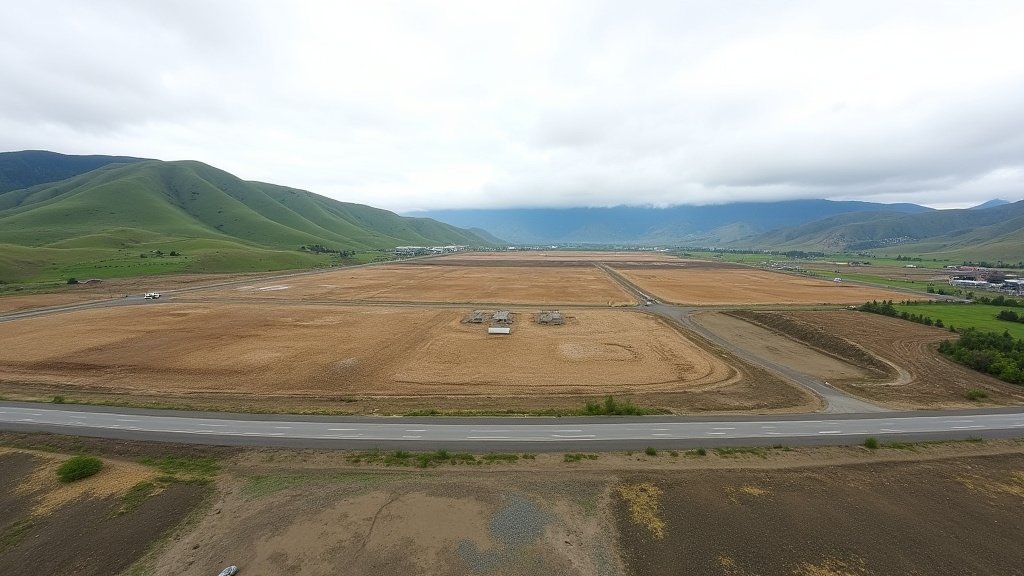
It refers to industrial sites that have already cleared zoning hurdles, possess existing or planned utility infrastructure (sewer, water, power), and have environmental assessments completed, allowing for immediate construction upon purchase.
3. How is the LCDC involved in industrial expansion?
The Land Conservation and Development Commission (LCDC) oversees the statewide planning goals. They are currently tasked with streamlining the process for designating industrial land to help the state compete for major investments and infrastructure projects.
4. Is this change in policy hurting Oregon’s land-use protections?
Proponents argue that by focusing industrial development on ‘ready’ sites, the state can prevent suburban sprawl into agricultural land, potentially increasing the efficiency of land use rather than just expanding the footprint.
5. What is the impact of Senate Bill 4 (2023) on this issue?
Senate Bill 4 was a landmark piece of legislation aimed at providing the Governor and state agencies more flexibility to bypass some traditional land-use hurdles for specific high-priority manufacturing projects, particularly in the semiconductor sector.