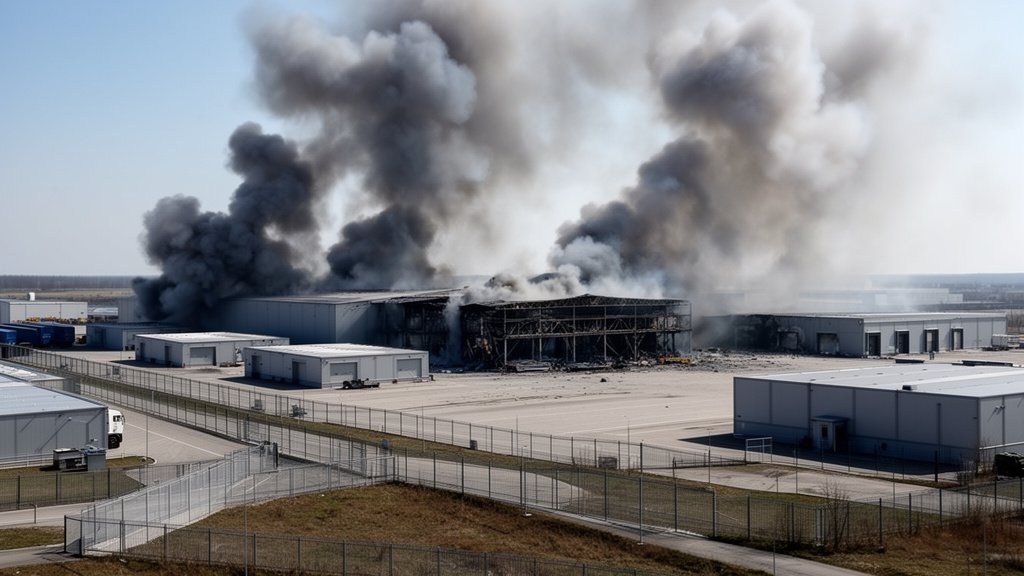
In a major escalation of the ongoing aerial conflict, Ukrainian forces have executed one of their largest and most sophisticated aerial strikes to date, targeting a critical logistics hub located deep within the Moscow region. The operation, which utilized a coordinated swarm of advanced unmanned aerial vehicles, resulted in significant fires and smoke plumes, marking a strategic pivot in the scope and distance of Ukraine’s counter-offensive operations. This strike underscores the increasing capability of Ukrainian intelligence and tactical planning to penetrate sophisticated air defense systems protecting the Russian heartland.
Key Highlights
- Tactical Scale: This operation represents one of the largest coordinated aerial strikes into the Moscow region, involving multiple vectors and advanced drone technology.
- Strategic Target: The attack focused on a high-value logistics hub, a critical node in Russia’s supply chain, resulting in immediate operational disruption and severe structural damage.
- Visible Impact: Eyewitness reports and satellite imagery confirm extensive fire and heavy smoke emerging from the facility, indicating a successful breach of defensive perimeters.
- Operational Shift: This event demonstrates a clear transition in strategy, moving from localized front-line engagement to deep-strike capabilities targeting infrastructure essential to sustaining military efforts.
Escalating Aerial Warfare: Striking the Moscow Logistics Hub
The recent aerial assault on a central logistics node in the Moscow region serves as a stark turning point in the technological and tactical evolution of the conflict. By successfully reaching a target deep within the Russian interior, Ukrainian forces have effectively bypassed traditional defensive screens, challenging the existing narrative regarding the vulnerability of key infrastructure. This operation was not merely a symbolic gesture but a calculated hit on the supply chains that fuel regional military stability.
The Strategic Significance of Logistics Hubs
Logistics hubs are the lifeblood of modern military operations. These facilities are responsible for the storage, distribution, and maintenance of essential hardware, fuel, and supplies. By targeting these hubs, Ukraine is shifting its focus toward ‘chokepoint warfare’—the concept of degrading the enemy’s ability to wage war by dismantling the infrastructure that supports it. Unlike front-line skirmishes, which yield territory, deep-strike operations against logistics hubs aim to create long-term operational paralysis. The destruction of this specific facility suggests that Ukrainian intelligence has successfully mapped Russian supply routes and identified nodes where disruption would cause the most systemic impact.
Technological Evolution in Drone Warfare
Central to this success is the evolution of drone technology. The operation involved a ‘swarm’ tactic, designed to overwhelm point-defense systems. By deploying a large volume of low-cost, expendable aerial vehicles, Ukrainian forces forced Russian air defenses to expend interceptor assets, potentially masking the flight path of more specialized, high-impact drones. This ‘saturation attack’ methodology represents a significant advancement over earlier, single-vector drone strikes. The ability to coordinate these assets over hundreds of miles, navigating around established radar coverage, indicates a high level of sophistication in flight planning, signal jamming evasion, and real-time operational flexibility.
Economic and Political Fallout
Beyond the immediate tactical damage, the strike carries heavy political and economic weight. The visual impact of fire and smoke in the Moscow region serves as a powerful psychological deterrent, signaling to both domestic and international audiences that the war is no longer a distant event confined to border regions. Economically, such strikes disrupt local commerce and drive up insurance and security costs for infrastructure operators. The Kremlin now faces the challenge of reallocating precious defensive assets from the front lines to protect its interior infrastructure—a strategic dilemma that favors the attacker. If Moscow is forced to pull air defense batteries from the front to bolster internal security, it may inadvertently create new vulnerabilities for its ground troops.
The Future of Deep-Strike Operations
Looking ahead, this attack sets a new baseline for the conflict. The integration of long-range aerial capabilities suggests that no facility within reach of these new platforms is inherently safe. Both sides are currently engaged in a ‘cat and mouse’ game of technological advancement: Russia attempting to harden its infrastructure and improve sensor detection, while Ukraine continues to iterate on its drone platforms to enhance range, stealth, and payload capacity. The coming months will likely see a proliferation of such strikes, further complicating the operational environment and forcing a re-evaluation of security postures across the region.
FAQ: People Also Ask
Q: Why are logistics hubs considered such critical targets?
A: Logistics hubs store the fuel, ammunition, and repair components necessary for military operations. Destroying them creates supply chain bottlenecks, preventing reinforcements and material from reaching the front lines, effectively ‘starving’ the military effort.
Q: How does this strike affect Russian air defense?
A: The strike exposes potential gaps in Russian air defense coverage. To prevent future attacks, Moscow may be forced to redeploy sophisticated air defense systems from the front lines to protect internal infrastructure, potentially weakening their position in active combat zones.
Q: Is this considered a escalation of the conflict?
A: Yes. By targeting infrastructure deep inside the Moscow region rather than limiting strikes to border areas, this operation represents a significant widening of the theater of operations, moving the kinetic conflict closer to the Russian capital’s core.