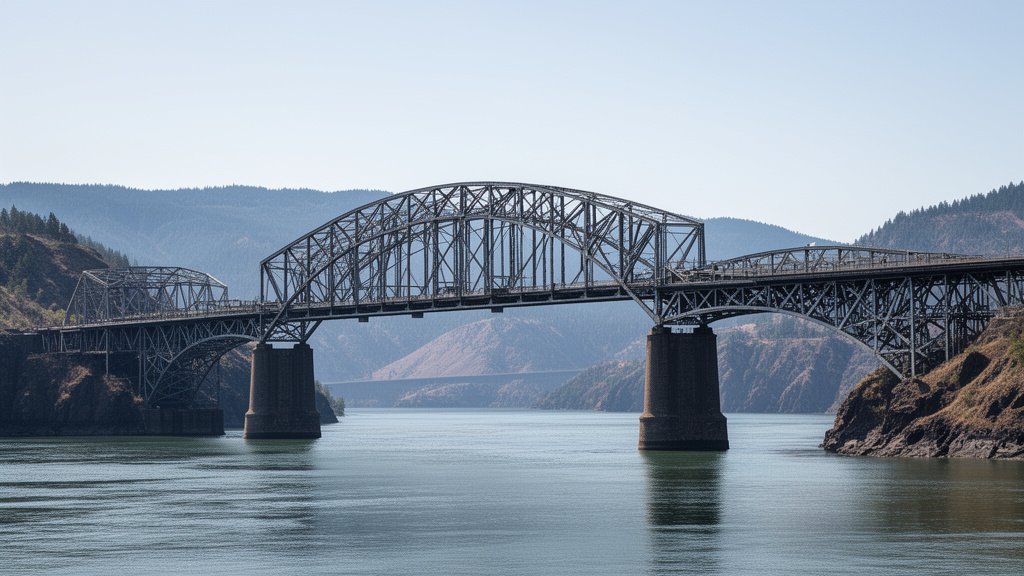
The Bridge of the Gods, an enduring symbol of engineering ingenuity and connectivity in the Pacific Northwest, is set to mark its 100th anniversary this year. Spanning the Columbia River to link Cascade Locks, Oregon, with Washington state, the cantilever truss bridge has served as a vital artery for local transit, regional commerce, and long-distance recreation for a full century. On September 19, 2026, the community of Cascade Locks will host a commemorative event that promises to honor the bridge’s deep historical, cultural, and structural significance, celebrating a landmark that has physically and metaphorically bridged the divide between two states.
Key Highlights
- Centennial Celebration: The official commemorative event is scheduled for September 19, 2026, in Cascade Locks, Oregon, marking exactly one century of operations.
- Engineering Evolution: The current structure, which required a significant reconstruction in 1940, serves as a testament to regional adaptability and the impact of the Bonneville Dam project.
- Pacific Crest Trail Hub: The bridge serves as the crucial crossing point for the Pacific Crest Trail (PCT), making it a site of pilgrimage for long-distance hikers and outdoor enthusiasts globally.
- Regional Vitality: Beyond its function as a transport link, the bridge remains the economic heart of Cascade Locks, supporting local tourism and transit.
A Century of Steel: The Bridge of the Gods Legacy
The story of the Bridge of the Gods is inextricably linked to the history of the Columbia River Gorge. To understand the significance of this 100-year milestone, one must look beyond the steel trusses and asphalt to the shifting currents of the river and the economic development of the region. As we approach the September 19, 2026, celebration, the bridge stands not just as a piece of infrastructure, but as a living timeline of Pacific Northwest development.
Engineering an Icon: The 1926 Origins
When the original Bridge of the Gods was opened to the public in 1926, it was a marvel of the era. Built by the Wauna Toll Bridge Company, the initial structure was a testament to the ambitions of the Roaring Twenties, intended to facilitate trade and travel in a region that was rapidly modernizing. However, the bridge we see today is technically a “second generation” structure. The original, lower-clearance bridge faced an existential threat in the 1930s with the construction of the Bonneville Dam. The resulting rise in the water level of the Columbia River meant the original bridge would have been hazardous for river traffic. In 1940, the bridge was raised significantly, a feat of engineering that essentially saved the crossing and secured its future for the next 86 years and counting. This historical pivot is a point of local pride, showcasing the region’s commitment to maintaining its vital infrastructure against all odds.
The Pacific Crest Trail Connection
In the realm of modern culture, the Bridge of the Gods has transcended its utility as a vehicular toll bridge to become perhaps the most famous landmark on the Pacific Crest Trail. For thousands of hikers trekking from Mexico to Canada, the bridge represents more than just a crossing; it is the gateway to Washington state and the final major geographical milestone before the finish line. The bridge provides a safe, pedestrian-accessible path across the Columbia, an essential link for the PCT. The centennial celebration will likely feature tributes from the hiking community, acknowledging the bridge’s dual identity as both a commuter necessity and a bucket-list destination for global outdoor enthusiasts.
Planning the Centennial: Cascade Locks Prepares
The upcoming event on September 19, 2026, represents a massive undertaking for the local government and community organizers in Cascade Locks. Plans for the day include historical exhibits, localized celebrations, and likely educational programming regarding the bridge’s construction and its ongoing maintenance under the Port of Cascade Locks. The celebration is designed to serve two purposes: to honor the past and to highlight the bridge’s future as a critical piece of the region’s transportation grid. Local stakeholders emphasize that the centennial is not merely a birthday party but a recognition of the bridge’s role in knitting together the rural and urban economies of Oregon and Washington. With its status as a registered historic site, the bridge’s preservation remains a high priority, and the centennial serves as a platform to secure long-term public and private support for its maintenance.
A Visual and Economic Landmark
The Bridge of the Gods is not just a crossing; it is a visual anchor. Photographers and filmmakers have long utilized the bridge’s distinct, towering silhouette against the backdrop of the Columbia River Gorge. Its cantilever truss design is emblematic of 20th-century industrial architecture. Economically, the toll bridge remains a revenue generator for the Port of Cascade Locks, facilitating thousands of vehicle crossings per day and serving as a critical backup route in the event of closures on the nearby I-84 interstate or other river crossings. As traffic patterns evolve and autonomous technologies emerge, the bridge continues to demonstrate resilience, remaining as indispensable today as it was in 1926.
FAQ: People Also Ask
Q: Why is the bridge named the Bridge of the Gods?
A: The name is derived from a geological legend of the Klickitat people regarding a massive natural land bridge that once spanned the Columbia River. The modern steel bridge was named to honor this ancient legend.
Q: Is the Bridge of the Gods a toll bridge?
A: Yes, it is a toll bridge owned and operated by the Port of Cascade Locks. Drivers must pay a fee to cross the bridge, which supports its ongoing maintenance and operational costs.
Q: What is the significance of the Pacific Crest Trail in relation to the bridge?
A: The bridge is the primary pedestrian crossing for the Pacific Crest Trail over the Columbia River. Hikers cross the bridge as part of their trek, connecting the trail systems of Oregon and Washington.
Q: How does the Bonneville Dam affect the bridge?
A: The construction of the Bonneville Dam in the late 1930s created a reservoir that raised the water level of the Columbia River. This forced the bridge to be completely dismantled and raised to a higher elevation in 1940 to allow for safe navigation of ships underneath.