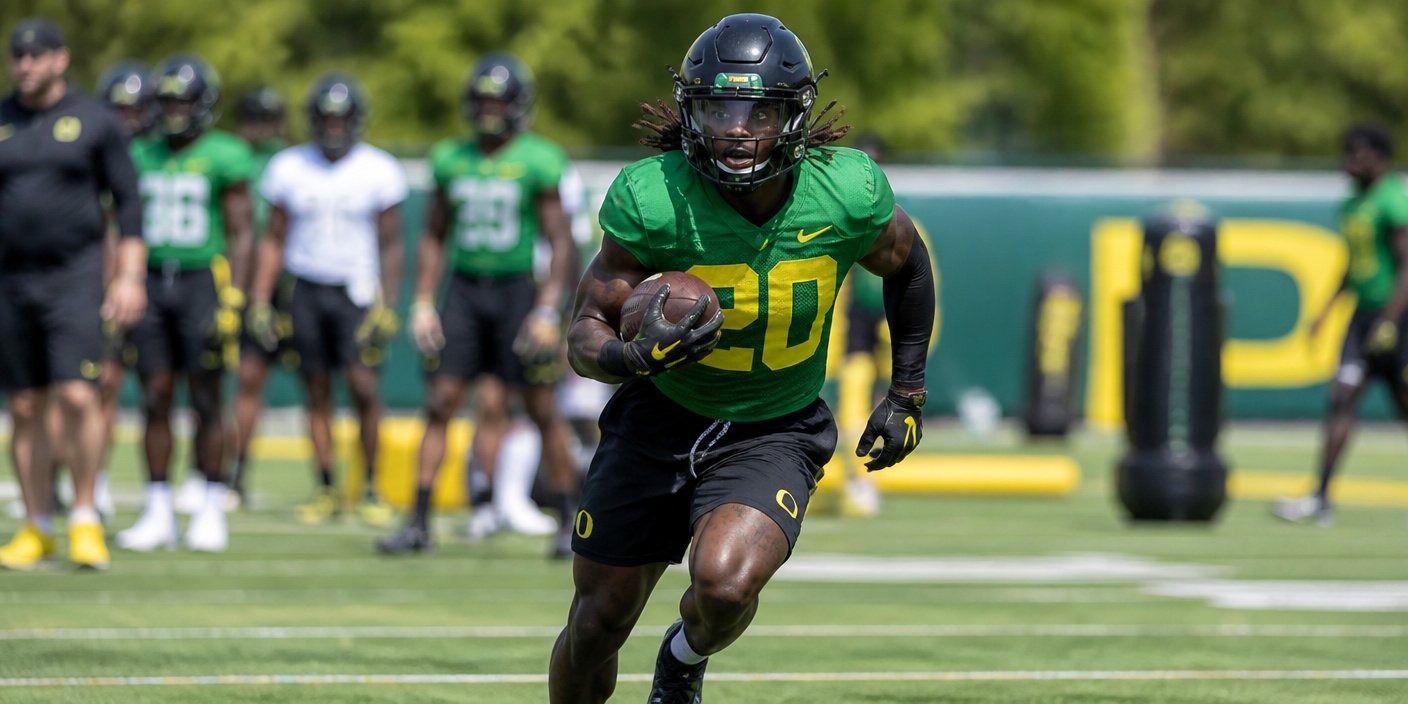
Oregon Ducks running back Dierre Hill Jr. has made a bold proclamation regarding the team’s trajectory for the 2026 season. After a turbulent campaign that left the program eager for redemption, Hill Jr. suggests that a fundamental shift in mentality is already underway. By characterizing the team’s collective potential as “scary,” he underscores a growing confidence in the locker room—one built on accountability, physical dominance, and a refusal to settle for mediocrity.
Key Highlights
- The ‘Hungry’ Mentality: Dierre Hill Jr. has emphasized that the 2026 roster is operating with a chip on its shoulder, prioritizing internal discipline over external hype.
- Strategic Offensive Pivot: Oregon’s coaching staff is refining the offensive scheme to better leverage Hill Jr.’s versatility, aiming for a more aggressive, run-heavy identity.
- Rebounding from 2025: The focus remains on addressing the inconsistencies of the previous year, with team leaders establishing a culture of physical accountability.
The Anatomy of an Oregon Football Resurgence
The narrative surrounding the Oregon Ducks entering the 2026 season is one of profound transition and intense internal correction. For Dierre Hill Jr., the running back position has become the focal point of this transformation. In recent availability, Hill Jr. was explicit: the goal is not just to improve, but to instill fear in opponents through sheer execution. This sentiment reflects a broader trend within the program to move past the inconsistent outcomes of 2025 and establish the Ducks as a perennial physical force in the Big Ten landscape.
The Psychological Shift: Cultivating a ‘Hungry’ Mentality
In modern college football, momentum is often psychological before it is statistical. Hill Jr.’s assessment that the team is “hungry” points to a specific developmental stage for the roster. The 2025 season served as a catalyst for this change. Faced with the reality of underperformance, the leadership core—led by players like Hill Jr.—has pivoted toward a blue-collar work ethic. This isn’t just rhetoric; it is a strategic necessity. The team is focusing on the ‘scary’ reality that they have not yet reached their ceiling, creating an environment where competition for roster spots is arguably fiercer than at any point in the Dan Lanning era.
Tactical Evolution: How Hill Jr. Fits the Scheme
Tactically, the Oregon offense is undergoing a calculated evolution. While the Ducks have historically been known for explosive playmaking, the plan for 2026 centers on establishing a more consistent, punishing ground game. Hill Jr. acts as the fulcrum for this strategy. His ability to hit the gaps with sudden acceleration allows the offensive coordinator to dictate the pace of the game, rather than reacting to defensive fronts. By emphasizing “scary” potential, Hill Jr. is likely referring to the synergy between the offensive line’s improved pass-protection metrics and his own capacity to turn short-yardage situations into significant gains. The scheme is designed to wear down opponents, capitalizing on the team’s conditioning advantage in the fourth quarter.
Rebounding from 2025: Metrics and Expectations
Looking back, 2025 was a year of missed opportunities and stalled drives for Oregon. The analytics from that season highlight a need for higher efficiency in the red zone and a reduction in turnover variance. The 2026 plan is essentially an inversion of these struggles. By prioritizing ball security and high-percentage running plays, the Ducks are attempting to normalize success. Hill Jr.’s confidence is bolstered by the return of key veterans who are equally invested in silencing critics. The objective is clear: maintain a relentless tempo, execute the playbook with clinical precision, and let the results recalibrate the program’s reputation.
Secondary Angles to Consider:
1. Roster Stability in the NIL Era: The ability to retain key talent like Hill Jr. is the new gold standard. How Oregon manages its retention strategies will dictate the consistency of this “scary” potential.
2. The Big Ten Physicality Mandate: As Oregon adjusts to the demands of the Big Ten, the running game serves as the ultimate litmus test for their championship viability.
3. Leadership Pipelines: Hill Jr. emerging as a voice of the team illustrates the maturation of the current sophomore and junior classes, signaling a bright future regardless of immediate outcomes.
FAQ: People Also Ask
Q: What specific changes is Dierre Hill Jr. referring to for the 2026 season?
A: Hill Jr. is primarily referencing a mental and physical “hunger” within the locker room. This involves increased focus on discipline, conditioning, and a more aggressive, ground-oriented offensive philosophy designed to overcome last year’s inconsistencies.
Q: Why does Dierre Hill Jr. describe the team’s potential as ‘scary’?
A: The term “scary” refers to the gap between their current performance and their actual talent ceiling. Hill Jr. believes the team has an untapped reservoir of ability that, when fully realized, will make them difficult for any opponent to contain.
Q: How does this focus impact the Oregon coaching staff’s game planning?
A: The coaching staff is leaning into the team’s strengths by designing schemes that prioritize physical dominance at the line of scrimmage, utilizing Hill Jr. to control the game’s pace and maximize scoring efficiency in the red zone.