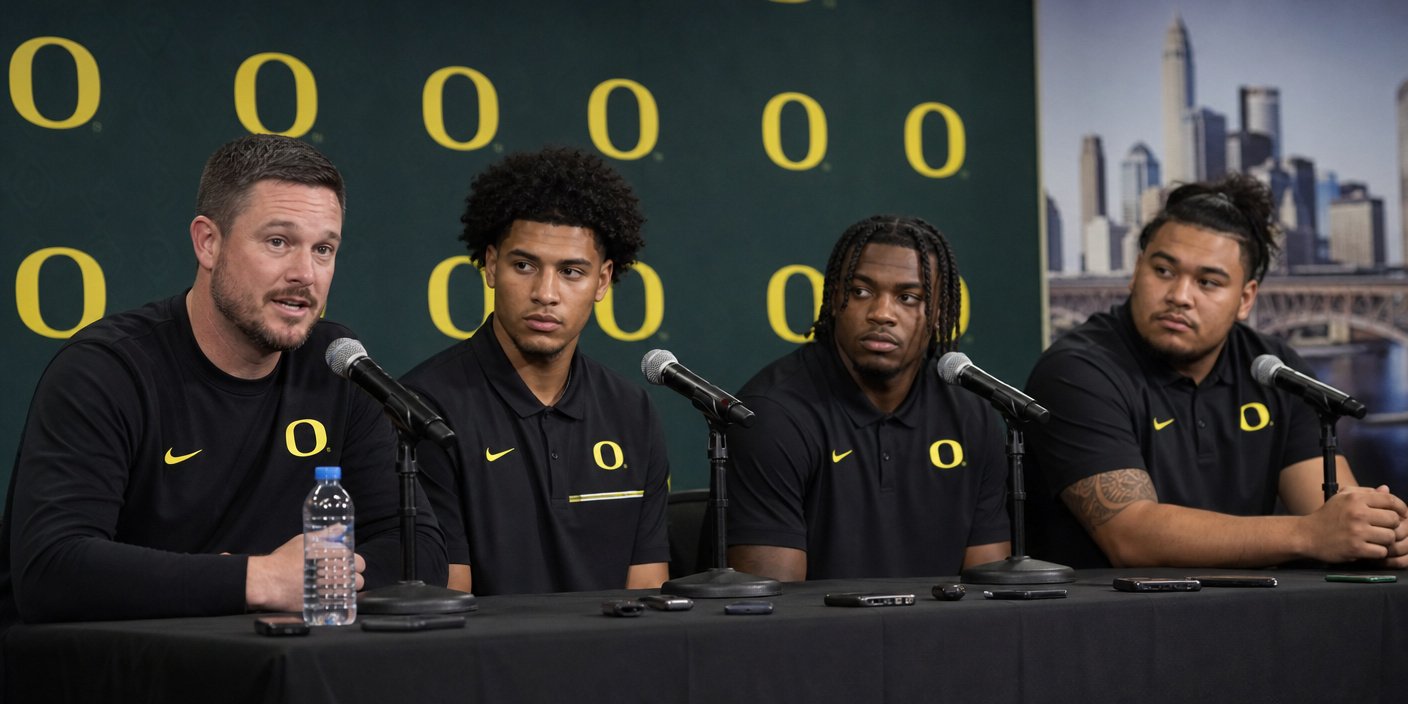
As the 2026 football season rapidly approaches, the University of Oregon is prepared to make its definitive mark on the Big Ten Conference. Head coach Dan Lanning is set to lead a high-profile contingent of Ducks to Chicago for the Big Ten Media Days, an event serving as the official kickoff for a new era of collegiate competition. With the event proceedings commencing on July 28, the Ducks are scheduled to take the stage on Wednesday, July 29, representing a critical moment for the program as it integrates into its new conference landscape.
Key Highlights
- Event Dates: Big Ten Media Days officially begin on July 28, 2026, in Chicago, Illinois.
- Oregon Spotlight: The Oregon Ducks are scheduled to address the media and analysts on Wednesday, July 29.
- Core Delegation: Head coach Dan Lanning will be joined by marquee players Dante Moore, Jamari Johnson, and Teitum Tuioti.
- Strategic Significance: This appearance serves as a high-visibility platform for the program to outline its cultural and competitive expectations within the Big Ten hierarchy.
The Oregon Blueprint: Inside Lanning’s Big Ten Strategy
The arrival of the Oregon Ducks at Big Ten Media Days is far more than a routine press obligation; it is a carefully choreographed assertion of identity. For Dan Lanning, who has meticulously built the Oregon brand around grit, innovation, and rapid-fire offensive schemes, this trip to Chicago represents the culmination of a multi-year transition strategy. The Big Ten, a conference historically synonymous with physicality and defensive rigidity, presents a unique challenge for an Oregon program predicated on speed. Lanning’s presence at the podium on July 29 will be scrutinized not just for what he says, but for the confidence he projects regarding this cultural collision.
Navigating the Cultural Realignment
The move to the Big Ten has sparked endless debate regarding the compatibility of the Ducks’ “West Coast Fast” offensive style against the traditional, trench-warfare approach favored by legacy programs like Ohio State and Michigan. Lanning, known for his defensive background, has effectively spent the offseason ensuring that Oregon’s roster depth mirrors the requirements of a grueling Big Ten schedule. By bringing key personnel to Chicago, Lanning is signaling to the media that the Ducks are not merely participants in this expansion; they are title contenders. The narrative throughout the July 29 presentation will focus heavily on how Oregon plans to maintain its high-scoring identity while absorbing the inevitable physical toll of playing in the Midwest.
Spotlight on the Personnel: Moore, Johnson, and Tuioti
The selection of Dante Moore, Jamari Johnson, and Teitum Tuioti as the player representatives provides a fascinating window into the team’s internal hierarchy and future-proofing. Dante Moore, as a primary signal-caller, carries the weight of the program’s offensive expectations. His ability to articulate the team’s vision during the media circuit will be a litmus test for his leadership maturity. Similarly, the inclusion of Jamari Johnson and Teitum Tuioti highlights the reliance on playmakers who can bridge the gap between skill positions and the front seven. These players are the face of the 2026 roster, and their performance in front of the microphone is just as vital as their performance on the turf. They represent a new generation of Oregon athletes who have been recruited specifically to thrive in the expanded, nationalized landscape of the Big Ten.
The Logistics of the Chicago Stage
Chicago serves as the perfect backdrop for this narrative. As the Big Ten continues to lean into its expanded geography, the choice of Chicago for Media Days reflects the conference’s intent to maintain a central, neutral, and high-visibility footprint. For the Ducks, acclimating to the Midwest—even for a few days—is part of the psychological preparation. Every detail of the July 28-29 schedule is designed to maximize exposure. From the press conference floor to the individual breakout sessions with national beat writers, the Oregon staff is expected to leverage every minute of the July 29 window to cultivate relationships with media members who cover the heartland of the conference.
Secondary Angle: The Economic Impact of the Big Ten Move
The financial implications of Oregon’s entry into the Big Ten cannot be overstated. By participating in this media event, the university is essentially performing a public audit of its investment. The move is expected to significantly increase the program’s share of conference revenue, which in turn fuels the NIL (Name, Image, and Likeness) engine that allows Oregon to compete for top-tier talent nationally. The branding power of the Ducks, combined with the television footprint of the Big Ten, creates a symbiotic relationship that will likely increase the team’s valuation and recruiting reach over the next decade.
Secondary Angle: The Evolution of Recruiting Geography
Historically, Oregon has dominated the West Coast. However, the move to the Big Ten necessitates a paradigm shift in recruiting. By establishing a presence in Chicago, the coaching staff is signaling that the Midwest is now a competitive territory for the Ducks. This media event allows Lanning and his team to court recruits from Illinois, Ohio, and Indiana who might not have considered Oregon in the past. It is an opportunity to prove that Eugene is a viable destination for athletes who previously felt geographically tethered to the traditional “Big Ten footprint.”
Secondary Angle: The Philosophical Shift in Coaching
Under Lanning, Oregon has embraced a modern, data-driven approach to coaching that contrasts sharply with some of the more conservative traditionalists in the Big Ten. This Media Days appearance is a showcase for that philosophy. Analysts will be watching closely to see if Lanning’s demeanor matches the swagger of his team. If he can successfully translate the “Oregon culture”—a blend of Nike-inspired modernism and high-intensity coaching—into the Big Ten’s traditional ethos, the Ducks could force a fundamental rethink of what success looks like in the new era of college football.
FAQ: People Also Ask
Q: What is the primary purpose of Big Ten Media Days?
A: It serves as the official preseason launch event where coaches and selected student-athletes provide insights, predictions, and updates to the media, setting the narrative for the upcoming collegiate football season.
Q: Why are Dante Moore, Jamari Johnson, and Teitum Tuioti attending?
A: These players were selected to represent the team’s core leadership and competitive future, providing the media with access to the key individuals expected to lead the Ducks’ on-field performance in 2026.
Q: How can fans follow the Oregon Ducks’ appearance on July 29?
A: Most of the sessions from Big Ten Media Days are broadcast via the Big Ten Network (BTN) and associated streaming platforms, with live updates available through major sports news outlets and the Big Ten’s official social channels.
Q: What makes this year’s media event unique for Oregon?
A: As part of the ongoing conference realignment, this marks a critical phase in Oregon’s integration into the Big Ten, making it a high-stakes moment for the program’s branding and regional credibility.