On July 18, 2026, the Cascade Head UNESCO Biosphere Reserve marked a half-century of ecological stewardship on the Oregon Coast. While many conservation sites rely heavily on federal fiscal support to maintain operations, Cascade Head has carved a unique path, operating entirely independently of federal financial or political backing. Since a strategic expansion in 2017, the reserve has proven that localized, community-driven conservation can not only survive but thrive in an era of tightening environmental budgets. By focusing on critical salmon habitat restoration and the promotion of sustainable livelihoods, the reserve has become a global case study for independent ecological governance.
- 50-Year Milestone: The reserve officially celebrated its golden anniversary on July 18, 2026, highlighting a long-standing commitment to the Salmon Drift Creek Watershed.
- Financial Autonomy: Operations remain resilient despite the complete absence of federal financial or political support, relying on private, non-profit, and community partnerships.
- Strategic Expansion: Since 2017, the reserve has significantly increased its footprint and operational scope, strengthening its capacity for biological research and habitat protection.
- Core Objectives: The reserve’s primary mission centers on the restoration of salmon populations and the integration of sustainable livelihoods for local Oregon coastal communities.
The Evolution of a Coastal Sanctuary: Five Decades of Resilience
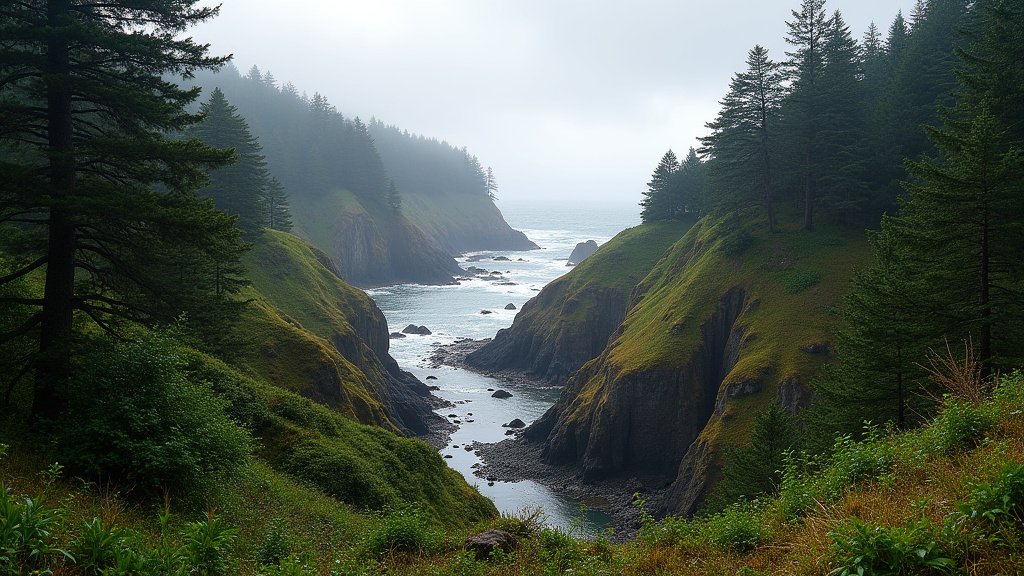
The history of the Cascade Head UNESCO Biosphere Reserve is a testament to the power of regional collaboration. Established in 1976, the reserve was designated as part of UNESCO’s Man and the Biosphere Programme, designed to demonstrate a balanced relationship between humans and nature. For fifty years, this area—characterized by its rugged headlands, tidal estuaries, and old-growth forests—has served as a living laboratory for environmental science.
Scaling Up: The 2017 Expansion
A pivotal turning point occurred in 2017, when stakeholders initiated a significant expansion of the reserve’s operational framework. While many similar organizations might have sought federal grants to facilitate such growth, the leadership at Cascade Head leaned into a decentralized, private-sector-funded model. This pivot allowed the reserve to acquire additional land rights and forge stronger ties with The Nature Conservancy and local coastal stakeholders. The expansion was not merely about increasing acreage; it was about increasing the capacity to manage the Salmon Drift Creek Watershed, a critical artery for the region’s biodiversity.
The Salmon-Centric Conservation Strategy
At the heart of the reserve’s ecological mandate is the protection of salmon. The Salmon Drift Creek Watershed is a vital nursery for several species of Pacific salmon, which are currently facing immense climate-related pressures across the Pacific Northwest. By removing man-made barriers to fish passage and restoring natural stream morphology, the reserve has seen measurable improvements in juvenile salmon survival rates. This work is conducted without federal oversight, allowing researchers to implement adaptive management strategies that respond in real-time to seasonal environmental changes—a level of agility that federal bureaucracies often struggle to replicate.
Integrating Sustainable Livelihoods
One of the defining features of a UNESCO Biosphere Reserve is the ‘development’ function—ensuring that conservation benefits the people who live there. Cascade Head has successfully integrated sustainable forestry, low-impact tourism, and traditional fishing practices into its core management plan. By working closely with partners such as the Confederated Tribes of Siletz Indians, the reserve has ensured that the protection of the headlands supports economic stability for local communities. This synergy between economy and ecology serves as a blueprint for other regions struggling with the tension between resource extraction and habitat preservation.
Financial Independence as a Strategic Advantage
The absence of federal backing, once seen as a vulnerability, has become the reserve’s greatest strategic asset. Without the volatility of federal budget cycles or the shifting political priorities of changing administrations, the Cascade Head Biosphere has cultivated long-term, stable funding through private endowments, philanthropic donations, and regional sustainable business levies. This independence has fostered a ‘long-game’ mentality. Projects at the reserve are planned in decadal increments rather than fiscal year quarters, allowing for the deep, slow work of ecological restoration that is often impossible under government-contracted constraints.
Looking Toward the Next Fifty Years
As the reserve enters its second half-century, the challenges are mounting. Climate change, ocean acidification, and increasing coastal population density present significant hurdles. However, the success of the last decade, particularly the post-2017 growth phase, provides a robust template for the future. The reserve plans to double down on its commitment to ‘citizen science,’ engaging more local residents in the monitoring of the forest and river systems. By decentralizing the power of conservation and putting it into the hands of those who live within the shadow of the headlands, Cascade Head is redefining what it means to be a modern environmental steward.
FAQ: People Also Ask
1. Why does the Cascade Head Biosphere Reserve operate without federal funding?
It was a strategic choice made by local stakeholders to ensure long-term stability. Federal funding is often subject to political shifts and annual budget uncertainty, whereas a private, community-backed model allows for stable, long-term conservation planning.
2. What is the main goal of the UNESCO biosphere program?
UNESCO’s program aims to reconcile the conservation of biological and cultural diversity with economic and social development. It creates ‘living laboratories’ where sustainable development can be tested and replicated globally.
3. How has the reserve expanded since 2017?
Since 2017, the reserve has focused on securing private and non-profit partnerships to increase protected acreage and enhance the management of the Salmon Drift Creek Watershed, prioritizing biodiversity corridors over mere land ownership.
4. Can visitors explore the Cascade Head Biosphere Reserve?
Yes, the area includes public trails and access points. However, visitors are expected to adhere to strict ‘leave no trace’ guidelines, as the area remains a protected research site managed for delicate ecological balance.