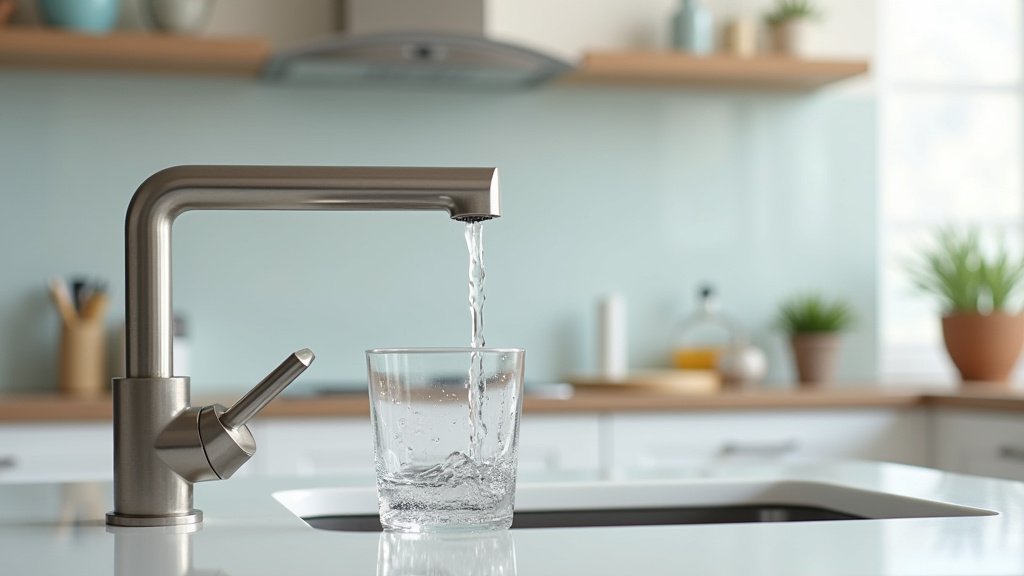
Gresham city officials held a virtual town hall to address ongoing resident concerns regarding the taste and smell of the municipal water supply, which switched entirely to groundwater this spring. Officials clarified that while chlorine-related odors should dissipate as the system stabilizes, the increased hardness of the water is a permanent feature of the new system, marking a significant change in the local utility landscape.
Key Highlights
- Infrastructure Pivot: The City of Gresham has fully transitioned its primary water source to a groundwater-based system as of this spring.
- Temporary Odors: The noticeable chlorine taste and smell reported by many residents are attributed to the adjustment phase and are expected to fade.
- Permanent Hardness: The higher mineral content, specifically calcium and magnesium, is a permanent characteristic of the new groundwater source.
- Virtual Dialogue: City officials hosted a town hall to manage public expectations and explain the reasoning behind the infrastructure shift.
Understanding the Transition to Groundwater
The recent transition in Gresham’s water supply represents a fundamental shift in how the city manages its most vital utility. For years, many residents may have become accustomed to the specific chemical and mineral profile of surface water—often treated with different levels of infrastructure complexity. The move to groundwater is typically driven by long-term strategic goals, including climate resilience, drought protection, and overall water security. Groundwater is generally more insulated from environmental contamination and surface-level weather fluctuations than open reservoirs, making it a reliable backbone for a growing municipality. However, this reliability comes with a different chemical signature that citizens are currently navigating.
The Science of the ‘Chlorine’ Issue
Many residents have flagged a metallic or chemical odor—identified as chlorine—since the switch. It is important to distinguish between water safety and sensory perception. Chlorine is a critical disinfectant used by water utilities to eliminate pathogens and bacteria throughout the distribution network. When a system switches sources, the utility often recalibrates the chemical dosing to ensure residual chlorine levels remain consistent across the pipe network.
During the initial transition, the chemical interaction between the new groundwater composition and the legacy infrastructure (the pipes themselves) can lead to temporary sensory spikes. City officials have emphasized that this is a transitional phase. As the system ‘settles’ and the water stabilizes within the plumbing network, the concentration of chlorine detectable by human senses should return to baseline levels. This is not a failure of the system, but rather an artifact of the adaptation process.
The Reality of ‘Hard Water’
While the chlorine smell is transient, the ‘hardness’ of the water is not. Groundwater naturally accumulates minerals such as calcium and magnesium as it filters through rock and soil layers over time. This mineral content is what defines ‘hard water.’ Unlike chlorine, which can be managed through evaporation or filtration, mineral content is intrinsic to the source itself.
This shift has practical implications for Gresham households. Hard water can reduce the efficiency of soaps and detergents, often requiring higher quantities of soap to achieve a lather. Additionally, the buildup of mineral scale (calcium carbonate) on fixtures, inside water heaters, and within dishwashers is a common byproduct. While this does not pose a health risk—in fact, many argue the minerals provide better flavor and nutritional value—it does change the daily maintenance requirements for household appliances. Residents are encouraged to adjust their detergent usage and consider descaling routines for their appliances to accommodate this permanent change.
Secondary Angles: Infrastructure, Economics, and Perception
To understand the broader context of Gresham’s water strategy, it is essential to look beyond the immediate complaints. First, there is the angle of Infrastructure Resilience. Groundwater sources act as a critical hedge against climate-induced drought. While surface water reservoirs are vulnerable to evaporation and reduced snowpack, groundwater aquifers provide a steady, reliable supply, securing the city’s future capacity.
Second, consider the Economic Impact. While the city may save on long-term surface treatment costs, residents may face increased costs related to water softening or descaling agents. This is a subtle shift in the municipal tax vs. private maintenance burden equation.
Finally, the Psychology of Utility Perception is at play. Water is a highly sensory product. Even when a change is chemically safe and operationally superior, any alteration in taste or smell triggers an immediate protective response in the public. The city’s proactive virtual town hall demonstrates a modern approach to ‘Radical Transparency,’ attempting to bridge the gap between technical water management and public comfort.
FAQ: People Also Ask
Is the ‘hard’ water safe to drink?
Yes. Hard water is perfectly safe for consumption and is actually rich in essential minerals like calcium and magnesium. It poses no health risks to the general population.
Why does the water taste different?
Groundwater has a different mineral profile than surface water. Additionally, the ‘chlorine’ taste is a temporary side effect of the system adjustment period as the utility ensures proper disinfection during the transition.
Will the chlorine smell go away forever?
While chlorine will always be present in treated water for safety reasons, the heightened odor that residents currently notice is temporary. As the water settles in the city’s pipe network, these sensory spikes will dissipate.
Do I need to buy a water softener?
It depends on personal preference. While not required for safety, some residents prefer a water softener to reduce mineral buildup on fixtures and improve soap lathering, especially in areas with high water hardness.