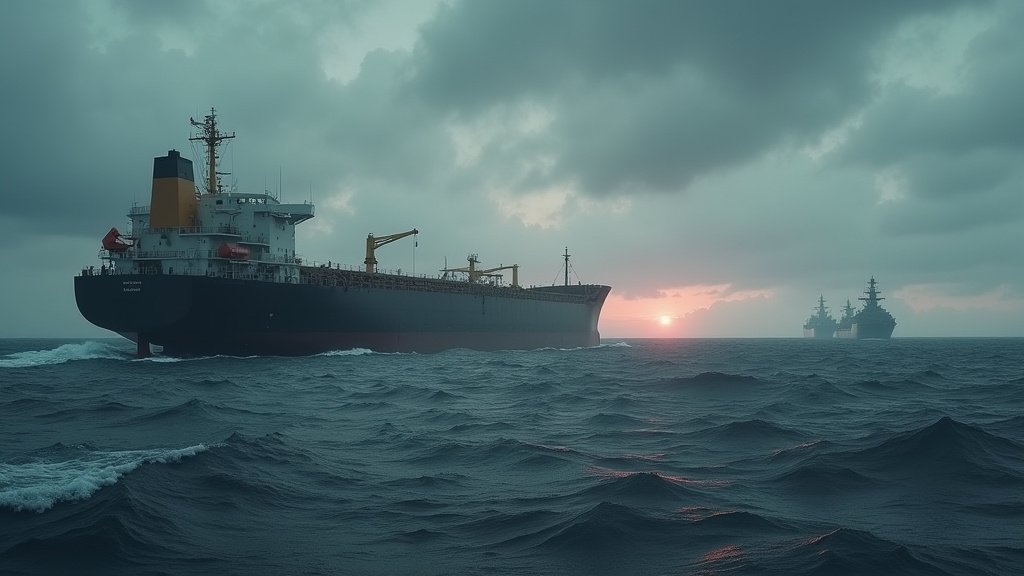
Tensions Flare as US Resumes Iranian Port Blockade and Threatens Wider Strikes
President Donald Trump announced Tuesday the reimposition of a naval blockade on all Iranian ports, coupled with a stern warning of expanded military strikes targeting power plants and bridges. This aggressive stance signals a significant escalation in the ongoing conflict between the United States and Iran, particularly concerning the strategic Strait of Hormuz. The U.S. military has also initiated a new wave of strikes aimed at degrading Iran’s capabilities used against commercial shipping. These actions intensify fears of a return to widespread conflict after a fragile truce in June showed signs of unraveling. The Strait of Hormuz, a vital chokepoint for global energy supplies, has seen significant disruption, leading to a sharp rise in oil prices.
Key Highlights
- Naval Blockade Reinstated: The U.S. reimposed a naval blockade of all Iranian ports, effective at 20:00 GMT on Tuesday, after it had been lifted in June.
- Threat of Expanded Strikes: President Trump warned of targeting Iranian power plants and bridges next week if negotiations do not resume.
- Escalating Hostilities: The U.S. military launched fresh strikes to counter Iranian capabilities used against commercial shipping in the Strait of Hormuz.
- Economic Impact: Oil prices have surged, with Brent crude rising 15% in seven days to $85 a barrel, the highest since mid-June, due to the escalating tensions.
- Iranian Response: Iran stated that the U.S. is mistaken if it believes these actions will lead to renewed negotiations, and claimed to have launched drone attacks against U.S. positions in Jordan.
Escalation in the Strait of Hormuz: A Strategic Impasse
The reimposition of the naval blockade by the U.S. marks a significant pivot in the escalating conflict, which has seen a fragile truce fray following months of fighting. The blockade, which was lifted in June, is now back in effect, effectively restricting vessels transiting to and from Iranian ports. The U.S. military has confirmed a series of strikes aimed at degrading Iran’s capacity to threaten commercial shipping. Admiral Brad Cooper, head of U.S. Central Command (CENTCOM), stated that “US forces are holding Iran accountable for unwarranted aggression that continues to endanger innocent lives.” CENTCOM also reported that Iran had attacked seven commercial ships in the past week, resulting in nearly a dozen crew members killed, injured, or missing.
Trump’s Ultimatum and Potential Consequences
President Trump’s rhetoric underscores a hardening U.S. stance, with explicit threats to target Iran’s critical infrastructure. “Next week comes the power plants, next week comes the bridges,” Trump declared, warning that these actions would occur “unless they get to the table and negotiate.” This threat has drawn comparisons to the 1949 Geneva Conventions, which prohibit attacks on sites essential for civilian life. The U.S. has positioned over 20 warships and hundreds of military aircraft in the region, signaling a robust military posture. Iran’s Deputy Foreign Minister, Kazem Gharibabadi, countered that the U.S. is making a mistake if it expects a return to negotiations through increased pressure.
Economic Repercussions and Global Oil Markets
The heightened conflict has sent ripples through global energy markets. The price of benchmark Brent crude oil has climbed 15% over the preceding seven days, reaching $85 a barrel, its highest point since mid-June. This price surge is a direct consequence of the disruption to shipping through the Strait of Hormuz, a waterway through which approximately a fifth of global oil and gas shipments once passed daily before the conflict intensified. The economic impact is also felt domestically in the U.S., where rising gasoline prices are becoming a political concern with congressional elections looming in November.
Iranian Retaliation and Regional Instability
In response to the U.S. actions, Iran has claimed to have launched drone attacks against U.S. positions at Jordan’s Azraq base, and its Islamic Revolutionary Guard Corps reportedly targeted facilities in Bahrain and Kuwait. While these reports could not be immediately verified independently, they indicate a potential for wider regional involvement and further destabilization. The ongoing hostilities have cast doubt on a memorandum of understanding signed in June, which was intended to lead to a permanent cessation of hostilities and restore stability to a region already impacted by months of fighting.
Historical Context: The Strait of Hormuz in Geopolitics
The Strait of Hormuz has long been a critical and contentious waterway. Its strategic importance as a narrow passage between the Persian Gulf and the Gulf of Oman means that any disruption there has immediate and far-reaching consequences for global trade, particularly for oil and gas. The U.S. has historically played a significant role in ensuring freedom of navigation through the strait, while Iran has periodically used its strategic location to exert influence or retaliate against perceived threats. The current escalation represents a dangerous resurgence of these long-standing geopolitical dynamics, with potentially severe implications for regional and global security.
FAQ: People Also Ask
What are the primary objectives of the U.S. naval blockade on Iranian ports?
The primary objective of the U.S. naval blockade is to degrade Iran’s capabilities used to attack commercial shipping and to pressure Tehran to return to negotiations, as stated by President Trump.
What specific infrastructure has President Trump threatened to strike in Iran?
President Trump has threatened to strike Iranian power plants and bridges next week if negotiations do not resume.
How has the conflict impacted global oil prices?
The escalating tensions and disruptions in the Strait of Hormuz have caused oil prices to rise sharply. Brent crude has increased by 15% in seven days to $85 a barrel, the highest since mid-June.
What is the strategic significance of the Strait of Hormuz?
The Strait of Hormuz is a vital maritime chokepoint, through which approximately a fifth of the world’s oil and gas shipments passed daily before recent escalations. Its control is crucial for global energy security.
What has been Iran’s response to the U.S. actions?
Iran has stated that the U.S. is mistaken in its approach and will not yield to pressure, and has claimed to have launched drone attacks against U.S. positions in neighboring countries.