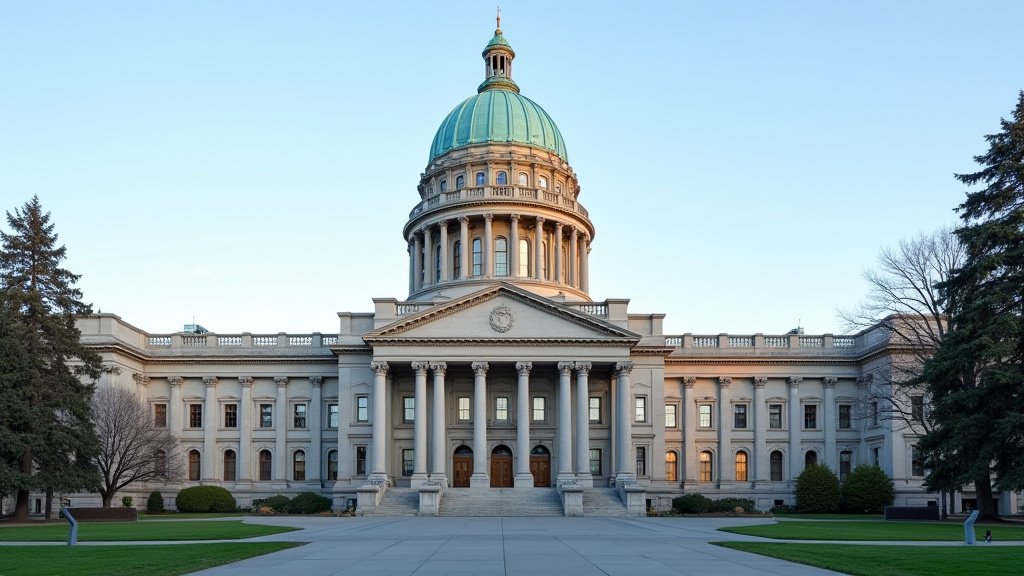
Between 2020 and 2025, the Oregon State Legislature experienced a period of unprecedented turnover. A collaborative study conducted by the Center for Tech and Civic Life and the Institute for Responsive Government has quantified this trend, revealing that 30% of Oregon’s state lawmakers vacated their seats prematurely during this five-year window. This statistic places Oregon second in the nation for legislative departures, trailing only Arizona. As the state grapples with these high turnover rates, political analysts and civic researchers are examining the long-term impact on governance, the mechanics of appointment-based replacements, and the resulting shift in the demographic composition of the capitol.
The Mechanics of the Legislative Revolving Door
The phenomenon of early departure from state legislative bodies is often attributed to a confluence of factors, including term limits, political burnout, career transitions, and the increasing polarization of state politics. In Oregon, the 30% vacancy rate represents a significant portion of the legislative body, essentially replacing nearly a third of the chamber’s occupants within a single half-decade cycle. This level of flux raises critical questions regarding institutional memory—the collective knowledge, procedural expertise, and historical context required to manage complex legislative processes effectively.
When a seat is vacated mid-term in Oregon, the process for filling the vacancy often relies on an appointment mechanism, typically managed by county commissioners representing the district in question. Unlike systems that mandate special elections, this appointment-based model allows for rapid filling of seats but bypasses the traditional voter-led process. The study from the Center for Tech and Civic Life and the Institute for Responsive Government underscores that this specific mechanism has acted as a primary driver for recent demographic shifts within the legislature.
Analyzing Demographic Shifts and Representation
One of the most compelling findings of the research is the intersection of these vacancies with the identity of the appointees. The study found that these midterm vacancies frequently resulted in the appointment of women or people of color to the legislature. This suggests that the appointment process—often influenced by party leadership and local political committees—may be serving as a significant pipeline for diversifying the statehouse. While the turnover itself is disruptive to legislative continuity, the replacement process has demonstrably altered the makeup of the legislature, providing pathways for underrepresented groups to gain experience and influence that might otherwise be harder to achieve through the traditional electoral primary system.
However, this diversification comes with a caveat: appointed incumbents face the challenge of establishing their own electoral mandate in the next full election cycle. The study prompts a discussion on whether these appointments create a ‘bridge’ to long-term representation or if they reflect temporary measures in a volatile political environment.
National Context: Why Arizona and Oregon?
To understand Oregon’s position as the state with the second-highest rate of lawmaker turnover, one must look at the national landscape. Arizona, which leads the country in this metric, shares characteristics with Oregon regarding the frequency of mid-term departures. Both states have faced significant political pressure in recent years, ranging from intense partisan friction to the external stressors of pandemic-era governance and shifting state-level economic policies.
Research indicates that high turnover states often share a commonality in their legislative culture—one where the legislative role is increasingly viewed as either a stepping stone to higher office or a high-pressure environment that is difficult to sustain. For Oregon, this 30% figure is a data point that underscores a broader shift in how state politics are conducted, moving away from the ‘career legislator’ model of previous decades toward a more fluid, transient system of service.
Future Implications for Governance
The implications of a 30% turnover rate are multifaceted. First, from an administrative standpoint, frequent transitions require significant onboarding, committee reshuffling, and leadership realignment, which can slow down the legislative calendar. Second, from an advocacy standpoint, lobbyists and interest groups must constantly cultivate new relationships, potentially leading to a more unstable policy environment.
As the Institute for Responsive Government continues to track these trends, the challenge for Oregon will be to reconcile the need for legislative stability with the benefits of a more representative and diverse body. If the trend of early departures persists, the state may need to revisit its appointment and succession protocols to ensure that the legislative body remains both responsive to the public and capable of maintaining the depth of experience necessary for effective governance. The findings serve as a wake-up call for stakeholders, suggesting that the era of legislative stability may be a thing of the past, replaced by a new, more dynamic, and arguably more volatile, reality.
FAQ: People Also Ask
1. What does a 30% vacancy rate mean for the Oregon State Legislature?
It means that between 2020 and 2025, nearly one-third of the legislative seats saw a change in occupant mid-term. This high turnover impacts institutional memory and requires frequent leadership adjustments within the statehouse.
2. Why are women and people of color being appointed to these seats?
The appointment process, which is often managed by local county commissions following a vacancy, has become a key pathway for diversification. Political parties and committees have utilized these vacancies to appoint diverse candidates, effectively bypassing some of the hurdles often associated with the traditional, long-term electoral primary process.
3. How does Oregon compare to other states?
Oregon ranks second in the nation for the rate of lawmaker turnover. Arizona currently holds the highest rate in the country, according to the collaborative study by the Center for Tech and Civic Life and the Institute for Responsive Government.
4. Is the appointment process common for replacing lawmakers?
Yes, in many states, including Oregon, legislative vacancies are filled through an appointment process rather than an immediate special election. While this ensures the seat is occupied quickly, it places significant authority in the hands of the appointing bodies, usually local political committees or county commissioners.