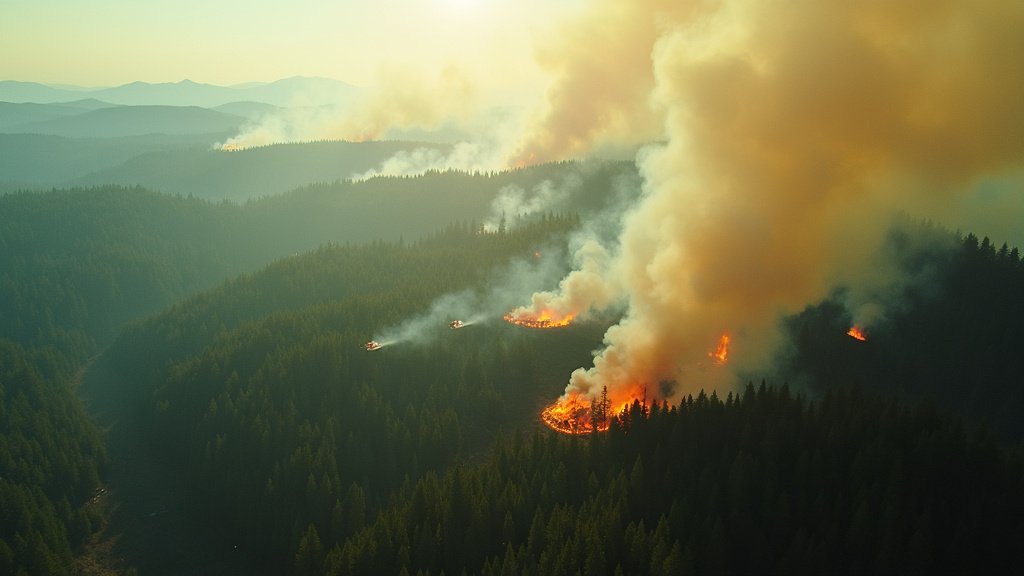
Oregon Fire Season 2025: A Success Story of Preparedness and Rapid Response
The Oregon fire season 2025 concluded as a significant success, demonstrating the effectiveness of the state’s fire management strategies for the Oregon wildfire season. Despite an increase in fire ignitions, the total acreage burned was dramatically reduced. This achievement is a testament to proactive planning, swift resource deployment, the dedication of firefighters, and opportune cooler, wetter autumn weather, marking a win for Oregon fire season preparedness.
Oregon Fire Season 2025: Key Statistics and Achievements in Fire Management Oregon
Official data from the Northwest Interagency Coordination Center (NWCC) reported 2,569 fires across Oregon as of October 16, 2025, consuming approximately 288,774 acres. This stands in stark contrast to the 2024 season, which saw nearly 1.9 million acres lost. Even with a slight rise in fire starts on lands managed by the Oregon Department of Forestry (ODF), early and decisive containment prevented widespread devastation, making the Oregon fire season 2025 a prime example of effective wildfire mitigation and reduced wildfire acreage.
Proactive Measures and Dedicated Crews Defined the Oregon Fire Season 2025
Oregon Department of Forestry (ODF) officials emphasized the critical role of their firefighting teams in successfully managing a higher number of ignitions during the Oregon fire season 2025. Michael Curran, ODF Fire Protection Division Chief, noted that an impressive 94 percent of fires on ODF-protected lands were contained at 10 acres or less. This highlights the efficacy of rapid response firefighting protocols in preventing small incidents from escalating into large-scale disasters and is a key aspect of ODF fire protection.
ODF spokeswoman Jessica Neujahr attributed this success to the unwavering commitment and hard work of Oregon’s firefighting personnel. By anticipating fire danger levels that could have mirrored those of 2024, ODF teams adopted a vigilant approach, prioritizing immediate action on every new ignition. This aggressive initial attack was a cornerstone of the Oregon fire season 2025, contributing to effective fire management Oregon.
Governor Tina Kotek’s proactive invocation of the Emergency Conflagration Act on eight occasions also proved crucial in expediting the mobilization of vital firefighters and resources to combat emerging blazes effectively during this critical Oregon fire season.
Key Strategies for Containing Wildfires in Oregon
The positive outcomes of the Oregon fire season 2025 are directly attributable to several critical strategies implemented by the ODF and its collaborating agencies:
- Aggressive Initial Attack: Every ignition was treated with the utmost urgency, ensuring fires were suppressed before they had the chance to spread significantly. This is a vital part of wildfire preparedness.
- Rapid Resource Deployment: Firefighting crews, specialized equipment, and essential resources were quickly dispatched to the sites of new fires, showcasing the importance of rapid response firefighting.
- Dedicated Firefighting Efforts: The skill, perseverance, and dedication of Oregon’s firefighters were instrumental in achieving successful containment throughout the Oregon fire season.
- Strategic Preparedness: Anticipating potentially high fire danger fostered a more vigilant, well-resourced, and responsive operational posture for the Oregon fire season 2025.
Favorable Weather Conditions Bolstered the Oregon Fire Season 2025’s Success
While early forecasts for 2025 suggested a potentially severe fire season, echoing the intensity of 2024, a significant shift in weather patterns proved to be a crucial mitigating factor for the Oregon fire season 2025. Timely mid-season rains and the consistent arrival of autumn weather, marked by cooler temperatures and shorter daylight hours, effectively dampened fuels and reduced the overall fire risk across the state. The beneficial impact of fall weather wildfire conditions was undeniable for the Oregon fire season.
Natalie Weber, a spokesperson for the Southwest Oregon District, highlighted the welcome absence of the early summer heatwaves that had intensified conditions in prior years, noting that this contributed to slower fire growth. Widespread rainfall experienced throughout various districts ultimately allowed for more effective suppression and a significantly reduced impact from wildfires during the Oregon fire season 2025, contributing to better fire season statistics.
The success of the Oregon fire season 2025 serves as a powerful reminder of the ongoing importance of continued investment in wildfire preparedness, advanced firefighting technologies, and robust public education campaigns to ensure the safety and resilience of Oregon communities against the persistent threat of the Oregon wildfire season.