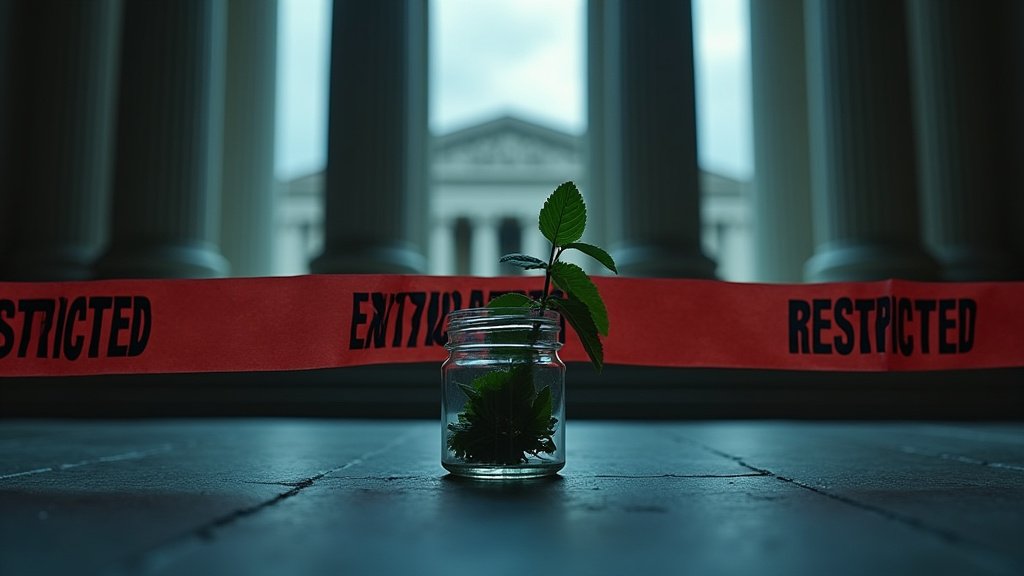
In a direct legislative challenge to the Trump administration’s recent push for cannabis reform, a GOP-led House appropriations subcommittee has advanced a fiscal spending bill that includes a provision to block the federal rescheduling of marijuana. The 8-6 party-line vote by the House Appropriations Subcommittee on Commerce, Justice, Science, and Related Agencies (CJS) on Thursday creates a significant hurdle for the administration’s stated goals, setting the stage for a high-stakes standoff between executive policy and congressional spending authority.
Key Highlights
- Legislative Blockade: The subcommittee advanced a Fiscal Year 2027 spending bill containing Section 591, which prohibits federal funds from being used to reschedule or deschedule marijuana under the Controlled Substances Act.
- Executive Conflict: The vote directly contradicts the Trump administration’s ongoing efforts to transition cannabis to Schedule III, creating a rift within the Republican party.
- The ‘Power of the Purse’: By targeting the Department of Justice’s budget, the committee is attempting to freeze the administrative process, effectively using the power of the purse to override executive policy.
- Ongoing Uncertainty: While the provision must still pass the full House Appropriations Committee, the full House, and the Senate, the move signals a growing resistance among conservative lawmakers to the modernization of federal drug laws.
The Legislative Showdown Over Federal Cannabis Policy
The move by the House Appropriations Subcommittee on CJS represents a tactical escalation in the long-standing debate over federal marijuana classification. For years, the conversation surrounding the Controlled Substances Act (CSA) and its classification of marijuana has been dominated by administrative law and executive branch directives. However, the introduction of Section 591 marks a shift toward aggressive congressional intervention, aiming to effectively neuter the executive branch’s ability to alter the scheduling of cannabis products.
The Mechanics of the Funding Rider
At the heart of this conflict is Section 591, a legislative rider that explicitly states: “None of the funds appropriated or otherwise made available by this Act may be used to reschedule marijuana (as such term is defined in section 102 of the Controlled Substances Act) or to remove marijuana from the schedules established under section 202 of the Controlled Substances Act.”
This is a classic “power of the purse” strategy. By tying the prohibition to the Department of Justice’s appropriations bill, the subcommittee is attempting to force the administration’s hand. Even if the Department of Justice, under the current administration, desires to move forward with the administrative rescheduling process, this rider—if enacted into law—would provide no funding to conduct the necessary administrative actions, hearings, or policy updates required to effectuate that change.
A Divided GOP: Trump vs. The Legislative Hardliners
Perhaps the most compelling aspect of this development is the public divide it exposes within the Republican Party. President Donald Trump has, over the past year, signaled his support for marijuana rescheduling as part of a broader political strategy to appeal to younger voters and broaden the GOP coalition. In contrast, key members of the House Appropriations Committee remain entrenched in a traditionalist, prohibitionist stance.
This “rebellion” is not merely procedural; it is ideological. Lawmakers who support the rider argue that rescheduling marijuana, even to Schedule III, would be a tacit endorsement of widespread drug use, potentially creating health crises and social instability. They view the administration’s overtures toward cannabis reform as a strategic error that could alienate conservative voters and weaken the party’s platform on law and order. Conversely, the administration and its allies view rescheduling as a pragmatic, economically sound policy decision that aligns with the realities of modern state-level cannabis markets.
The Impact on State-Federal Relations
Crucially, while this bill aims to block rescheduling, it does not explicitly threaten the existing riders that protect state-legal medical marijuana programs from federal interference—a distinction that some analysts note may be a political olive branch to moderate Republicans. However, the inconsistency of a federal policy that protects state programs while simultaneously preventing the federal government from acknowledging the medical or scientific reality of cannabis at the federal level creates a chaotic legal environment.
For the cannabis industry, this creates a state of perpetual limbo. Businesses that have invested heavily in anticipation of Schedule III tax benefits (specifically regarding 280E) and banking reforms are now forced to factor in the possibility that Congress could effectively stall or reverse the federal progress entirely. The economic consequences of this uncertainty are profound, as capital investment in the sector requires regulatory stability that this legislative tug-of-war actively undermines.
Future Implications and Senate Dynamics
The legislation now heads to the full Appropriations Committee. While this is only the first step, the committee’s willingness to advance this language suggests that the resistance to marijuana reform is more organized than some observers previously assumed. The battle will ultimately be determined by the Senate, which historically has held a different, often more moderate view on cannabis legislation. If the Senate version of the spending bill omits this rider, the stage is set for a contentious conference committee negotiation.
This standoff effectively turns the 2027 fiscal budget into a referendum on the Trump administration’s drug policy. If the President feels strongly enough about his reform agenda, he may eventually face the difficult decision of whether to veto a funding package that includes this rider, or to accept the limitation in exchange for other legislative priorities. As it stands, the GOP-led committee has successfully placed a massive roadblock in front of what seemed to be a fast-track process for cannabis rescheduling.
FAQ: People Also Ask
1. Does this vote immediately stop the rescheduling process?
No. This is a committee-level vote on a draft spending bill. It must pass the full House, clear the Senate, and be signed into law by the President to take effect. However, it signals strong intent and creates significant political pressure against the administration.
2. What is Schedule III in the context of marijuana?
Moving marijuana to Schedule III under the Controlled Substances Act would acknowledge that it has a recognized medical use and a lower potential for abuse than Schedule I drugs (like heroin). This would also provide relief for the cannabis industry from the restrictive tax code known as 280E.
3. Why are some GOP lawmakers defying President Trump on this issue?
Many conservative lawmakers prioritize traditional drug policy stances, fearing that rescheduling will normalize cannabis use and lead to social ills, particularly among youth. They view the political potential of courting younger voters as secondary to the public health and “law and order” concerns associated with marijuana legalization or rescheduling.
4. Will this affect state-legal medical marijuana programs?
For now, the spending bill maintains existing protections for state-legal medical marijuana programs. The current legislative rider specifically targets the federal rescheduling process itself, rather than the existence of state-sanctioned medical operations, though the legal friction between federal and state levels continues to intensify.