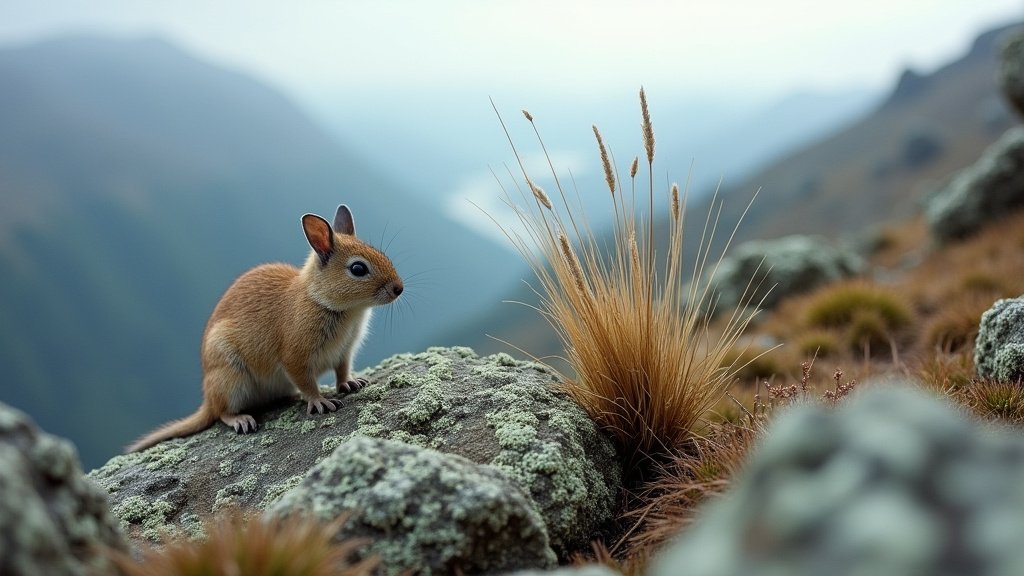
The Oregon Zoo has officially launched its recruitment drive for the “Cascades Pika Watch,” a vital community science program aimed at tracking one of the Pacific Northwest’s most elusive and adorable residents: the American pika. As global climate patterns shift, these potato-sized members of the rabbit family—famous for their distinct, squeak-toy alarm calls—have become central figures in local conservation efforts. By enlisting hikers and nature enthusiasts to conduct “sitting surveys,” the zoo is gathering critical environmental data that helps land managers and scientists understand how climate change is reshaping the unique ecosystems of the Columbia River Gorge.
Key Highlights
- Volunteer Recruitment: The Oregon Zoo is currently seeking community scientists to assist with the Cascades Pika Watch program.
- Climate Indicators: American pikas are highly sensitive to temperature fluctuations, making them an essential “sentinel species” for monitoring climate change impacts.
- Scientific Methodology: Volunteers are trained to perform “sitting surveys” on public trails, documenting pika presence, vocalizations, and habitat characteristics.
- Data-Driven Conservation: Findings from this program are integrated into broader regional ecosystem management, including the Columbia Gorge Commission’s Vital Sign Indicators.
- Accessibility: The program offers both in-person and virtual training sessions in May, making scientific fieldwork accessible to the general public.
Protecting the Pika: Community Science and Climate Resilience
For most hikers traversing the rocky slopes of the Columbia River Gorge, the American pika (Ochotona princeps) is a hidden treasure. Often heard before they are seen, these small, round-eared mammals are famously difficult to spot, usually blending perfectly into the talus slopes and boulder fields they call home. However, the Oregon Zoo’s Cascades Pika Watch initiative is changing that narrative, turning everyday recreational hikers into data-gathering assets for the scientific community.
The “Canary in the Coal Mine” for the Cascades
Why invest so much energy into finding a creature the size of a potato? The answer lies in the pika’s physiology and habitat requirements. Unlike many other mammals that migrate or hibernate to cope with seasonal extremes, American pikas are distinctively adapted to cool, alpine-like environments. They rely on the thermal buffering provided by deep boulder fields to regulate their body temperature.
Dr. Johanna Varner, a scientific advisor for the Cascades Pika Watch, has long emphasized that the Columbia River Gorge represents the lowest elevation where this species is found. This makes the Gorge population particularly unusual and, consequently, particularly vulnerable. As temperatures in the Pacific Northwest continue to trend upward, the pika’s “comfort zone”—a narrow band of temperate conditions—is shrinking. By monitoring these populations, researchers can gain an early warning system for ecological shifts that might affect the wider region. They are, in many ways, the canary in the coal mine for the high-altitude ecosystem.
Methodology: The Art of the Sitting Survey
The efficacy of the Cascades Pika Watch lies in its simplicity. The program removes the barrier to entry for high-level ecological research, allowing anyone with a passion for the outdoors to contribute. Volunteers do not need specialized degrees in biology or zoology to participate; instead, they are provided with comprehensive training on how to identify pikas by sight and sound.
Central to this data collection is the “sitting survey.” Volunteers hike to designated talus slopes and, quite literally, sit. They remain stationary for approximately 20 minutes, scanning the boulders for movement and listening for the pika’s signature squeak—a sharp, distinct sound that often alerts predators and researchers alike to their presence. This method is highly effective because it minimizes human disturbance, allowing the shy, elusive pikas to emerge from their rocky dens and go about their daily routines of foraging and caching vegetation for the winter.
Beyond the Cute Factor: Real-World Impact
The data generated by these volunteers is not merely academic; it has real-world consequences for land management. The Columbia Gorge Commission utilizes the information logged by Pika Watch participants to inform the Vital Sign Indicators program, which tracks the overall health of the Gorge ecosystem.
Perhaps the most compelling evidence of the program’s success is its history with the Eagle Creek Fire. Following the catastrophic 2017 wildfire, there was significant concern about the status of the local pika population. Volunteers fanned out across the affected burn areas, conducting surveys that documented the population’s remarkable resilience and recovery. This data provided scientists with insights into habitat suitability post-fire, proving that community-led initiatives can be as precise and effective as professional field studies when implemented with proper training and rigor.
Engaging with the Future of Conservation
As the program looks toward the upcoming season, the scope of the surveillance is expanding. This year, volunteers will focus on monitoring sites at the edges of the pika’s core habitat, particularly where the Gorge transitions into the drier, eastern rain shadow of the Cascades. By focusing on these ecotones—or boundary zones—researchers hope to observe whether pika populations are retracting, shifting, or adapting to the new climate reality.
Participation in the Cascades Pika Watch offers a unique blend of outdoor recreation and meaningful civic contribution. It transforms a standard weekend hike into an act of conservation, bridging the gap between the general public and the scientific community. For those interested in joining the “fluff patrol,” the Oregon Zoo provides free crash courses that detail identification techniques, data logging protocols, and the best practices for minimizing impact on the delicate habitat. These courses are designed to be accessible, with online options available for those unable to attend in-person sessions.
By participating, volunteers contribute to a long-term dataset that transcends individual seasons. As climate change continues to be one of the defining challenges of the 21st century, these local efforts provide the granular, ground-level intelligence that is essential for regional land managers to make informed decisions. It is a reminder that even the smallest, fluffiest creatures can play a massive role in our understanding of planetary health.
FAQ: People Also Ask
Q: Do I need prior scientific experience to join the Pika Watch?
A: No, absolutely not. The Cascades Pika Watch is designed for citizen scientists of all backgrounds. The Oregon Zoo provides all the necessary training, covering how to spot pikas, how to record data, and how to stay safe on the trails.
Q: Are pikas dangerous?
A: Pikas are small, harmless mammals. They are not aggressive toward humans, though they are quite shy and will hide if approached too quickly or if they perceive a threat. The goal is to observe them from a distance using binoculars or your own eyes.
Q: How does the data help with climate change studies?
A: Because pikas are highly sensitive to heat, their presence or absence in specific rocky habitats acts as an indicator of local climate stability. When populations decline or disappear in certain areas, it provides scientists with a warning that the environment may be becoming too hot or arid for cold-adapted species.
Q: What exactly is a “sitting survey”?
A: It is a standard scientific observation technique where a volunteer stays stationary in a specific location for a set amount of time (usually 20 minutes). This minimizes human impact on the wildlife and allows the researcher to observe natural behavior that would otherwise be interrupted by movement.