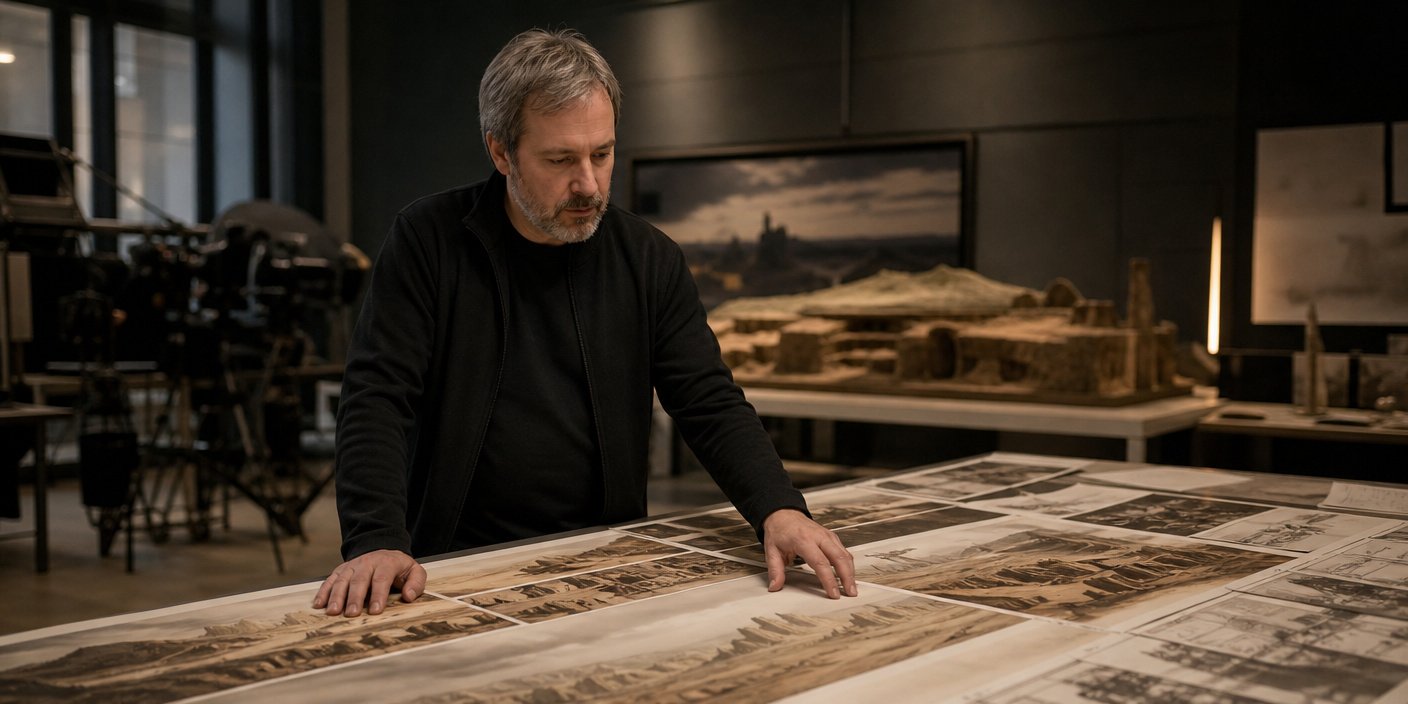
The desert of Arrakis will see one final transformation under the lens of Denis Villeneuve. Warner Bros. and Legendary Entertainment have officially greenlit ‘Dune: Part Three,’ confirming that the ambitious adaptation of Frank Herbert’s sci-fi legacy will conclude as a definitive trilogy. The announcement solidifies Villeneuve’s status as a master of modern science fiction, having successfully navigated the complex narrative architecture of Herbert’s seminal novels where many others in the industry struggled to find footing.
Key Highlights
- Official Greenlight: Warner Bros. and Legendary have formally confirmed the production of ‘Dune: Part Three,’ completing the planned trilogy.
- Director Confirmed: Denis Villeneuve is officially set to return to the director’s chair, ensuring creative continuity for the final chapter.
- Source Material: The film will be based on ‘Dune Messiah,’ the second book in the original series, serving as the thematic and narrative bridge to complete Paul Atreides’ arc.
- Franchise Milestone: The confirmation follows the historic critical and financial success of ‘Dune: Part Two,’ which reset the expectations for intellectual property adaptation in the blockbuster era.
The Final Chapter: Adapting the Weight of Dune Messiah
With the confirmation of ‘Dune: Part Three,’ the industry turns its attention to the specific challenges of adapting Dune Messiah. Unlike the epic, heroic trajectory of the first two films, Dune Messiah is a notoriously difficult, introspective, and cautionary narrative. Frank Herbert wrote the second book specifically to correct the public perception of Paul Atreides as a traditional hero; in Messiah, the reader sees the horrific consequences of the jihad unleashed in Paul’s name. For Denis Villeneuve, this represents the ultimate creative pivot.
Throughout the production of the first two films, Villeneuve has been vocal about his desire to treat the source material with liturgical seriousness. He has successfully visualised the ecological and political stakes of Arrakis, moving away from the campier aesthetic of the 1984 David Lynch adaptation toward a brutalist, high-stakes, and deeply philosophical atmosphere. Moving into the third act, the director faces the daunting task of sustaining the same visceral intensity while transitioning the tone into a political tragedy. The success of the trilogy rests on whether audiences—who have been conditioned by the ‘chosen one’ narrative—will accept the subversion that the source material demands.
Economic and Cultural Impact of the Dune Franchise
The economic viability of high-concept science fiction was in question until the release of the Dune franchise. The global box office performance of Part Two proved that there is a massive, untapped audience for dense, uncompromising sci-fi that does not prioritize traditional comic-book pacing. By securing Villeneuve for the third installment, Warner Bros. and Legendary are signaling a commitment to the ‘auteur-driven blockbuster’ model. This strategy suggests that they are not looking for quick cash-grabs, but rather long-term, prestige assets that can anchor their streaming services and theatrical lineups for years to come. The decision to finalize the trilogy is a calculated move to preserve the brand’s integrity, ensuring that the legacy of Arrakis is contained within a singular, high-quality vision rather than diluted by endless spin-offs.
Future Predictions and Technological Evolution
Looking ahead, the third installment will likely push the technical boundaries established in the first two films. Villeneuve and his team have already set industry standards for practical effects, lighting, and sound design. With the conclusion of the saga, we can expect the scale of the visual effects to reach a crescendo. One secondary angle to watch is how the production manages the aging of the characters. Dune Messiah takes place 12 years after the events of the first novel, presenting a unique challenge for the makeup and post-production teams. This time jump will likely be the cornerstone of the film’s narrative structure, requiring a distinct shift in the visual language compared to the immediate, breathless continuity of Part One and Part Two.
The Historical Context: Herbert’s Vision
To understand the significance of this confirmation, one must look at the historical context of Frank Herbert’s work. Since 1965, the Dune series has been considered ‘unfilmable’ due to its internal monologues, complex planetary politics, and mystical themes. Villeneuve’s ability to synthesize these elements has turned a dormant intellectual property into a cultural juggernaut. By finalizing the trilogy with the adaptation of Messiah, the team is not just making a sequel; they are completing a literary mission that has spanned decades. This trilogy will stand as the definitive screen version of the original Herbert texts, likely influencing sci-fi production design for the next twenty years.
FAQ: People Also Ask
Q: Will Dune: Part Three be the final film in the series?
A: While the current confirmation focuses on ‘Dune: Part Three’ as the conclusion to Denis Villeneuve’s planned trilogy based on Frank Herbert’s original books, the broader franchise landscape at Legendary and Warner Bros. remains open to further expansion, though no other projects are confirmed.
Q: Is the movie based on a specific book?
A: Yes, ‘Dune: Part Three’ will be based on Frank Herbert’s ‘Dune Messiah,’ the direct sequel to the original ‘Dune’ novel, which serves as the final chapter in the arc of Paul Atreides.
Q: When will production begin?
A: Warner Bros. has not released an official production timeline or release date for the third film, though industry reports indicate that development is underway following the success of the previous installment.
Q: Will the main cast return for the third film?
A: While official casting for the third installment is still in development, the narrative arc of ‘Dune Messiah’ relies heavily on the return of key central characters from the previous films to resolve their story arcs.