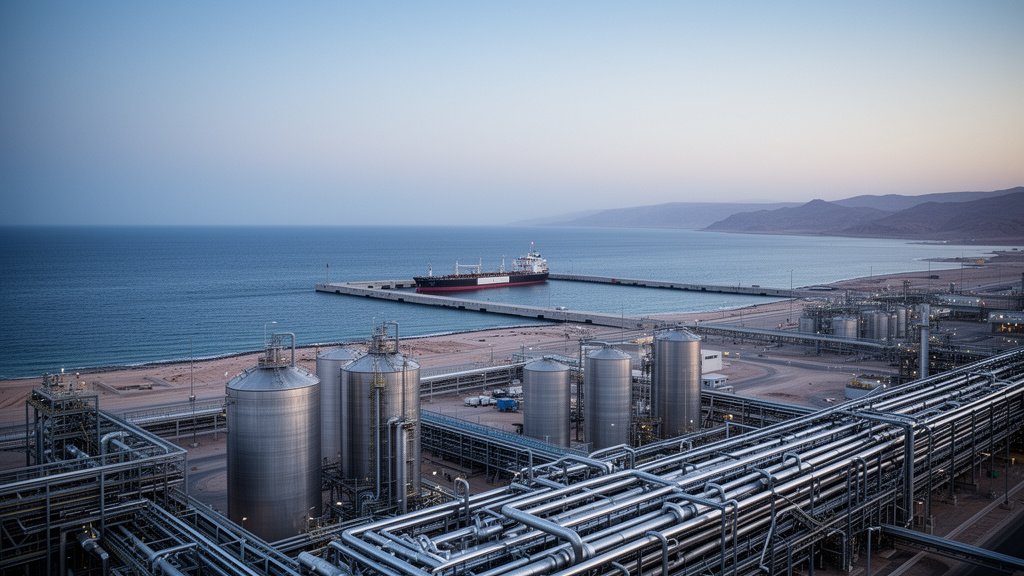
The Middle East finds itself at a precipice this week, as the somber observance of the October 7 anniversary coincides with a fresh wave of military escalation. Reports confirm that Houthi rebels have intensified operations, targeting critical military and civilian infrastructure within Saudi Arabia. This convergence of historical trauma and contemporary aggression has sent shockwaves through regional capitals, raising urgent questions about the fragile security architecture currently holding the Gulf and the Levant in a tenuous balance.
The Shadow of October 7
As Israel marks the third anniversary of the October 7 attacks, the psychological and political climate is heavy with the weight of unresolved conflict. This date, etched into the collective memory of the region, acts as a trigger for both military posture and diplomatic caution. The anniversary is not merely a day of remembrance; it has become a geopolitical focal point. Regional actors are navigating the intersection of public grief and strategic maneuvering, with the Israeli Defense Forces (IDF) maintaining a state of high alert across all frontiers. The atmosphere is one of profound apprehension, as the memory of the 2021-era violence serves as a stark reminder of how quickly dormant tensions can erupt into full-scale, multi-front warfare.
The Houthi Offensive: A Strategic Pivot
The recent Houthi strikes on Saudi Arabia represent a tactical shift that has caught many regional analysts off guard. While the Houthi movement—formally known as Ansar Allah—has long utilized the Red Sea as a theater for asymmetrical warfare against international shipping, the direct targeting of Saudi infrastructure signals an expansion of their operational mandate. By striking facilities deep within the Kingdom, the Houthis are attempting to recalibrate the regional power dynamic, likely in response to broader shifts in the Iran-Saudi rapprochement and the ongoing instability in Gaza and Lebanon.
These strikes have not only disrupted local aviation and critical logistics but have also re-introduced the risk of a spillover conflict. Saudi Arabia, which has been attempting to steer a path of neutrality and regional de-escalation, now faces the difficult challenge of responding to these provocations without derailing its own internal economic ambitions. The disruption to aviation and infrastructure suggests a calculated attempt by the Houthis to assert leverage, potentially aiming to compel Saudi concessions or to signal their own relevance in the face of dwindling Iranian-backed support elsewhere.
Economic Ripples: Maritime Trade and Energy
The economic implications of this escalation are immediate and severe. The Red Sea is a vital artery for global commerce, and any instability in the vicinity of Saudi coastal infrastructure inevitably impacts global maritime shipping rates and insurance premiums. Investors are closely monitoring the situation, fearing that the sustained Houthi campaigns could lead to significant bottlenecks in the Bab el-Mandeb Strait.
Beyond shipping, the energy sector remains highly sensitive. Saudi Arabia is a lynchpin of global oil markets; any credible threat to its refining or export infrastructure induces a volatility premium that is felt instantly from London to Tokyo. The current volatility serves as a reminder that the geopolitical security of the Middle East is the silent partner of global economic stability. If the Houthi campaign sustains its current tempo, analysts predict a tightening of supply chain logistics that could ripple into broader inflationary pressures globally.
Regional Diplomacy and the Tightrope Walk
Perhaps the most complex angle in this crisis is the reaction from regional powers. Saudi Arabia, in particular, is forced into an agonizing geopolitical balancing act. On one hand, the Kingdom needs to protect its sovereignty and territorial integrity from Houthi projectiles; on the other, it remains committed to a broader diplomatic strategy that involves engaging with Iran to de-escalate regional tensions.
This creates a paradox: how does a nation respond to an adversary that is ostensibly backed by a state with whom you are trying to negotiate peace? The Saudi leadership is currently navigating these waters with extreme caution, utilizing a combination of air defense protocols to intercept threats and quiet, back-channel diplomacy to urge de-escalation. However, the endurance of these strikes tests the limits of that diplomacy. If the civilian and military infrastructure continues to suffer, pressure will mount on the Saudi government to adopt a more kinetic response, potentially pulling the region into a wider conflict cycle that many have spent the last year trying to avoid.
Future Implications: What Lies Ahead?
As the region moves past the anniversary date, the focus shifts to the resilience of current ceasefire efforts. The Houthi activity acts as a ‘spoiler’ in this landscape, designed to demonstrate that the regional order cannot be settled without their input. Whether this leads to a formal intensification of the Saudi response or a new round of mediated talks remains to be seen.
Security analysts suggest that the coming weeks will be defined by ‘low-intensity high-stakes’ operations. The goal for all parties is to contain the violence to specific targets, avoiding an accidental escalation into a full-scale regional war. However, as history has shown in the Middle East, the gap between controlled escalation and total regional conflagration is often thinner than the surface appearances suggest. Monitoring the frequency of these strikes against the Saudi interior will be the primary metric for gauging the likelihood of a larger, systemic shift in the regional status quo.