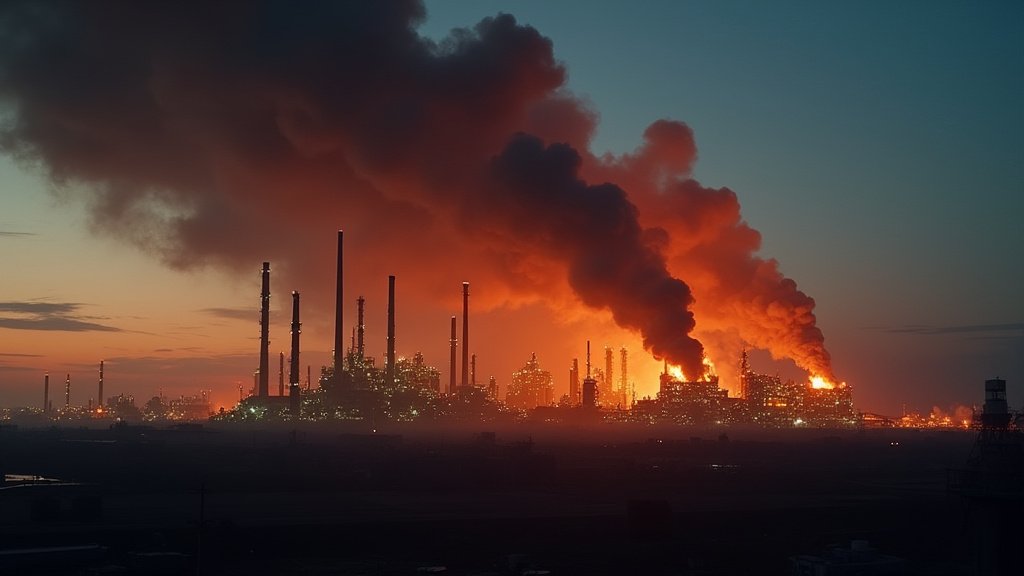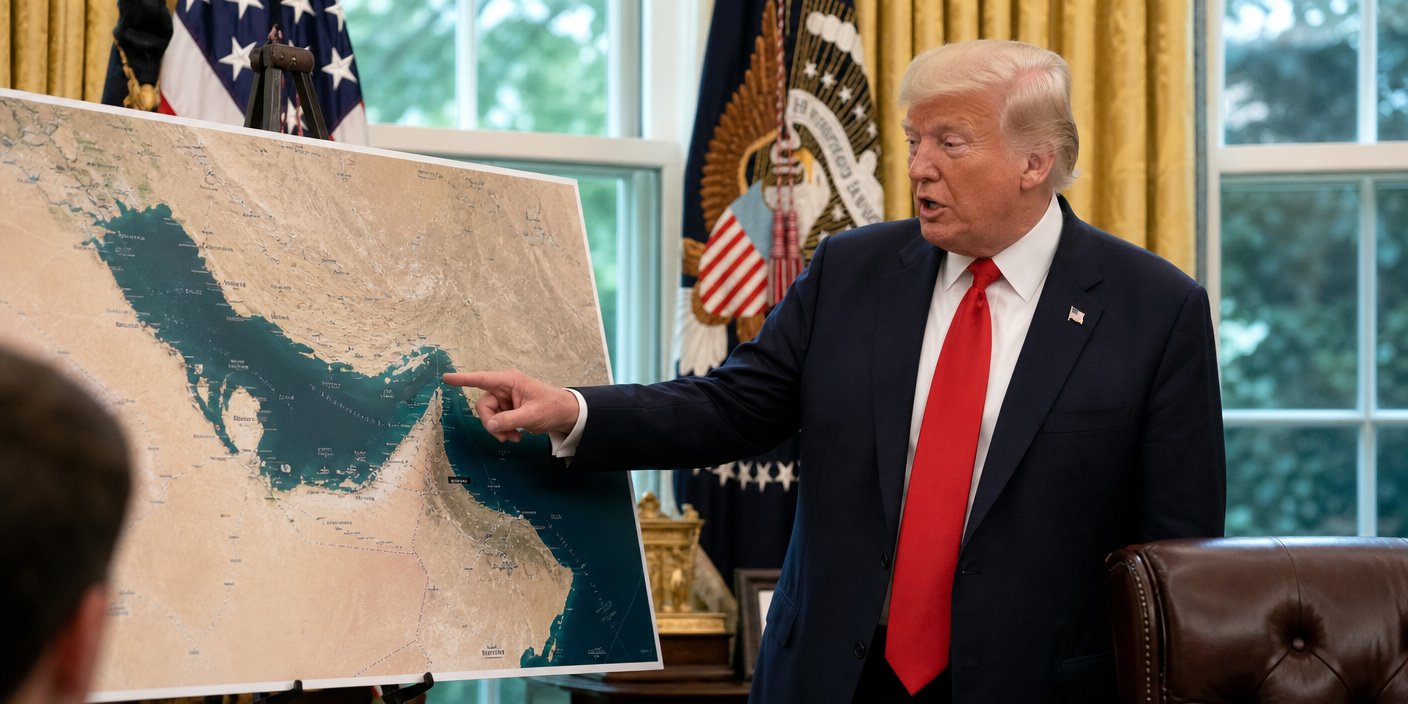
The Strait of Hormuz, a critical artery for global energy supplies, has become the flashpoint of a severe international security crisis following a coordinated attack on August 19, 2026. The incident, involving unidentified projectiles that struck two merchant vessels, resulted in the tragic loss of at least one sailor and has triggered a rapid military response across the Persian Gulf. In an unprecedented diplomatic pivot, President Donald Trump escalated the regional volatility by publishing a map of the Strait of Hormuz, provocatively labeled “New U.S. Territory,” a move that has drawn immediate condemnation from international observers and intensified the already fragile standoff between Washington and Tehran.
Key Highlights:
- A maritime assault occurred on August 19, 2026, when unidentified projectiles struck two ships in the Strait of Hormuz, resulting in at least one confirmed fatality.
- The United Arab Emirates (UAE) confirmed it successfully intercepted ballistic missiles launched from within Iran, marking a significant escalation in regional conflict.
- President Trump’s digital dissemination of a map declaring the Strait of Hormuz “New U.S. Territory” has further complicated diplomatic channels and international maritime law.
- Global energy markets are bracing for volatility, as insurance premiums for vessels navigating the Persian Gulf are expected to surge following the violence.
Geopolitical Destabilization in the Strait of Hormuz
The events of August 19 represent a watershed moment in the security architecture of the Persian Gulf. By effectively transforming a localized maritime attack into a broader, territory-focused diplomatic crisis, the situation has moved beyond traditional skirmishes. The Strait of Hormuz, through which approximately 20% of the world’s petroleum consumption flows, is no longer merely a conduit for oil; it has become the focal point of a contest for sovereignty and regional dominance.
Analyzing the Maritime Security Breach
The attack on the two vessels, which remains under investigation by naval intelligence, underscores a sophisticated shift in non-state and state-sponsored maritime warfare. Experts note that the use of projectiles capable of targeting commercial shipping while simultaneously launching a ballistic missile barrage—intercepted successfully by UAE defense systems—suggests a high degree of coordination. The death of the crew member is a significant escalation from previous “gray zone” tactics, which typically favored harassment or vessel seizures over kinetic lethality. Analysts from the International Maritime Security Construct are currently evaluating the projectile debris to determine the origin and sophistication of the weapons used, though early indicators point to advanced guidance systems that bypass traditional radar detection methods.
The “New U.S. Territory” Declaration: A Legal and Diplomatic Minefield
President Trump’s claim that the Strait of Hormuz constitutes “New U.S. Territory” introduces a profound disruption to the United Nations Convention on the Law of the Sea (UNCLOS). While the United States has historically maintained a posture of asserting Freedom of Navigation (FON) operations to ensure international waters remain open, declaring a body of water as sovereign territory is a dramatic departure from established international norms.
Legal scholars argue that such a claim is unenforceable under international law, yet its political efficacy in inflaming tensions is undeniable. By framing the waterway as domestic territory, the administration is effectively redefining the Rules of Engagement (ROE) for any naval assets currently deployed in the region. This posture forces Tehran into a corner, where any further naval maneuvering by the Iranian Islamic Revolutionary Guard Corps (IRGC) could now be construed by the U.S. as an act of territorial invasion rather than a challenge to naval transit rights.
Economic Shockwaves and Energy Security
Global financial markets have reacted with immediate apprehension. With uncertainty surrounding the safety of the Strait, shipping conglomerates are reviewing their insurance coverage, with some analysts predicting a 15–20% increase in war-risk premiums for vessels passing through the Gulf within the next quarter. The energy market, sensitive to the slightest hint of supply disruption, saw a sharp uptick in Brent Crude futures shortly after the reports of the attack were verified. Should the conflict escalate to the point of a blockade or a significant reduction in shipping traffic, the global economy could face an inflationary shock, reminiscent of the oil crises of the 1970s. The UAE’s involvement in the interception of missiles suggests that regional security cooperation is deepening, yet this also positions the Gulf states directly in the crosshairs of a potential broader conflict between the U.S. and Iran.
The Future of Regional Stability
As of late August 2026, the diplomatic path forward remains murky. The United States maintains that its territorial claim is a strategic deterrent intended to secure the Strait against further hostile actions. Conversely, Iran has characterized the move as a dangerous provocation, asserting its right to maintain a defensive perimeter. The international community, particularly the UN Security Council, is facing mounting pressure to intervene before the situation deteriorates into a full-scale regional war. With the death of the sailor serving as a grim catalyst, the coming days will be defined by whether backchannel diplomacy can prevail over the current trajectory of brinkmanship.
FAQ: People Also Ask
Is it legally possible for the U.S. to claim the Strait of Hormuz as territory?
Under the UN Convention on the Law of the Sea (UNCLOS), a nation cannot claim international straits as sovereign territory. The U.S. declaration is largely viewed by international legal experts as a rhetorical and strategic posturing tool rather than a recognized change in international law.
What does this mean for global oil prices?
Analysts expect increased volatility in energy markets. With the Strait of Hormuz serving as a primary transit point for global oil, the combination of a kinetic attack and a territorial dispute will likely lead to higher shipping insurance premiums and supply chain risk, creating upward pressure on oil futures.
How did the UAE participate in the recent events?
The UAE confirmed it successfully intercepted ballistic missiles fired from Iran, demonstrating the strength of its regional air defense systems. This action underscores the UAE’s commitment to regional security but also highlights their direct involvement in the current escalation.
Why is this specific attack considered more serious than past incidents?
This incident involves a confirmed fatality among the crew of a merchant vessel. While past incidents in the Strait of Hormuz have involved harassment, illegal boarding, and non-lethal strikes, the loss of human life represents a significant escalation in the level of violence, forcing a more aggressive response from involved nations.