In a commanding display of brewing prowess, California’s craft breweries have once again cemented their status as the industry’s gold standard, capturing 23 of the 99 gold medals awarded to U.S. producers at the 2026 World Beer Cup. Announced at the Pennsylvania Convention Center during the Craft Brewers Conference & BrewExpo America, the results confirm that the Golden State remains the beating heart of American craft beer innovation. With 1,644 breweries from 50 nations competing, this sweep represents more than just a victory for individual brands; it is a testament to a mature, highly technical regional ecosystem that continues to set the bar for the global industry.
Key Highlights
- Unprecedented Success: California breweries took home nearly one-quarter of all gold medals awarded to U.S. participants.
- National Standings: Washington state secured second place with nine golds, while Colorado and Oregon tied for third with six each.
- The Competition: The 2026 World Beer Cup marked its 30th anniversary, evaluating 8,166 entries across 118 categories through rigorous, blind-tasting protocols.
- Regional Dominance: The success was widespread across California, ranging from San Diego’s powerhouse breweries to emerging operations in Northern and Central California.
The California Brewing juggernaut
The 2026 results from the World Beer Cup—often referred to as the “Olympics of Beer”—offer a fascinating window into the state of the American craft industry. While many emerging craft markets across the U.S. are closing the gap, California’s performance suggests a deep, institutionalized excellence that is difficult to replicate.
The Anatomy of a Medalist
Winning gold at the World Beer Cup is an exercise in technical precision. Unlike local festivals, the World Beer Cup utilizes a blind-tasting format where 255 judges from around the world evaluate entries against strict style guidelines. A gold medal signifies that a beer is the definitive example of its style category.
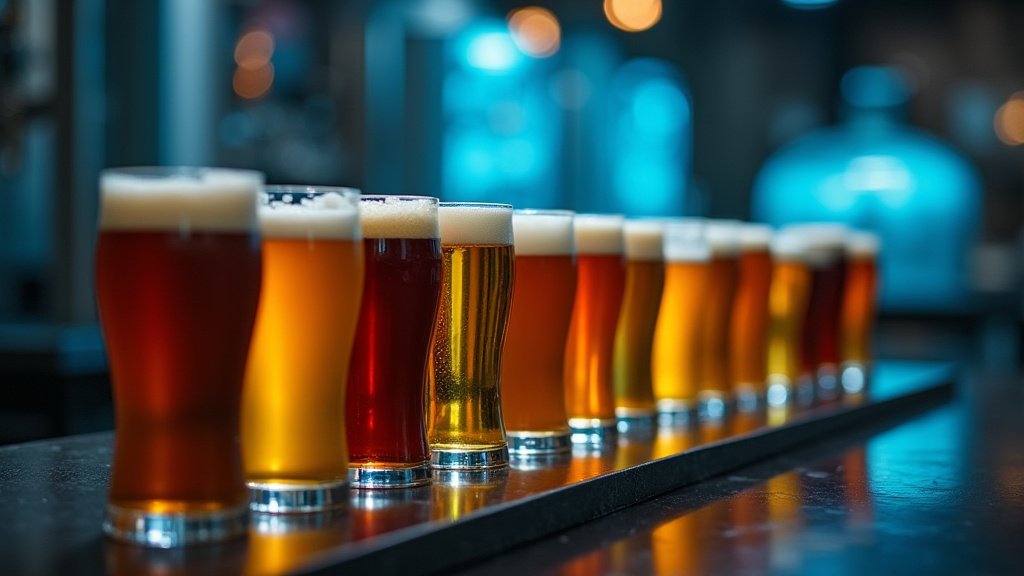
For California breweries, success this year was not tied to one specific style. While “West Coast IPA” remains a regional hallmark, the gold medals spanned a diverse spectrum: from South German-Style Weissbiers and Vienna-Style Lagers to Robust Porters and Strong Red Ales. This versatility highlights a shift in the California brewing ethos: they are no longer just the masters of aggressive hopping; they are masters of refined technique, fermentation control, and historical style execution.
The Role of Infrastructure and Collaboration
The concentration of talent in California cannot be overstated. From San Diego’s dense cluster of award-winning breweries—like North Park Beer Co., which saw significant success—to the technical innovations happening in the Bay Area and beyond, the state benefits from a hyper-competitive environment. Brewers in California have access to high-quality ingredients, advanced laboratory technology for yeast propagation, and a culture of peer-to-peer knowledge sharing that is arguably the most robust in the country.
Global Benchmarks and the Evolution of Beer
The Global Context
While the U.S. dominated the total medal count, the 2026 competition underscored the internationalization of craft beer. Japan, in particular, was a standout, capturing five gold medals, signaling that the appreciation for high-quality, small-batch brewing is no longer an American-centric phenomenon. For California brewers, this represents both a challenge and an opportunity. As international competitors refine their processes, the California market is increasingly looking toward exporting not just its beer, but its brewing methodologies.
Economic and Cultural Implications
The economic impact of a World Beer Cup gold medal is profound. For a craft brewery, these awards are the highest form of marketing currency. A gold-medal-winning beer often sees an immediate spike in regional and national demand, leading to increased distribution and, in many cases, expanded production capacity. For local economies, these accolades drive tourism, with “beer tourism” becoming a significant economic engine for cities like San Diego, Anaheim, and Santa Rosa.
Future Predictions
Looking ahead, the 2026 results suggest a few key trends for the industry:
1. The Rise of Lagers: With so many golds awarded in Lager categories, the “all IPA all the time” trend is clearly diversifying. Consumers are demanding cleaner, crisper, and more nuanced beer styles.
2. Sustainability as Quality: As breweries invest in better equipment to win medals, they are naturally improving energy efficiency. The pursuit of the “perfect beer” is aligning with the pursuit of the “sustainable brewery.”
3. Cider’s Increasing Prominence: With California also winning the cider title among U.S. states, the lines between traditional brewing and cider production are blurring, with crossover expertise driving success in both segments.
FAQ: People Also Ask
Q: Why is the World Beer Cup considered so prestigious?
A: The World Beer Cup is known for its rigorous, blind-tasting format. Entries are judged against objective style guidelines, not against each other in a popularity contest, and the judges are some of the most qualified sensory experts in the world.
Q: Does winning a gold medal actually help a brewery’s sales?
A: Yes. In a saturated market, a World Beer Cup gold medal serves as a “quality seal” that helps breweries stand out on crowded retail shelves and tap lists, often resulting in increased sales and national distribution opportunities.
Q: Will California breweries continue to dominate in future years?
A: While California currently leads in industry infrastructure and maturity, other regions like Washington and Colorado are rapidly narrowing the gap. The competitive nature of the industry ensures that while California is the current leader, the title is always contested.
Q: What is the Craft Brewers Conference?
A: It is the largest industry gathering in the United States, bringing together thousands of brewing professionals for education, networking, and the celebration of the World Beer Cup winners.