Key Takeaways
- U.S. Admission: A preliminary Pentagon inquiry has determined that American forces were responsible for the February 28 missile strike on an elementary school in Minab, Iran.
- Casualty Count: Iranian authorities and independent monitors confirm at least 175 fatalities, including 108 children, making it the deadliest civilian incident of the current conflict.
- Intelligence Failure: The strike was the result of a targeting error caused by reliance on outdated Defense Intelligence Agency (DIA) data that incorrectly identified the school as an active IRGC naval base.
- International Backlash: Amnesty International and the United Nations have called for immediate accountability and a transparent, independent investigation into the breach of international humanitarian law.
Summary Lead
In a stunning reversal of initial denials, a preliminary U.S. military inquiry has confirmed that American forces were responsible for a devastating missile strike on the Shajareh Tayyebeh girls’ primary school in Minab, Iran. The attack, which occurred on the morning of February 28, 2026, claimed the lives of at least 175 people, the majority of whom were school-aged children. The investigation, first detailed by sources within the Pentagon and later corroborated by major news outlets like The New York Times, points to a catastrophic failure in intelligence gathering. The Iran school strike inquiry has revealed that U.S. Central Command planners used obsolete coordinates, leading a precision-guided Tomahawk missile to hit the school instead of the adjacent military complex it was intended for.
The Deep Dive
Outdated Intel Leads to Tragedy
The Shajareh Tayyebeh school, located in the Hormozgan province of southern Iran, was once part of an Islamic Revolutionary Guard Corps (IRGC) compound. However, as satellite imagery and local records confirm, the school had been walled off and operated as a purely civilian educational facility for years prior to the conflict. Despite this, the coordinates remained labeled as a military target in the U.S. targeting database. According to the preliminary report, officers at U.S. Central Command failed to verify the site’s current status before authorizing the strike.
On the morning of the attack, three distinct strikes hit the area. While two missiles struck the intended IRGC targets, a third Tomahawk cruise missile slammed directly into the school building during classes. The “triple tap” tactic, often used to ensure target destruction, proved fatal for the children and staff inside as the roof collapsed onto the crowded classrooms. Witnesses described scenes of unimaginable horror as rescuers spent days pulling small bodies from the rubble.
Mounting International Pressure
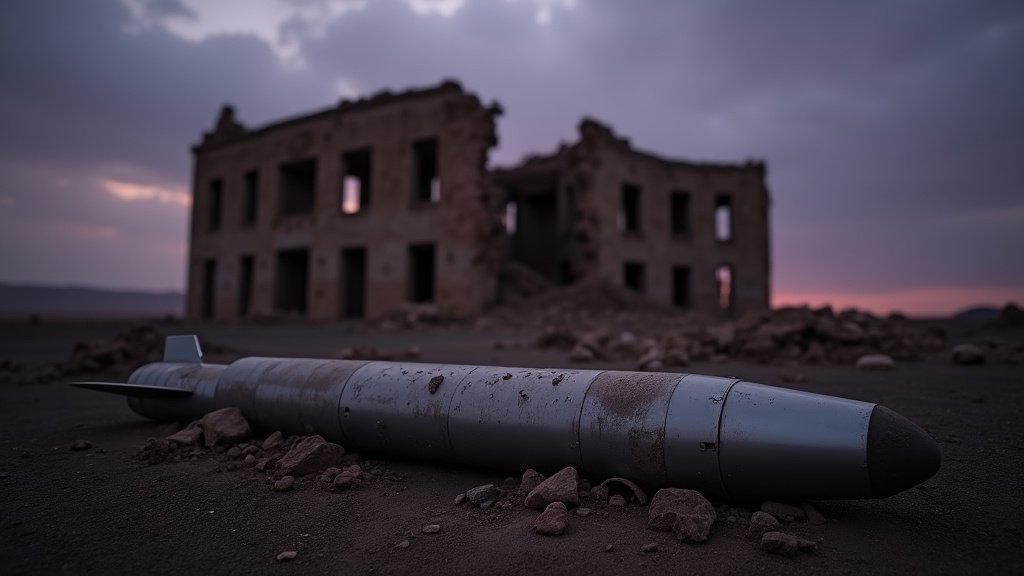
The admission comes after weeks of intense international scrutiny. Initially, President Donald Trump and Defense Secretary Pete Hegseth suggested that Iran might have been responsible for the blast, claiming the Iranian military used “inaccurate munitions.” However, geolocation analysis by organizations like Bellingcat and the BBC Verify team quickly pointed to the debris of a U.S.-manufactured UGM-109 Tomahawk missile at the scene. Video footage captured from a nearby construction site showed the subsonic cruise missile—a weapon used exclusively by U.S. forces in that sector—hitting the building.
Amnesty International released a scathing report on March 17, stating that the strike may constitute a serious violation of international humanitarian law. The organization emphasized that the failure to take “feasible precautions” to avoid civilian harm—especially when targeting a facility so close to a school—is a breach of the rules of war. UN experts in Geneva also expressed “profound shock and grief,” noting that there is no excuse for the killing of children in a classroom setting.
The Human Cost in Minab
The tragedy has left the city of Minab in a state of deep mourning. Of the 175 confirmed dead, at least 110 were students, with 66 boys and 54 girls identified in the initial lists. Twenty-six teachers, including the school’s principal, and four parents who were on-site at the time also perished. Funerals for the victims have become focal points for national grief and anti-war sentiment within Iran.
Defense Secretary Pete Hegseth has vowed a “thorough probe” into the incident, moving from a preliminary inquiry to a full command investigation. While the Pentagon maintains that the strike was not intentional, the scale of the error has sparked a debate in Washington regarding the use of artificial intelligence and automated targeting systems in modern warfare. Critics argue that if AI was used to filter the DIA’s outdated data, it only magnified the human error by providing a false sense of precision.
FAQ: People Also Ask
What was the Shajareh Tayyebeh school?
It was a girls’ primary school in Minab, Iran. It was formerly part of an IRGC base but had been a separate, walled-off civilian facility for several years before it was struck by a U.S. missile on February 28, 2026.
How many people died in the Iran school strike?
Official reports and independent investigations confirm that at least 175 people were killed. Among the fatalities were over 100 schoolchildren, as well as teachers and parents.
Why did the U.S. military strike the school?
A preliminary military inquiry found that the U.S. used outdated targeting data from the Defense Intelligence Agency. This data incorrectly listed the school as part of an active military compound belonging to the IRGC.