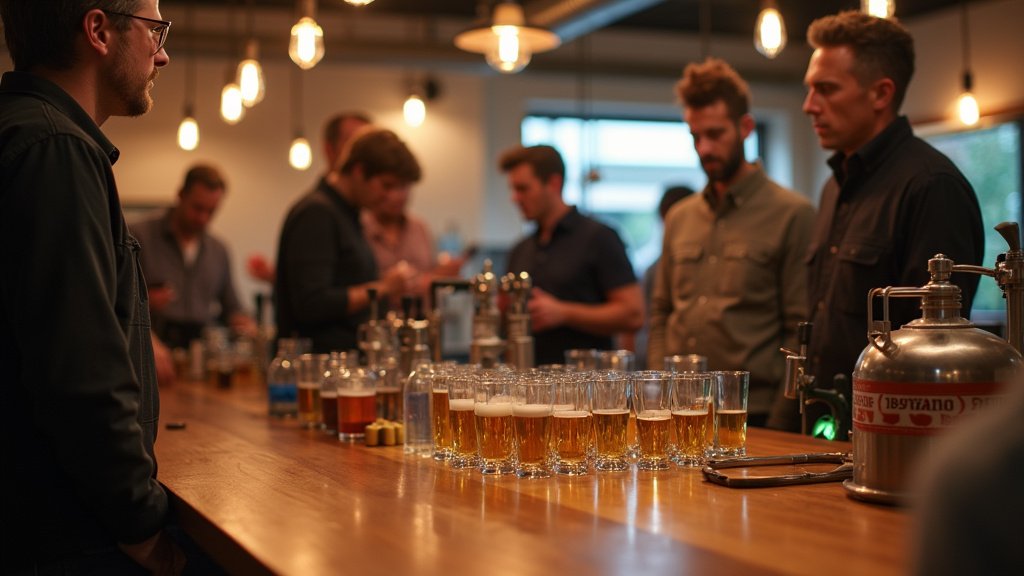
The U.S. Beer Industry, once a symbol of robust growth and craft innovation, is now grappling with significant financial headwinds, leading to an unprecedented wave of brewery closures and declining sales. For the first time in nearly two decades, more breweries shuttered their doors in 2024 than opened, signaling a profound shift in the U.S. beer market long dominated by expansion. This sobering reality, often described as the industry “bleeding red ink,” is driven by a confluence of escalating operational costs, evolving consumer preferences, and intense competition from alternative beverages.
The Numbers Don’t Lie: Brewery Closures in the U.S. Beer Industry
Statistics from the Brewers Association paint a stark picture: in 2024, the United States saw 399 brewery closures compared to just 335 new startups. This trend has continued into 2025, with reports indicating that closures are still outpacing new openings, leading to a net decrease in the number of operating craft breweries. As of June 2025, the number of active craft breweries in the U.S. had fallen by 1% year-over-year. This marks a significant departure from the booming growth era of the 2010s, where hundreds of new breweries launched annually. The shift from expansion to contraction highlights a maturing market grappling with intense competition and economic pressures within the U.S. Beer Industry.
Rising Costs, Falling Sales, and Supply Chain Squeeze: Beer Industry Challenges
Compounding the challenge of increased competition is a sharp rise in operational expenses. Brewers are contending with higher prices for essential raw materials like hops and barley, increased labor costs, and a significant inflationary impact on packaging materials, exacerbated by recent tariffs on aluminum for beer cans. These rising operational costs come at a time when overall beer sales volume has seen a decline nationally. While dollar sales for craft beer have seen a modest increase, driven by price adjustments and on-site sales, the volume figures indicate a struggling core market. This economic squeeze is particularly difficult for smaller breweries with tighter margins within the U.S. beer market.
Shifting Tastes and the Rise of Alternatives in the U.S. Beer Industry
Consumer preferences are rapidly evolving, presenting a formidable challenge to traditional beer sales. There’s a growing demand for healthier options, including lower-calorie, low-alcohol, and non-alcoholic beers. Simultaneously, the market has seen a surge in popularity for ready-to-drink (RTD) cocktails, seltzers, spirits, and even cannabis-infused beverages, which are diverting consumers away from beer. This diversification of beverage choices means beer is no longer the default option it once was, forcing brewers to compete in a much broader landscape, a key factor for the U.S. Beer Industry.
The Oregon Beer Scene Faces Headwinds
The state of Oregon, long celebrated for its vibrant beer culture and pioneering craft breweries, is not immune to these industry-wide challenges. Recent news highlights that around 30 breweries in Oregon closed in 2023, and many more are struggling. The closure of Rogue Ales & Spirits, a prominent Oregon-based brewery, due to significant financial issues, including substantial back rent and tax obligations, serves as a stark, recent example of these pressures. This event impacts a sector that contributes billions to the state’s economy and supports thousands of jobs.
Adaptation and Innovation: The Path Forward for the U.S. Beer Industry
In response to these headwinds, surviving breweries are being forced to adapt and innovate. Many are diversifying their offerings beyond traditional beers, venturing into non-alcoholic options, canned cocktails, or even food and entertainment to drive taproom traffic. Premiumization – focusing on higher-quality, more expensive brews – is also a strategy being employed, though value for money remains critical for many consumers. The rise of online sales channels and direct-to-consumer models are also being leveraged to reach customers. The industry is also seeing consolidation, with larger companies acquiring smaller breweries, which can provide stability but also reduces the number of independent players in the U.S. beer market.
Conclusion: A Challenging Climate for the U.S. Beer Industry Ahead
The U.S. Beer Industry is navigating a period of significant transformation. The days of consistent, high-volume growth appear to be over, replaced by a more challenging environment characterized by increased competition, rising operational costs, and changing consumer tastes. While the total economic contribution of the beer industry remains substantial, supporting millions of jobs and generating billions in revenue, the path forward for many breweries is fraught with uncertainty, highlighting significant beer industry challenges. Those that can successfully adapt to evolving tastes, manage rising costs, and foster strong community connections may weather the storm, but the era of easy expansion has undoubtedly passed.