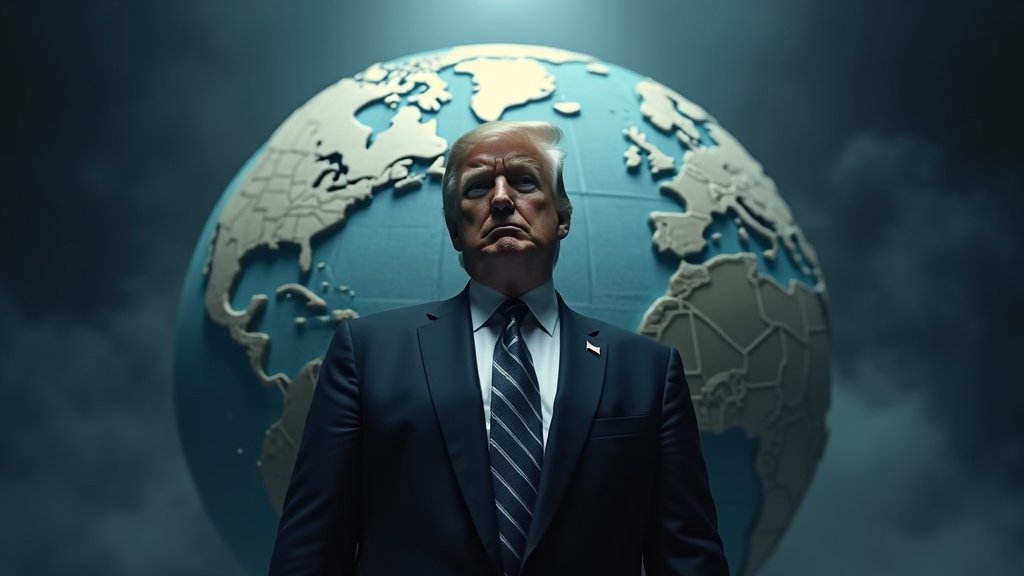
Trump’s Greenland Tariffs: Market Fears Prompt Diplomatic Shift
President Donald Trump pursued Greenland with vigor. He threatened significant trade penalties. Global markets reacted with alarm. Diplomacy ultimately averted a deeper crisis.
Trump’s Longstanding Greenland Ambition
US interest in Greenland spans decades. It dates back to the 19th century. Strategic importance drives this focus. Greenland guards critical Arctic pathways. It sits between North America and Europe. President Trump revived this interest. He cited national security needs. This included missile defense. Russia and China’s Arctic presence also fueled concerns. Trump believed Denmark lacked capacity to defend it. However, Greenland remains a self-governing territory. It is part of the Kingdom of Denmark. Denmark and Greenland firmly rejected any sale. They stated Greenland was “not for sale.” However, they remained open to cooperation.
The Tariff Threat Emerges
In early 2026, tensions escalated. Trump threatened economic action. He targeted eight European nations. These countries opposed his Greenland pursuit. They included Denmark, Norway, Sweden, France, Germany, the UK, the Netherlands, and Finland. Trump announced a 10% import tariff. This would start in February. It would affect goods from these nations. The tariff rate would climb to 25%. This would happen by June 1st. It would remain until a “Complete and Total purchase of Greenland” occurred. This move created significant global news.
Markets React Sharply
The stock market showed immediate concern. US stocks experienced sharp declines. Major indexes saw their biggest losses since October 2025. The S&P 500 fell 2.1%. The Dow Jones Industrial Average dropped 1.8%. The Nasdaq composite lost 2.4%. Technology stocks were hit particularly hard. Investors sought safety. Gold and silver prices surged. They reached record highs. This financial turmoil underscored market anxiety. The global economy felt the impact.
Diplomatic Fallout and Firm Stances
The tariff threat strained alliances. It risked a US-EU trade war. European leaders condemned the actions. They expressed solidarity with Denmark. NATO’s reliability was questioned. President Trump critiqued allies. He implied they were not strong partners. Denmark’s Foreign Minister acknowledged the day improved. However, the fundamental stance remained firm. Greenland’s Premier stated, “Greenland belongs to the people of Greenland.” They added, “We are not for sale and will never be for sale.” This echoed Denmark’s official position. Cooperation was welcomed, but sovereignty was absolute.
A Diplomatic Resolution Emerges
President Trump was preparing to travel to Davos. He was set to attend the World Economic Forum. He had a “very good” call with NATO Secretary-General Mark Rutte. This call preceded his address. Following this discussion, Trump announced a change. He stated he would not impose the scheduled tariffs. He revealed a “framework of a future deal” was reached. This agreement involved Greenland and the wider Arctic region. He also ruled out military force. He emphasized seeking “immediate negotiations” instead. The initial tariff deadline of February 1st was thus averted.
Looking Ahead: Global Trade and Alliances
The crisis highlighted market influence. It showed how financial reactions could shape policy. Trump’s administration often used tariffs. This event demonstrated their potency. It also revealed the fragility of international relations. The episode underscored the importance of diplomacy. It also confirmed Greenland’s strategic value. The path forward involves continued dialogue. The “framework of a future deal” remains to be detailed. This news remains trending globally. It serves as a reminder of ongoing geopolitical dynamics.