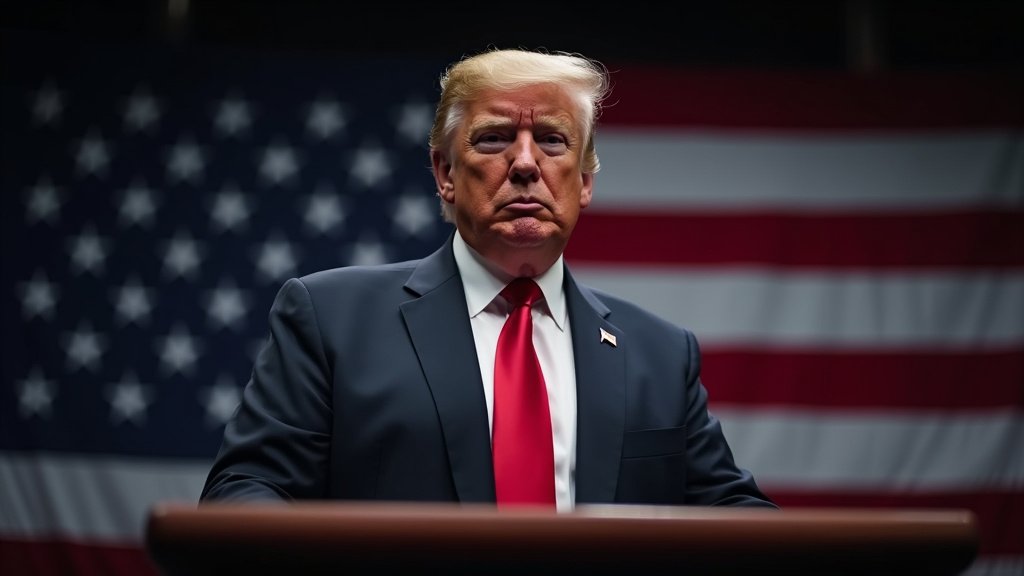
In a move that has ignited a firestorm of political controversy, President Donald Trump’s **Trump Sedition Accusations** against six Democratic lawmakers have escalated his rhetoric by suggesting their actions are “punishable by DEATH!”. The dramatic accusations, made via a series of social media posts on Thursday, November 21, 2025, followed the release of a video by the targeted lawmakers urging U.S. military personnel to defy unlawful orders.
The Core of the Controversy: A Video and Trump Sedition Accusations
The six Democratic members of Congress featured in the video are all veterans or have backgrounds in military or intelligence services: Senators Elissa Slotkin of Michigan and Mark Kelly of Arizona, and Representatives Maggie Goodlander of New Hampshire, Chris Deluzio, Chrissy Houlahan, and Jason Crow of Colorado. In the 90-second clip, they directly address service members, reminding them of their constitutional duty to uphold the Constitution and refuse illegal orders. They stated, “Our laws are clear. You can refuse unlawful orders. No one has to carry out orders that violate the law or our Constitution”.
President Trump reacted swiftly and severely on his Truth Social platform. He labeled the video “SEDITIOUS BEHAVIOR AT THE HIGHEST LEVEL” and declared the lawmakers “TRAITORS” who “SHOULD BE IN JAIL RIGHT NOW”. In a particularly alarming escalation, he added, “SEDITIOUS BEHAVIOR, punishable by DEATH!”. Trump also amplified posts from other users, including one suggesting the lawmakers should be “HANGED”, further emphasizing the severity of the Trump Sedition Accusations.
Lawmakers Stand Firm Amidst Trump Sedition Accusations
The targeted lawmakers issued a joint statement, asserting that Trump “considers it punishable by death for us to restate the law”. They reiterated their commitment to their oath to the Constitution and their duty to protect service members, emphasizing, “No threat, intimidation, or call for violence will deter us from that sacred obligation”. They underscored that their message was a simple restatement of existing military law and precedent, which dictates that service members are not obligated to obey unlawful orders, a point crucial to understanding the Trump Sedition Accusations.
Political Fallout and Divided Reactions to Trump Sedition Accusations
The President’s comments sparked immediate outrage from Democratic lawmakers. Senate Minority Leader Chuck Schumer condemned the statements as a “deadly serious threat” and likened the situation to “lighting a match in a country soaked with political gasoline”. Senator Chris Murphy called the remarks “dangerous” and “not normal,” urging Republicans to “draw a line in the sand” against such political rhetoric. He stated, “The President of the United States just called for Democratic members of Congress to be executed”.
Republican responses showed a degree of division. House Speaker Mike Johnson characterized the video as “wildly inappropriate” and suggested Trump was merely “defining the crime of sedition,” though he conceded that Trump’s wording was not ideal. Other Republicans downplayed Trump’s rhetoric, suggesting he was speaking “tongue in cheek” or that his statements were hypothetical. However, some acknowledged the gravity of the situation, with Senator Lindsey Graham reportedly asking the Democrats for clarification on which military orders they considered illegal, a question relevant to the broader context of the Trump Sedition Accusations.
Defining Sedition and Legal Context in Trump Sedition Accusations
Legally, sedition involves language or actions intended to incite insurrection against the government. The U.S. federal government criminalizes “seditious conspiracy” under 18 U.S.C. § 2384, which pertains to conspiring to overthrow or destroy the U.S. government by force, levying war against it, opposing its authority by force, or by force preventing, hindering, or delaying the execution of any U.S. law. Violations of this statute can carry penalties of fines or imprisonment for up to twenty years. While “sedition” itself is a broader term related to inciting rebellion, it is distinct from treason and espionage, and charges are relatively rare due to free speech protections, a crucial point when considering the Trump Sedition Accusations.
Broader Implications and Trending Political Climate Regarding Trump Sedition Accusations
This incident unfolds against a backdrop of heightened political tensions and concerns about political violence, a topic that has gained significant news coverage and become a trending issue. The political rhetoric used by President Trump has drawn widespread condemnation from civil liberties groups and has been flagged as potentially inciting further division and instability, both domestically and on a global scale, complicating the understanding of the Trump Sedition Accusations.
Adding another layer to the ongoing scrutiny of the administration’s actions, separate reports emerged concurrently detailing internal legal concerns within the U.S. military. A top military lawyer at U.S. Southern Command reportedly raised objections in August regarding the legality of U.S. strikes on boats in the Caribbean and eastern Pacific, warning they could constitute extrajudicial killings. These concerns were reportedly dismissed by higher officials, a development that highlights broader questions about legal oversight of military operations under the current administration, separate from the direct Trump Sedition Accusations.
Conclusion on Trump Sedition Accusations
President Trump’s Trump Sedition Accusations against six Democratic lawmakers, coupled with his death penalty threats, represent a significant escalation in political rhetoric. The incident underscores the deeply polarized nature of current American politics, the critical role of military personnel’s constitutional duty to uphold the law, and the ongoing debate over the boundaries of presidential speech and its potential impact on national discourse and legal frameworks. As the political landscape continues to evolve, the implications of these pronouncements will likely be a subject of intense scrutiny and debate.