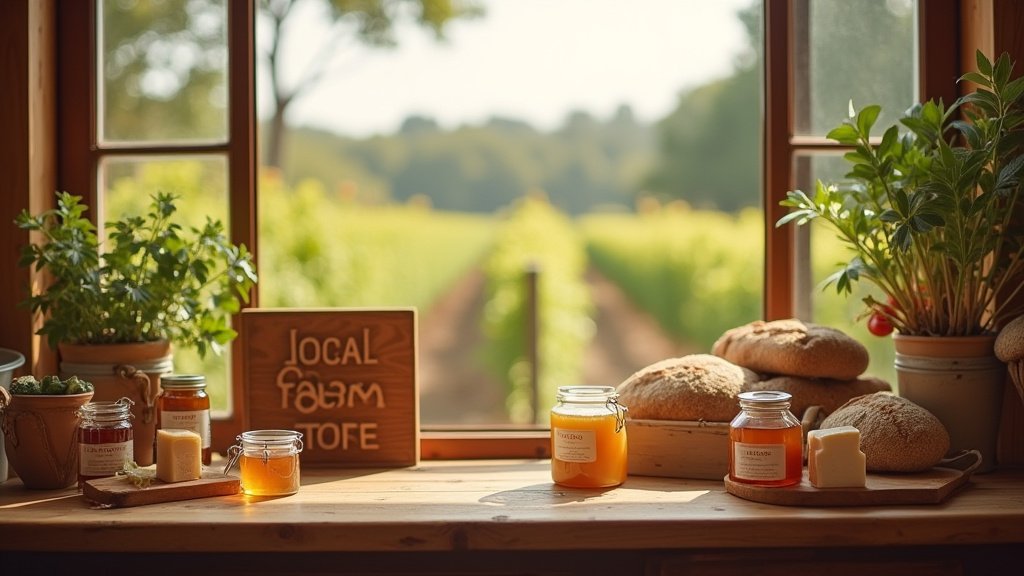
On April 8, 2026, the agricultural landscape of Oregon underwent a significant structural shift as Governor Tina Kotek signed House Bill 4153 into law. Designed to modernize the state’s stringent land-use regulations, the legislation introduces a new, dedicated permit classification for “farm stores,” offering a distinct path for farm operators to diversify revenue streams. By moving away from restrictive income-based tracking toward clearer, spatial-based permits, the state aims to provide financial stability for struggling family farms while maintaining the character of rural Oregon. This law, which will take effect in January 2027, marks the culmination of months of debate between property rights advocates, who champion the move as a necessity for economic survival, and conservationists, who fear that commercialization could erode the state’s long-standing protection of agricultural land.
Key Highlights
- Modernizing Regulatory Frameworks: HB 4153 establishes a formal “farm store” permit, allowing farms on Exclusive Farm Use (EFU) or mixed farm and forest land to host retail operations and agritourism events with clearer guidelines.
- From Income to Space: The legislation replaces burdensome income-tracking requirements—previously capped at 25% of annual sales—with spatial boundaries, allowing farm stores to allocate up to 25% of their total floor area to non-farm retail items.
- Controlled Growth: To prevent the commercialization of farmland, the bill limits permanent enclosed structures (including the store and accessory buildings) to 10,000 square feet and maintains strict requirements that a significant portion of the property remain dedicated to active farming.
- Agritourism Integration: The law clarifies allowable on-site activities, including farm tours, educational classes, and “farm-to-table” dining, provided these events remain secondary to the primary agricultural operation.
- Geographic Expansion: The definition of “local agricultural area” has been expanded to include all of Oregon and adjacent counties in neighboring states, easing sourcing constraints for local products.
The Evolution of Oregon’s Agricultural Economy
For decades, Oregon has been defined by its rigid, purposeful land-use laws. Designed primarily to prevent urban sprawl and protect the state’s fertile soil from being paved over, these policies have successfully maintained the integrity of agricultural zones. However, as the 21st century progressed, the economic reality for the average family farm grew increasingly difficult. Global supply chains, fluctuating commodity prices, and rising operational costs created a scenario where traditional farming alone was often insufficient to sustain a multi-generational property.
The Failure of the Old Model
Under the previous “farm stand” regulations, farmers were trapped in a regulatory gray area. To generate supplemental income, they were restricted by income-based quotas—specifically, they were often required to prove that at least 75% of their revenue came from items grown on their own land, with no more than 25% of revenue allowed from incidental retail or fee-based events. For many farmers, this was a logistical nightmare. Tracking the source of every individual product, calculating the percentage of event revenue versus crop revenue, and navigating county-level audits created a massive administrative burden that discouraged many from pursuing legitimate diversification.
Representative Vikki Breese-Iverson, the chief sponsor of HB 4153, argued throughout the legislative session that these regulations were not just cumbersome—they were counterproductive. “We are asking our farmers to be experts in agronomy, logistics, marketing, and now, high-level accounting just to sell a t-shirt or host a pumpkin patch,” proponents argued. The result was a stagnant system where farmers could not adapt to modern consumer demands for “experiential” agricultural shopping.
The Mechanics of the Farm Store Permit
House Bill 4153 is fundamentally a pivot toward a more predictable regulatory environment. By establishing the “farm store” as a permitted land use, the law provides a clear, uniform pathway for county planning departments to approve these businesses. The shift is not just linguistic; it is structural.
Instead of managing revenue percentages, farmers will now manage square footage. A farm store can now dedicate up to 25% of its enclosed, permanent floor area to non-farm products (such as branded apparel, gifts, or local artisan goods). This provides a tangible, measurable metric for code compliance. The 10,000-square-foot cap on total structure size acts as a hard ceiling, ensuring that while farmers can build retail spaces, they cannot build massive, commercial-scale shopping centers in the middle of a valley.
Moreover, the legislation clarifies the role of “agritourism.” This term—often a lightning rod for debate—now includes specific, permitted activities: crop mazes, hayrides, farm tours, and, perhaps most importantly, the ability to operate licensed on-site commercial kitchens. This allows farms to pivot toward value-added production, transforming their produce into ready-to-eat meals, jams, or bottled goods without triggering a “commercial” land-use reclassification.
The Debate: Economic Necessity vs. Land Preservation
Despite the bipartisan support in the legislature, the path to passing HB 4153 was fraught with tension. The primary opposition came from groups like the Friends of Family Farmers (FoFF) and other conservation-minded stakeholders, who expressed concern that the new law effectively opens the door to “paper farms.”
The Fear of ‘Paper Farms’
Critics argue that by allowing more retail and commercial-style events, the law creates an incentive for non-farmers to purchase agricultural land as an investment vehicle. They posit that if a landowner can build a 10,000-square-foot structure and operate it as a high-end retail boutique or event venue with only a token agricultural component, the land will cease to be an active farm. This, in turn, could drive up land prices, making it impossible for actual, first-generation farmers to purchase land at prices that align with farming income.
“The risk is that we transform our rural countryside into a series of commercial tourist attractions,” one critic noted during the hearings. While the bill does contain acreage thresholds—for instance, requiring at least 45 acres of farm use on an 80-acre tract—critics argue that these thresholds are still too permissive and could allow for significant commercialization of the remaining acreage.
Supporting the Modern Farm
In contrast, the Oregon Farm Bureau and many growers have hailed the bill as a lifesaver. Their argument is rooted in the reality of the “seasonal crunch.” Crops like berries, melons, and pumpkins have limited harvest windows. If a farm only relies on the direct sale of those specific crops, their revenue is tied entirely to a few months of the year. By enabling year-round farm stores, the bill allows farmers to sell processed goods, local artisan items, and host seasonal events throughout the winter, providing the cash flow necessary to pay property taxes and invest in modern irrigation or soil health technology.
Ultimately, the law represents a compromise. It does not replace the traditional farm stand, which remains a permitted, low-friction option for smaller growers. Instead, it creates a new tier for farms ready to scale up their consumer interaction. The success of the policy will depend on implementation at the county level, where local planners will be responsible for enforcing the 25% retail space cap and ensuring that the “farm store” does not devolve into a general commercial retail establishment.
Future Implications: What This Means for Oregon
As the law prepares to take effect in January 2027, the focus shifts to how farmers will adapt their business models. Many operators are already looking at their existing infrastructure and determining whether they meet the acreage and zoning criteria to apply for the new permit.
Economic Diversification as Resilience
This legislation is likely to encourage a new wave of investment in rural Oregon. With the ability to host farm-to-table dinners and educational workshops, farms are moving from being passive suppliers of raw commodities to becoming active lifestyle destinations. This shift mirrors broader trends in the Pacific Northwest, where consumers are increasingly prioritizing “farm-to-table” transparency and local sourcing.
The Regulatory Learning Curve
For the state’s county planning departments, the next 18 months will be a period of intense preparation. They must develop the permit review processes, train staff on the new square-footage calculation methods, and establish enforcement mechanisms to monitor compliance. While the bill provides a clearer statutory framework, the actual “on the ground” interpretation of what constitutes an “incidental retail item” versus a “farm product” may require further refinement through administrative rules.
Ultimately, HB 4153 is an admission that the old ways of protecting farmland—through rigid isolation—may no longer be the best path forward. Instead, the state is betting that by integrating the farm into the local economy as a destination, it can secure the financial viability of family farms, thereby ensuring that the land stays in agricultural production for the next generation.
FAQ: People Also Ask
Q: When does HB 4153 officially go into effect?
A: The law takes effect in January 2027, providing a period for state agencies, counties, and farmers to prepare for the implementation of the new permitting framework.
Q: Can any farm open a “farm store” under this new law?
A: Not necessarily. While the law is designed to be accessible, there are specific threshold requirements based on the total acreage of the farm. For example, a property of 80 acres or more must have at least 45 acres dedicated to farm use to qualify for a farm store permit. The requirements scale down for smaller tracts.
Q: What is the difference between a “farm stand” and a “farm store”?
A: A farm stand is a more limited, often permit-free use that focuses primarily on the sale of farm products grown on-site or nearby. A “farm store,” under the new law, is a permitted use that allows for broader retail activities, on-site food preparation, and agritourism, provided they stay within the new spatial limits (10,000 sq ft structure cap and 25% retail space cap).
Q: Will this law lead to the commercialization of rural farmland?
A: This is the central point of contention. While proponents argue that the law provides necessary economic tools to save family farms from bankruptcy, critics fear that it could create loopholes allowing non-farming commercial entities to operate on rural land, potentially driving up property prices.