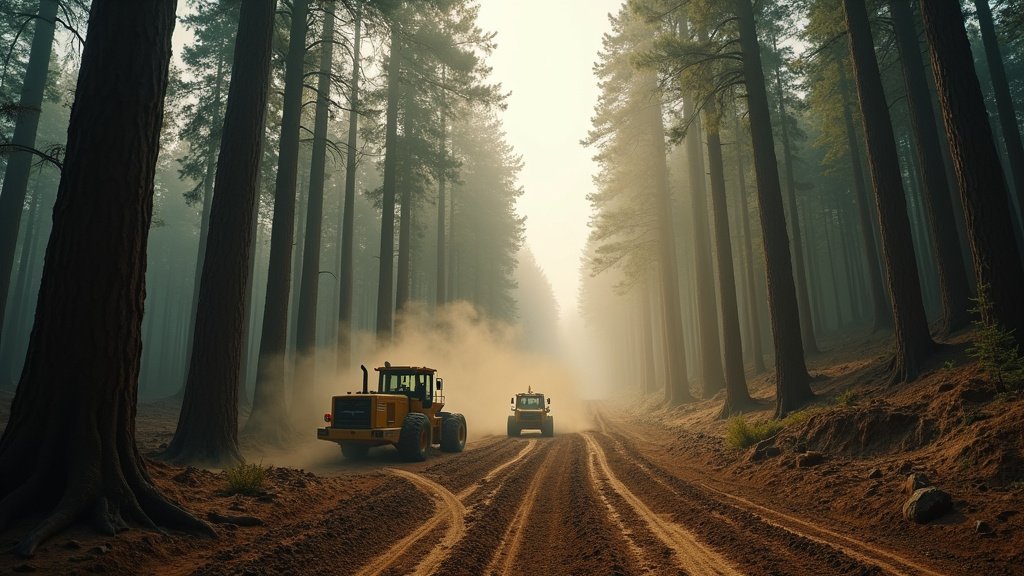
Federal officials propose huge changes for Oregon forests. The Bureau of Land Management (BLM) wants to allow much more logging. This plan affects 2.5 million acres. It covers 17 western Oregon counties. The goal is to increase timber production significantly. Logging levels could return to those of the 1960s.
Historic Logging Levels Targeted
The BLM’s proposal revises management plans. These plans guide logging and conservation. The current plans were last updated in 2016. The agency now seeks to open more forest lands. This includes areas with protected species. The BLM aims to reach “maximum productive capacity”. This could mean harvesting up to 1 billion board feet annually.
The O&C Lands
Most of these lands are known as O&C lands. They originated from grants to the Oregon & California Railroad. The O&C Act of 1937 mandates sustained timber production. Timber revenue from these lands funds local services. This includes schools and roads in 18 western Oregon counties.
Why the Push for More Logging?
The BLM cites several reasons for the proposed change. They want to boost local economies. They aim to reduce reliance on foreign timber imports. Increased timber production is vital for national security and economic prosperity. Acting BLM Director Bill Groffy stated it is essential for reviving local economies. It also aims to reduce the threat of catastrophic wildfires.
Declining Harvests and County Revenues
Timber harvests on O&C lands peaked in 1964. That year, over 1.6 billion board feet were harvested. From 1960 to 1989, harvests averaged nearly 1.1 billion board feet. After the northern spotted owl’s listing, harvests dropped significantly. By the mid-1990s, harvests fell below 100 million board feet. Recent harvests are around 250-267 million board feet.
Timber payments to counties also declined sharply. They fell from over $109 million in 1989 to $21 million by 1995. Mill closures and job losses devastated local communities. Current payments are about $25-$30 million annually. The American Forest Resource Council argues current harvests are a fraction of growth. They claim forests are overstocked and fire-prone.
Concerns for Wildlife and Environment
Environmental groups strongly oppose the plan. They argue it would devastate fish and wildlife. The northern spotted owl and marbled murrelet are vulnerable species. Conservationists warn of threats to communities and drinking water. They fear increased logging will worsen wildfire risk.
Oregon Wild called the proposal a return to destructive practices. They state the BLM already logs old growth and clearcuts. This plan would double down on those aspects. It prioritizes profit over forest health. Bev Law, a forest scientist, called the plan “insanity”. She noted these forests are effective carbon stores. Harvesting reduces this carbon sequestration potential.
Broader Implications
These forests are some of the most productive timberlands globally. They are also crucial carbon sinks. Past logging practices nearly drove species to extinction. Conservationists highlight the importance of streamside buffers. They worry about impacts on water quality and recreation.
The Trump administration’s priorities are evident. This includes expanding domestic timber production. It also supports effective wildfire management. The BLM manages 2.5 million acres in western Oregon. This is about 60% of Oregon’s forests, shared with the US Forest Service.
Public Input Period
The BLM opened a public comment period. It began with a notice in the Federal Register. The period closes on March 23. The agency will not hold public meetings beforehand. Comments can be submitted online or via email. This is a critical window for public feedback.
A Contentious Future for Oregon’s Forests
This proposal sparks a major debate. It pits economic interests against environmental protection. Supporters see a path to jobs and county revenue. Opponents fear irreversible ecological damage. The future of these vast western Oregon forests hangs in the balance. The BLM’s decision will shape the landscape for decades. It will impact wildlife, communities, and climate resilience.