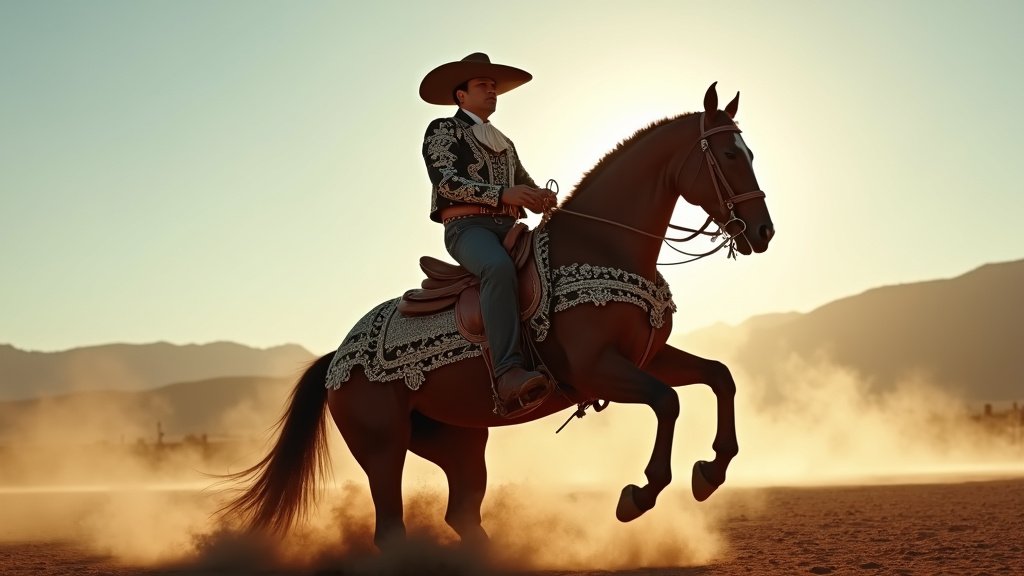
Charrería, a vibrant equestrian tradition from Mexico, is gaining visibility in Oregon. An exhibit at the Lane County History Museum in Eugene highlights this rich cultural practice. It showcases ornate outfits and accessories. These items are on loan from local Oregon charros. The exhibit aims to educate Oregonians about charrería’s history and significance.
The Roots of Charrería
Charrería’s origins trace back to the 16th century. Spanish colonizers introduced horses and cattle to the Americas. Ranchers and cowboys developed essential skills for managing livestock on large haciendas. These practical skills evolved into a ceremonial and competitive sport. Charrería became a symbol of Mexican identity and pride. This was especially true after the Mexican Revolution. The sport was officially named the national sport of Mexico in 1933. It is now recognized by UNESCO as an Intangible Cultural Heritage of Humanity. Charrería is more than just horsemanship; it includes costume, music, and food. It represents a blend of indigenous art and Spanish influence.
Charrería in Oregon
Latino communities have practiced charrería in Oregon since the mid-20th century. Many came as braceros starting in 1943. They established residences across the state. Communities in the Willamette Valley, Klamath County, and eastern Oregon became centers for informal practice. Charrería skills were often part of their livelihood in Mexico. Antonio Huerta, director of Comunidad y Herencia Cultural, is a key figure in promoting charrería in Oregon. His nonprofit organization works to share this tradition. They aim to build relationships with institutions where Latino presence is often lacking. Annual charrería championships have taken place in Oregon since 2007. These events bring together five charro associations from the state.
The Charro Attire Exhibition
The exhibit at the Lane County History Museum offers a glimpse into charrería’s visual richness. It features intricate items like woven belts with cactus fiber embroidery, known as piteado. Ornate cattleman’s outfits display detailed embroidery. Women’s attire, such as the Adelita dress, is also displayed. These costumes reflect centuries of craftsmanship. They showcase a fusion of Spanish and indigenous Mexican artistry. The charro saddle itself is distinct from American saddles. It features a wider, taller horn and cactus fiber embroidery. These items are lent by Oregon charros, who are Mexican horsemen. The exhibition serves to teach Oregonians about the history and artistry of this tradition.
Cultural Significance and Youth Engagement
Antonio Huerta emphasizes the importance of sharing charrería with younger generations. It helps them explore their identity. This is especially true in predominantly white communities like Eugene-Springfield. Comunidad y Herencia Cultural actively brings this knowledge into schools. This ensures Latino students feel represented culturally and linguistically. It also provides a valuable learning opportunity for other students. The organization hosts events like Noche Cultural. These events celebrate Mexican culture and foster community bonds. Such initiatives help preserve a tradition that has deeply shaped Mexican identity. This rich heritage is increasingly visible and celebrated in Oregon. The tradition’s beauty and cultural depth are becoming more accessible through events and exhibits. This trend highlights its growing presence and popularity.