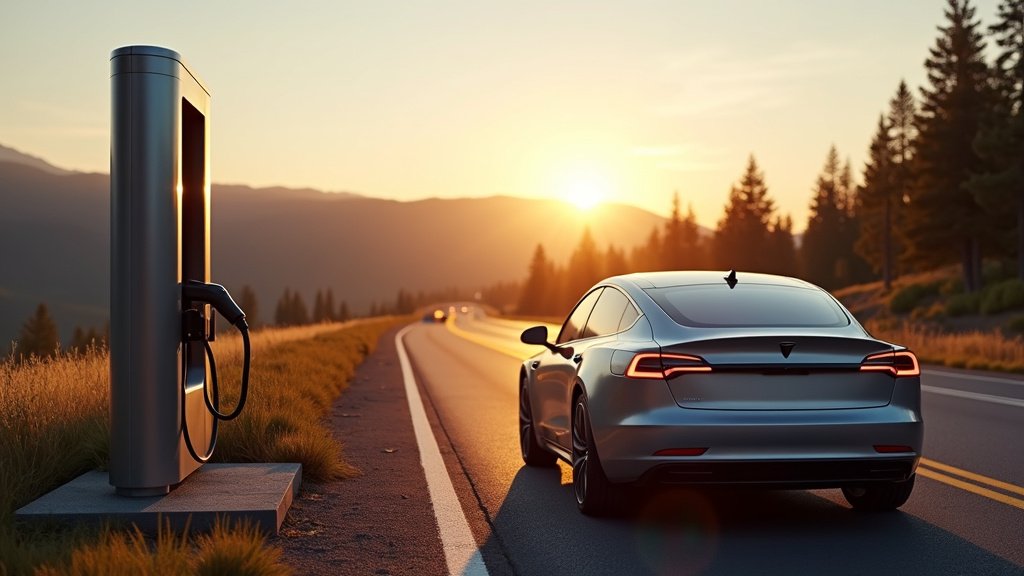
Oregon EV charging is set for a significant expansion as the state actively seeks companies to build new fast-charging stations along five key Oregon highways. This major initiative is part of the National Electric Vehicle Infrastructure (NEVI) program, with Oregon aiming to install at least 200 public fast-charging EV ports by the end of 2026, an effort spearheaded by the Oregon Department of Transportation (ODOT).
Expanding Oregon EV Charging Infrastructure
Oregon is deeply committed to advancing clean transportation and increasing the number of electric vehicles on its roads. The NEVI program provides crucial federal funds to support this objective, focusing on the build-out of essential electric vehicle infrastructure. Oregon is currently in its second round of NEVI funding, aiming to make EV charging more accessible, particularly along busy highway corridors. This development marks a significant step forward for EV drivers and the broader adoption of electric vehicles.
Understanding the NEVI Program for Oregon EV Charging
The NEVI program is a federal initiative designed to establish a nationwide EV charging network, funded by the 2021 Bipartisan Infrastructure Law. Oregon is slated to receive over $52 million in federal funding over five years. Private companies are required to contribute matching funds, at a minimum of 20%. ODOT manages Oregon’s NEVI program through a competitive grant process, awarding contracts to private EV charging companies for the installation and operation of charging stations, enhancing the overall Oregon EV charging landscape.
Round 2: Enhancing Oregon Highways EV Coverage
This second funding round specifically targets vital routes, including Interstate 84, U.S. Highway 20, U.S. Highway 26, U.S. Highway 101, and U.S. Highway 97. Oregon plans to fund approximately 40 DC fast-charging stations in this round, contributing to the overarching goal of at least 200 fast-charging ports. Some projections suggest an additional 250 to 300 ports could be added, effectively addressing charging ‘deserts’ and improving Oregon highways EV charging accessibility.
Meeting the Growing Demand for Oregon EV Charging
Oregon is experiencing a rapid surge in EV adoption, with over 126,000 registered EVs as of August, a number that continues to climb. This growth necessitates a corresponding increase in public charging infrastructure, which has lagged behind demand. With approximately 4,000 public charging ports currently available, including nearly 1,200 DC fast chargers, this initiative is critical for meeting current and future EV needs and supporting Oregon’s ambitious climate goals. The expansion of Oregon EV charging is paramount.
Key Program Updates for Oregon EV Charging Providers
ODOT has implemented significant changes for Round 2 of the NEVI program to attract more applicants and streamline the process for Oregon EV charging providers. The removal of the pre-qualification step broadens the pool of interested companies, and a new option allowing individual site hosts to own the charging stations offers greater flexibility. Eased location rules by federal authorities permit more strategic site selection, moving away from strict 50-mile spacing or one-mile-from-exit requirements. Eligibility criteria are now more inclusive, welcoming any incorporated entity or federally recognized Tribe.
Funding Details and Timeline for Oregon EV Charging Projects
The federal government is providing NEVI funding, with Oregon set to receive over $52 million over five years. For Round 2 specifically, $32.3 million in federal funds is available (with some sources citing $25.3 million for this round). Companies are required to provide at least 20% in matching funds. The application period is currently open and closes on February 20, with awards anticipated by the end of March. Construction for Round 1 stations commenced in late 2025, with the first new charging stations expected to be operational by early 2026, marking progress in the Oregon EV charging network.
Program History and Flexibility in Oregon EV Charging Deployment
The NEVI program experienced a temporary suspension of federal funding in February 2025 due to developing federal guidance, prompting lawsuits from Oregon and other states. A subsequent court injunction in June 2025 restored funding approval, allowing Oregon to move forward. ODOT has also adjusted charger specifications: chargers must now have four or more DC fast-charging ports, each providing at least 150kW simultaneously, and be CCS-compliant, with some stations also including NACS connectors. U.S. Highway 97, initially slated for Round 1 but facing contractor issues, has been successfully included in Round 2, further bolstering Oregon EV charging options.
The Impact of Enhanced Oregon EV Charging for Drivers
This expansion represents vital news for EV drivers in Oregon, directly addressing ‘range anxiety’ by increasing the availability of reliable charging options on major routes. Drivers will benefit from enhanced support for longer travel distances, which in turn encourages more individuals to transition to EVs. This initiative strongly aligns with Oregon’s vision for a cleaner transportation future and supports the state’s climate and emission reduction goals, significantly improving the Oregon EV charging experience.
This significant investment will bolster Oregon’s electric vehicle infrastructure, supporting wider EV adoption and contributing to the state’s clean energy future. The progress in Oregon EV charging is a positive development for the entire Oregon region and supports the goals of the NEVI program Oregon.