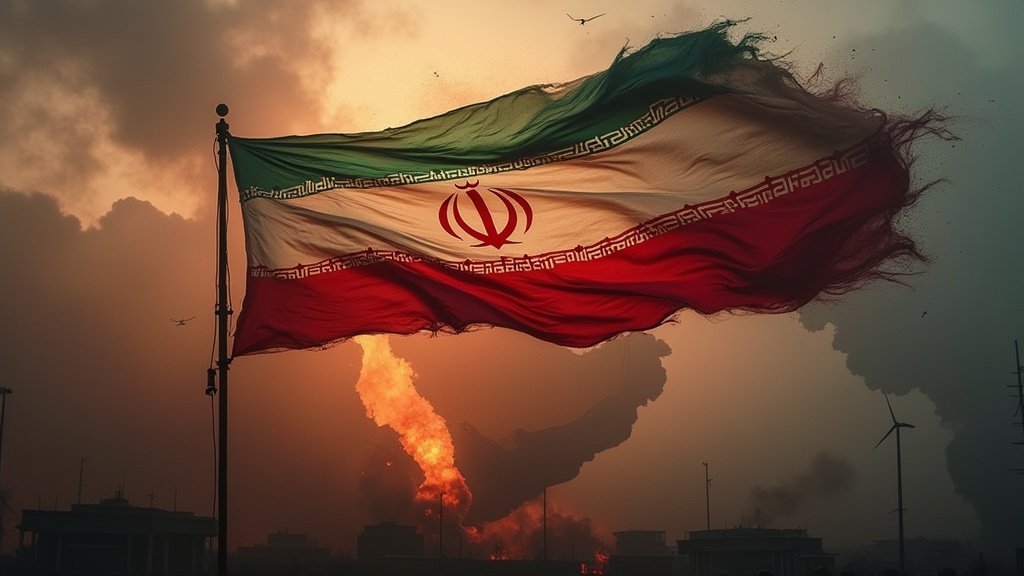
Iran’s Rejection and Counter-Offer Amidst Conflict
In a significant geopolitical development, Iran has officially dismissed an American proposal aimed at pausing the ongoing conflict in the Middle East. The rejection, communicated through Iranian state television’s English-language broadcaster, Press TV, came as the nation simultaneously launched further attacks across the region. This move escalates tensions, particularly as Israel has conducted airstrikes on Tehran, and the United States has increased its military presence with the deployment of paratroopers and additional Marines.
The US had put forth a 15-point plan, transmitted to Iran via Pakistani intermediaries, which reportedly addressed key issues such as sanctions relief, limitations on Iran’s nuclear program, missile restrictions, and the reopening of the Strait of Hormuz. However, an anonymous Iranian official quoted by Press TV stated that Iran “will end the war when it decides to do so and when its own conditions are met,” adding that Tehran would continue its “heavy blows” across the Middle East.
Adding to the complexity, Iran has presented its own counterproposal. This Iranian plan, as reported by Press TV, includes demands such as a halt to the killing of its officials, assurances against further aggression, reparations for the war, an end to hostilities, and Iran’s assertion of sovereignty over the Strait of Hormuz. These demands, particularly those concerning reparations and continued control over the Strait of Hormuz, are likely to be met with strong opposition from the White House, especially given the current global energy crisis exacerbated by the conflict.
Geopolitical Tensions and the Strait of Hormuz
The situation is further complicated by Iran’s deep-seated suspicion of the United States, stemming from past incidents during diplomatic talks. Foreign Ministry spokesperson Esmail Baghaei articulated this sentiment, stating, “We have a very catastrophic experience with U.S. diplomacy.”
The Strait of Hormuz, a critical chokepoint for global oil transportation, continues to be a focal point. Iran’s control over passage through the strait represents a significant strategic advantage, and its actions, along with attacks on regional energy infrastructure, have sent oil prices soaring and fueled fears of a global energy crisis. France’s Finance Minister Roland Lescure highlighted the severity of the situation, noting that a significant portion of refining capacity in the Gulf has been damaged, leading to a deficit of 11 million barrels of oil per day.
Escalation and International Response
The conflict has resulted in a significant loss of life, with Iran reporting over 1,500 deaths, Lebanon over 1,000, Israel 16, and 13 U.S. military members. Millions have been displaced in Lebanon and Iran. In response to the escalating hostilities, the United States is reinforcing its military presence in the Middle East, with plans to send at least 1,000 troops from the 82nd Airborne Division and approximately 5,000 Marines.
The United Nations Secretary-General Antonio Guterres has condemned the fighting, urging an end to the war and calling on all parties to de-escalate tensions. Meanwhile, diplomatic efforts continue, with Egypt expressing its support for President Trump’s peace initiative and actively working to bring the warring parties closer to a compromise.