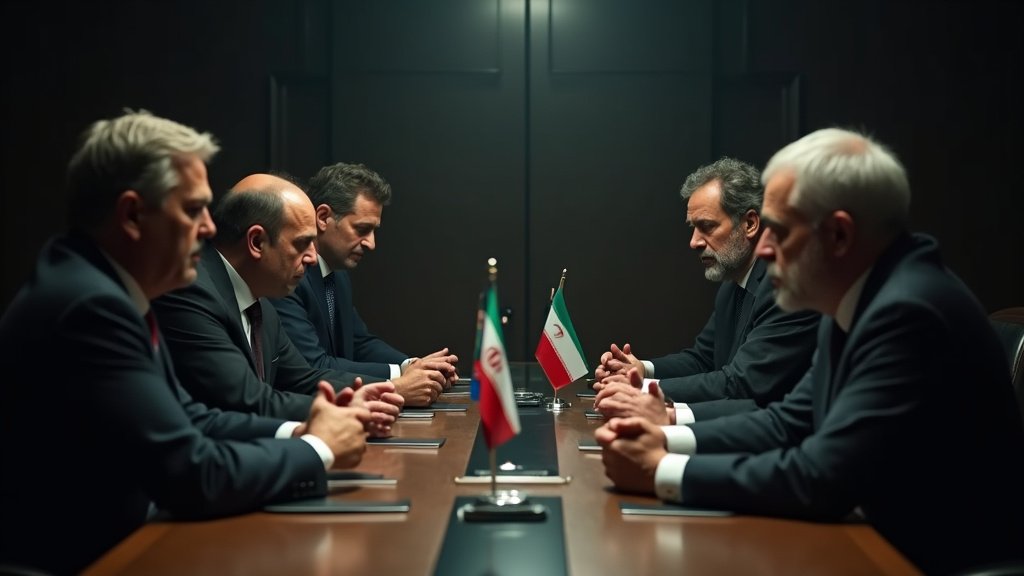
Iran Declares EU Armies Terrorist Groups in Retaliatory Move
Iran has officially designated the armies of European Union countries as terrorist groups. This significant development occurred on February 1, 2026. It serves as a direct retaliation. The European Union had recently labeled Iran’s Islamic Revolutionary Guard Corps (IRGC) a terrorist organization. This EU action followed Iran’s harsh crackdown on widespread protests. These protests began after the death of Mahsa Amini. They have become the deadliest unrest in Iran since 1979.
Retaliatory Action and Legal Basis
Iran’s parliament announced the designation of EU armies. Parliament Speaker Mohammad Baqer Qalibaf stated this decision. He cited Article 7 of Iran’s countermeasure law. This law allows retaliatory actions. It targets countries labeling the IRGC as terrorists. The move escalates diplomatic tensions sharply. Iranian lawmakers wore IRGC uniforms during the session. This showed solidarity with the elite force. They chanted slogans against the US and Israel. Many lawmakers condemned the EU’s “irresponsible action.” They believe the EU blindly followed the United States. This action effectively mirrors the US designation of the IRGC in 2019.
Background of Escalation
The EU’s decision to designate the IRGC as a terrorist group was made on January 29, 2026. EU foreign ministers agreed to this move. It marked a shift in European policy. The IRGC plays a significant role in suppressing protests. Human rights groups report thousands of deaths. The EU also imposed sanctions. These targeted 15 Iranian individuals and six entities. They are accused of human rights violations. Sanctions included travel bans and asset freezes. Several Iranian officials and organizations faced these measures.
Iran’s Stance and Warnings
Iran’s Foreign Minister Abbas Araghchi called the EU’s move a “major strategic mistake.” He accused Europe of “fueling the flames.” Iran warned of serious consequences. Tehran views the IRGC as its “national army.” They see the EU designation as hypocrisy. Iran feels the EU ignores actions in Gaza. Iran’s government also criticized the US and Israel. They claim these nations instigated the protests. Iran insists on its sovereign defense rights. It has rejected US demands to curb its missile program.
Potential Implications and Consequences
The practical impact of Iran’s designation remains unclear. Some Iranian MPs suggested expelling EU military attachés. They argued their presence would violate Iranian law. Iran’s National Security and Foreign Policy Committee will monitor the situation. Relations between Iran and Europe are expected to deteriorate further. This escalation adds to existing regional tensions. The US has increased its naval presence in the Middle East. This includes additional destroyers and an aircraft carrier. Global leaders are engaging in diplomacy. Qatar, Turkey, the UAE, and Saudi Arabia are trying to reduce tensions. However, Iran has warned of swift and comprehensive responses to any attacks. The situation remains volatile. The designation signifies a hardening of stances. It creates a more confrontational dynamic. This news is a key global development. It highlights ongoing geopolitical instability. It is a trending topic in international news.