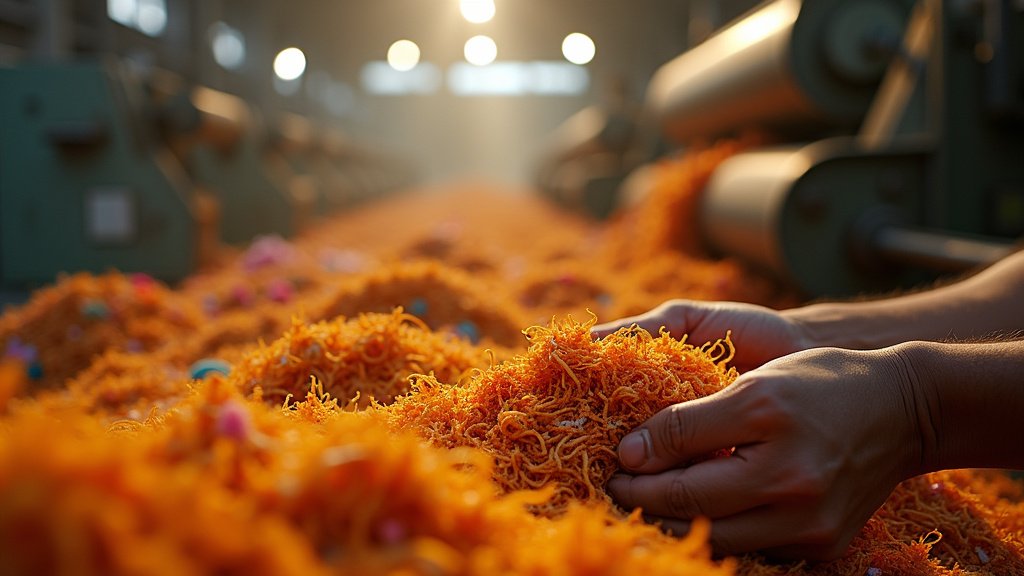
India is emerging as a global leader. This nation is transforming textile waste. It creates high-value fibers and fabrics. This trend drives the global fashion supply chain. India generates about 7.8 million tonnes of textile waste yearly. Nearly 59% of this waste is reused or recycled. This makes India a key part of the circular fashion economy.
The Scale of Textile Waste
India’s fashion industry is huge. It employs millions and boosts exports. However, it creates immense waste. Approximately 7,800 kilotonnes of textile waste are generated annually. Most of this ends up in landfills. This causes pollution and strains resources. Fast fashion accelerates this problem. It encourages quick consumption and disposal.
India’s Circularity Momentum
India’s textile recycling sector is vibrant. It reached $328.3 million in 2024. It is projected to hit $427.2 million by 2033. This growth is driven by demand for eco-friendly products. Circular business models are gaining traction. Nearly 59% of textile waste is already recovered. This happens through formal and informal networks. This high recovery rate is notable globally.
Innovation Hubs Drive Change
Textile hubs like Panipat and Tiruppur are vital. They act as major collection and recycling centers. Panipat is known as the “cast-off capital.” It processes tons of discarded clothing. Innovations include fibre regeneration. Upcycling and remanufacturing are also key. Advanced technologies convert old fibers. They create high-quality new materials. Ester Industries and Loop Industries created India’s first textile-to-textile recycling plant. This plant uses polyester waste. It produces virgin-quality resin.
Environmental and Economic Gains
Textile recycling offers significant benefits. Recycling cotton reduces water usage. Regenerated polyester lowers energy use. It also cuts carbon emissions. Circular practices reduce landfill burden. They also lessen pollution. Beyond sustainability, recycling creates economic chances. It enhances brand credibility. It opens new revenue streams. This strategic advantage prepares companies for the future. It also makes them competitive.
Key Players Shaping the Future
Many companies are leading this transformation. Vibeevest Apparels focuses on recycled fabrics. NoName helps brands use textile waste. Ganesha Ecosphere recycles PET bottles. It produces recycled polyester fiber. Arvind Ltd. integrates circular principles. Raymond Ltd. has recycled over a billion PET bottles. ReCircle runs programs to collect textile waste. Firms like Recyclr partner with major brands. Ecosystem builders like CAIF foster collaboration. These efforts are reshaping fashion.
Challenges and the Way Forward
Despite progress, challenges remain. The waste value chain is often unorganized. Waste management can be inefficient. Infrastructure for collection and sorting needs improvement. Blended fabrics are complex to recycle. Consumer awareness is still low. Recycling technologies can be costly. Clearer policies and incentives are needed. Companies like those in the fashion sector in Oregon are increasingly looking for sustainable sourcing. India’s efforts make it a preferred partner. Brands seek materials with a lower carbon footprint. India offers flexible manufacturing. It provides access to certified recycled materials.
The Trending Path to Circularity
India’s commitment to textile recycling is clear. It is a strategic industry movement. This news signals a shift. The country is becoming a powerhouse for recycled textiles. This positions India as a cornerstone of global circular fashion. The future of fashion is circular. India is leading this exciting trend. Collaborative efforts will accelerate this transition further. This includes industry, policymakers, and NGOs.