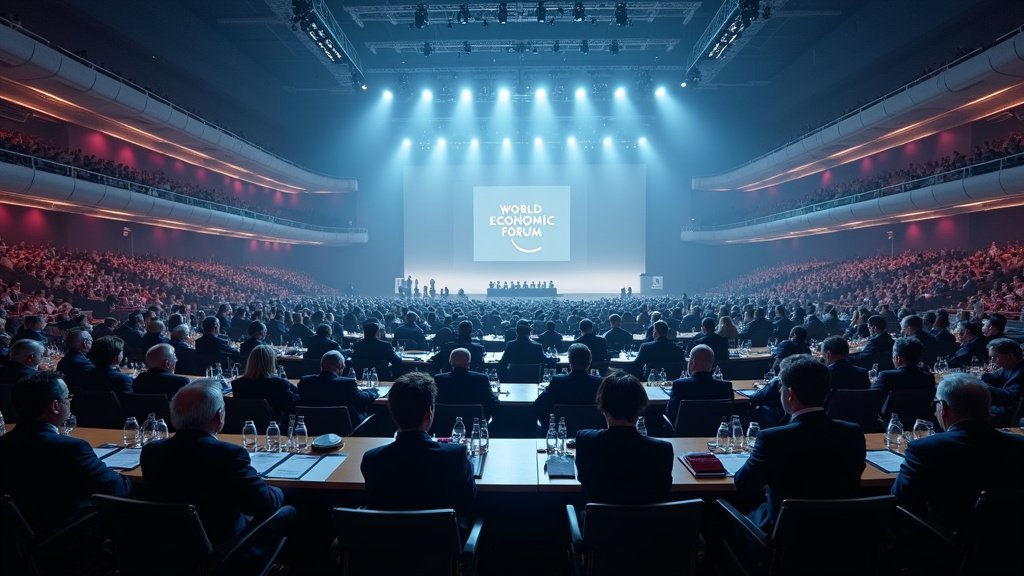
The World Economic Forum (WEF) convenes in Davos. This gathering is the 56th Annual Meeting. It runs from January 19-23, 2026. The theme is “A Spirit of Dialogue.” Nearly 3,000 global leaders are expected. This includes about 65 heads of state. It marks a record political presence. However, the world faces rising fragmentation. Geoeconomic confrontation is the top global risk. This is according to the WEF’s Global Risks Report 2026. Leaders express deep concern. Fifty percent expect turbulence ahead. Only one percent anticipate calm. This signals structural, not cyclical, uncertainty.
Geoeconomic Confrontation Takes Center Stage
Geoeconomic confrontation tops the risk list for 2026. It climbed eight positions. This risk involves using economic tools as weapons. Trade disputes and tariffs are key examples. Investment restrictions also play a role. Competition for critical resources intensifies. Many leaders see this as the biggest threat. Eighteen percent believe it could cause a global crisis. This concern is particularly high for 2026. It is also the top risk over the next two years. The WEF calls this an “age of competition.” This era is marked by rivalry. It is also defined by fragmentation. Cooperation is becoming more difficult. Multilateral institutions are under stress. A new competitive order is taking shape. Major powers seek to protect their interests.
The Role of Tariffs and Economic Warfare
Tariffs are a primary tool in this confrontation. The US administration has pursued aggressive tariff policies. These actions affect many trading partners. Sanctions also play a significant role. Economic tools are increasingly weaponized. This dynamic can escalate quickly. It could lead to port blockades. It might involve export restrictions. Canceled contracts are also possible. Capital controls could be used. These flashpoints threaten supply chains. They disrupt global cooperation. This trend is reshaping the global economy. It is moving away from past norms. A “multi-nodal trade patchwork” is emerging. This system is fragmented yet functional. It is organized around distinct trade nodes. Each node has its own priorities. These pathways are shaped by geopolitics. Industrial policy also plays a part. Strategic partnerships are key. Universal trade rules are less dominant.
Broader Global Risks
Beyond economic clashes, other risks loom large. State-based armed conflict is a major concern. It ranks second for 2026. However, it falls to fifth in the two-year outlook. Extreme weather events are also a significant threat. Societal polarization contributes to instability. Tech-driven misinformation is a pressing issue. These factors erode trust. They fuel political and social divides. Misinformation and disinformation rank high. They are key short-term risks. For the long term, environmental risks dominate. Extreme weather is the top concern. Biodiversity loss is also critical. Critical changes to Earth systems are feared.
The Urgency for Dialogue
Leaders face a complex global landscape. The WEF’s theme, “A Spirit of Dialogue,” is crucial. It highlights the need for cooperation. This meeting offers an impartial platform. It connects leaders to confront challenges. Rebuilding trust is essential. The spirit of dialogue aims to foster solutions. Discussions will focus on practical pathways. Managing geopolitical risk is key. Economic uncertainty demands attention. Harnessing new technologies is also vital. This includes artificial intelligence. The human impact of transformation is central. Investing in people is a priority. Strengthening workforce resilience matters. Supporting skills transitions is important. Improving well-being is also a focus.
Navigating an Uncertain Future
The WEF meeting occurs at a pivotal moment. The global order is under immense pressure. Geopolitical tensions are high. Economic challenges are significant. Tariffs and trade wars are prominent news. These factors create uncertainty. They strain the global economy. They weaken crisis response capacity. Leaders must address these issues. The “spirit of dialogue” offers a path forward. Finding common ground is vital. The world watches Davos 2026 closely. The discussions there will shape future global trends.