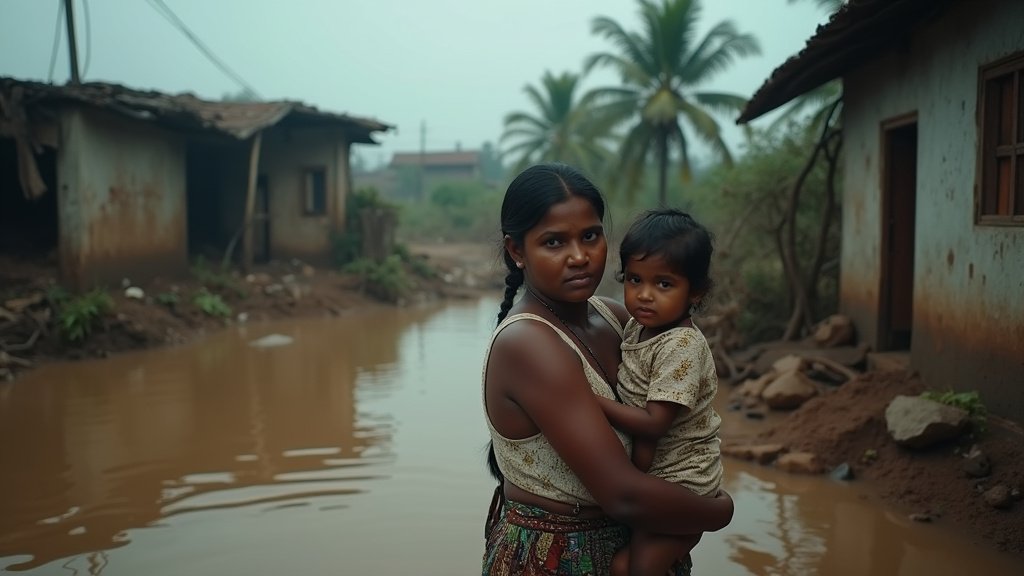
The devastating impact of **Cyclone Ditwah disaster** has struck South and Southeast Asia, causing widespread destruction. This global news event, identified as **Cyclone Ditwah disaster**, triggered catastrophic flooding and deadly landslides, claiming over 1,300 lives. Sri Lanka, Indonesia, and Thailand are the hardest-hit nations, with tens of thousands displaced by this significant **tropical storms asia** event. This is a major trending story following the **Cyclone Ditwah disaster**.
Sri Lanka Reels From The Cyclone Ditwah Disaster
The **Cyclone Ditwah disaster** made landfall in Sri Lanka on November 28, 2025. Torrential rains and powerful winds preceded its arrival. The cyclone unleashed severe flooding and landslides, marking it as the island’s worst natural disaster in two decades and arguably its most challenging natural disaster in its history.
The death toll in Sri Lanka climbed rapidly in the wake of the **Cyclone Ditwah disaster**. At least 334 people perished, though some reports cite higher numbers, with some indicating over 366 fatalities. Hundreds more are still missing following the **Cyclone Ditwah disaster**. Nearly one million people were affected across all 25 districts, with over 200,000 individuals displaced and seeking refuge in temporary shelters.
Major cities like Colombo faced severe inundation, with low-lying areas remaining underwater for days. Landslides devastated central hill country districts. Kandy, Badulla, and Matale suffered immense loss. Critical infrastructure collapsed, with over 200 roads becoming impassable and ten bridges damaged. Sections of the rail network and power grid were also affected by the **Cyclone Ditwah disaster**.
Indonesia Suffers Over 600 Fatalities From Cyclone Ditwah
In Indonesia, the impact of the **Cyclone Ditwah disaster** was equally grim. Cyclone Ditwah, alongside a separate storm, Senyar, brought immense devastation. More than 600 people are confirmed dead from these **South Asia storms**, with hundreds remaining missing, particularly on Sumatra island. Thousands were stranded without essential supplies following the **flooding catastrophes**.
The flooding and landslides wiped out villages. Roads were severed, complicating rescue efforts and aid delivery, which was severely hampered. Communication networks were also damaged. Many residents described the flooding as the worst in their lifetime, with homes submerged up to their rooftops due to the **Southeast Asia disaster**.
Thailand Faces Worst Flooding in a Decade Due To Cyclone Ditwah
Southern Thailand endured its worst flooding in ten years, exacerbated by the **Cyclone Ditwah disaster**. At least 162 lives were lost, with other reports indicating over 170 deaths. Thousands were affected by the deluge. Businesses and property suffered extensive damage. Infrastructure and communication were also impacted, and food shortages became a significant concern following this **cyclone disaster**.
The Human Cost and Global Response to the Cyclone Ditwah Disaster
The cumulative death toll across Sri Lanka, Indonesia, and Thailand exceeded 1,300 due to the **Cyclone Ditwah disaster**. Hundreds are still unaccounted for, and millions have been affected or displaced. Homes were destroyed, and livelihoods extinguished overnight, highlighting the immense scale of the humanitarian crisis, a direct result of **natural disaster relief** efforts being urgently needed.
International aid efforts quickly mobilized. India and Pakistan deployed rescue teams. Military helicopters airlifted supplies to isolated areas. Other nations offered condolences and financial assistance. Organizations like the IOM and UN are coordinating relief. Binance Charity and Bybit pledged significant donations to support urgent relief and early recovery from the **Cyclone Ditwah disaster**.
Climate Change and Future Preparedness for Cyclone Ditwah
Meteorologists link the storm’s intensity to warm sea surface temperatures. **Climate change storms** are increasing in frequency and power. These “turbo-charged” storms, like the **Cyclone Ditwah disaster**, highlight systemic risks and expose global infrastructure fragility. Resilience planning gaps are evident.
The aftermath of the **Cyclone Ditwah disaster** presents immense challenges. Rebuilding destroyed homes and infrastructure will take time. Ensuring access to food, water, and healthcare is critical. The region faces a long road to recovery. This global event underscores the urgent need for climate action and emphasizes disaster preparedness. This ongoing news serves as a stark reminder of the consequences of **climate change storms**.