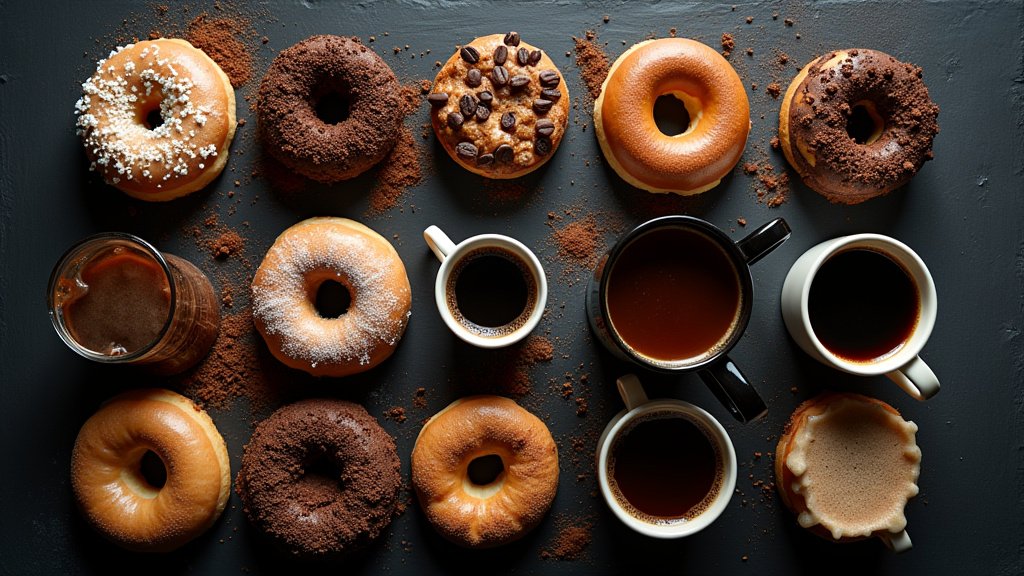
Today, April 11, 2026, Portland, Oregon, transforms into the nexus of craft beverage and pastry innovation as the 10th annual Baker’s Dozen: Coffee, Beer & Doughnut Festival takes over The ZED at Zoiglhaus. This event, now a staple in the Pacific Northwest’s culinary calendar, masterfully executes a specific, high-concept premise: 13 independent breweries, 13 local coffee roasters, and 13 artisan doughnut makers collaborating to create a tasting experience that defines the region’s “Beervana” and “Coffeetopia” reputation. By marrying the bitterness of roasted coffee, the complexity of craft beer, and the indulgent sweetness of artisan doughnuts, the festival continues to offer a rare, holistic look at Portland’s thriving artisanal food ecosystem.
Key Highlights
- The 13-13-13 Format: The festival features 13 unique breweries, 13 coffee roasters, and 13 doughnut purveyors, ensuring a “Baker’s Dozen” quantity of quality for every participant.
- Collaborative Innovation: Each brewery must partner with a specific roastery to produce a unique, coffee-infused beer, creating a direct synergy between the two industries.
- Inclusive Impact: The 2026 event continues its partnership with All Hands Raised, a nonprofit organization dedicated to improving educational equity within Portland Public Schools.
- Curated Experience: Unlike marathon beer festivals, this event utilizes a tight three-hour window (10 a.m. to 1 p.m.), encouraging a focused, high-quality tasting session rather than a volume-based drinking marathon.
A Decade of Portland’s Culinary Synergy
When Brian Yaeger first conceived the Baker’s Dozen Festival in 2015, the landscape of Portland’s craft scene was already legendary, yet somewhat siloed. While the city was internationally recognized for its independent roasting companies and its prolific brewery density, these two industries operated largely on parallel tracks. Yaeger, an established beverage writer and industry expert, identified a gap in the market: a celebration that would not only highlight the individual craft of these entities but force them into a creative collision.
The Birth of a ‘Throuple’
The name “Baker’s Dozen” serves as a nod to the historical tradition of adding a 13th item to a dozen as a gesture of goodwill—a concept Yaeger extended to the structure of the event. By inviting 13 breweries, 13 coffee roasters, and 13 bakeries to participate, he created a rigid yet effective constraint. This constraint is the engine of the event’s success. It forces breweries to move beyond standard flavor profiles, compelling them to work with specific roasters to integrate the nuanced acidity, chocolate notes, or earthy undertones of single-origin beans into their fermentation process.
Scaling the Experience
The 2026 edition marks a significant milestone: 10 years of operations (with a brief hiatus during the pandemic). Moving the event to The ZED at Zoiglhaus in Southeast Portland has provided a dedicated, community-focused venue that captures the spirit of local neighborhood culture. For the attendees, the draw is not just the “cool” factor of the pairings, but the accessibility of high-end, artisanal products in a manageable, intimate setting. At $40 for an all-inclusive ticket, it remains one of the most accessible and high-value food and beverage experiences in the region.
The Science of the Triple Pairing
The festival’s success relies on the delicate balance of flavor science. Coffee and beer, on paper, share a complex chemical profile—both rely on the Maillard reaction during roasting and kiln-drying to produce flavors ranging from toasted malt and cocoa to deep, berry-like fruitiness. When you add the third variable—the doughnut—the palate is challenged. A well-constructed pairing might see a stout brewed with a high-acidity Ethiopian roast paired with a light, yeast-raised doughnut, creating a bridge between the bitter dark chocolate of the stout and the sweet, citrus-floral notes of the coffee.
The Economic and Cultural Ripple
Beyond the tasting notes, Baker’s Dozen serves as a vital economic network. By mandating these collaborations, the festival generates new business relationships. A brewery that might have previously sourced coffee from a national distributor is now incentivized to forge a partnership with a local roaster. This micro-economy of collaboration ensures that capital stays within the Portland metro area, supporting local artisans.
Furthermore, the event has successfully shifted the public perception of the “Portland doughnut.” While national media often focuses on the kitschy, high-sugar, gimmicky doughnuts that became synonymous with the city’s tourism, Baker’s Dozen highlights the genuine craftsmanship behind the product—from delicate brioche to traditional cake doughnuts. It provides a platform for legacy shops like Annie’s Donuts or Blue Star Donuts to stand alongside newer, experimental doughnut purveyors, proving that Portland’s pastry culture is as diverse as its beer culture.
Community and Philanthropy
The festival does not shy away from its social responsibilities. The 2026 beneficiary, All Hands Raised, highlights the organizer’s intent to connect luxury and artisanal indulgence with the foundational needs of the city’s youth. By donating proceeds to support racial equity and education within Portland Public Schools, the festival bridges the gap between leisure and civic duty. It reminds the attendees that their participation is part of a larger ecosystem of community reinvestment.
Future Outlook: Can the Model Scale?
As the festival celebrates its 10th anniversary, the question of scalability naturally arises. While the “13” number is the defining limit, the interest from surrounding regions—such as Bend and the broader Willamette Valley—suggests a potential appetite for similar events. However, Yaeger’s model relies heavily on the density of local talent. This is not a franchiseable event; it is a hyper-local expression of a specific city’s terroir and talent. The future of Baker’s Dozen likely remains in its intimacy. By refusing to expand into a massive, faceless beer garden, the festival maintains its reputation as a “brewer’s festival”—a place where the creators actually talk to the consumers.
FAQ: People Also Ask
Q: Why does the festival stop at 1 p.m.?
A: The timing is intentional. The event is designed to be a morning tasting session rather than an all-day drinking event. It respects the craft nature of the products, allowing attendees to enjoy their samples and still have the rest of their Saturday available for other activities.
Q: Are there non-alcoholic options available?
A: While the beer is 21+, the festival prides itself on being family-friendly. The focus is equally on the coffee and the doughnuts, which are available to all ages. The event explicitly encourages the appreciation of the coffee and pastry craft alongside the beer.
Q: How are the breweries and roasters paired?
A: The pairing process is curated by the festival organizers. Each brewery is matched with a specific local roaster to develop a unique coffee-infused beer. This mandatory collaboration is the core feature of the festival’s innovation strategy.
Q: Why is it called “Baker’s Dozen”?
A: It refers to the historical trade custom where bakers would throw in a 13th item (usually a doughnut or bun) when a dozen was purchased, ensuring the customer received “a little extra.” The festival applies this to its 13 breweries, 13 roasters, and 13 bakeries.