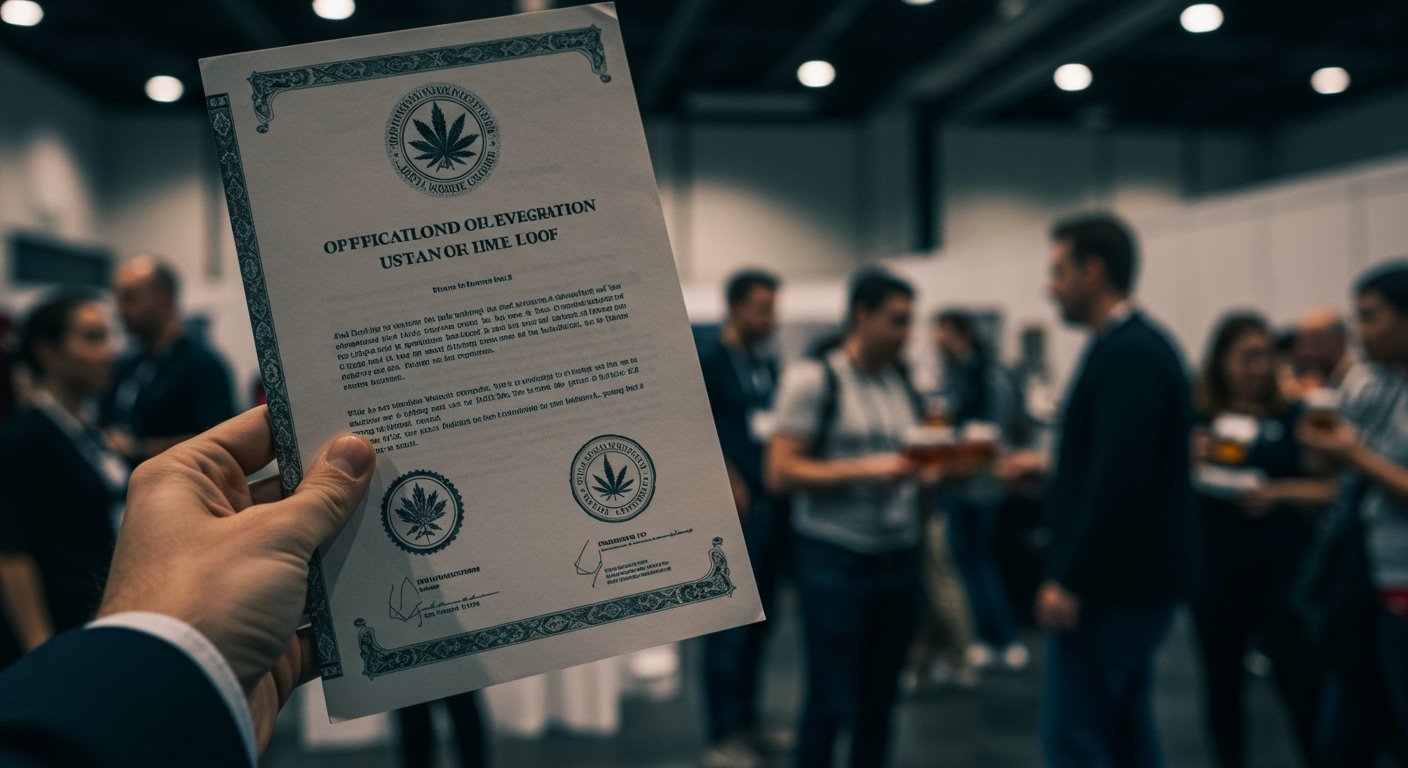
Congress has officially passed legislation to pause the impending federal ban on hemp-derived THC products, delivering a critical regulatory lifeline to the multi-billion-dollar cannabis industry. This legislative maneuver effectively halts immediate enforcement actions that threatened to reclassify many popular hemp products as controlled substances, providing operators with a vital period of legal stability while the broader regulatory framework remains in flux.
Key Highlights
- Legislative delay effectively stalls the FDA and DEA-linked federal crackdown on intoxicating hemp derivatives.
- The bill now proceeds to President Trump’s desk for final signature, expected to be enacted promptly.
- Industry stakeholders cite this pause as essential “breathing room” for supply chain compliance and market stabilization.
- Long-term uncertainty remains regarding future Farm Bill amendments and permanent federal hemp policy.
A Regulatory Lifeline: The Strategic Delay of the Hemp THC Ban
The passage of this legislative delay marks a significant turning point in the ongoing tug-of-war between the rapidly expanding hemp-derived cannabis market and federal regulators. Since the passage of the 2018 Farm Bill, the hemp industry has exploded, fueled by the production of cannabinoids like Delta-8 THC, which exist in a legal grey area due to their extraction from federally legal hemp. However, this growth has triggered mounting pressure from federal agencies, including the Food and Drug Administration (FDA) and Drug Enforcement Administration (DEA), which have raised significant concerns regarding consumer safety, product potency, and the lack of comprehensive manufacturing standards.
The Mechanics of the Legislative Reprieve
For months, manufacturers, distributors, and retail operators in the hemp space have faced existential dread, anticipating a swift federal reclassification that would have effectively criminalized their inventory. The legislative delay passed by Congress serves as a temporary suspension of these looming enforcement mechanisms. It does not permanently legalize intoxicating hemp products, but rather prevents the sudden disruption of the marketplace that experts warned could lead to widespread business closures and supply chain collapses.
Lawmakers, acknowledging the economic weight of this sector—which includes thousands of independent retailers, boutique manufacturers, and agricultural partners—opted for a measured approach. By pushing the enforcement deadline, Congress has signaled an intent to facilitate a more orderly transition to a regulated market, rather than an abrupt shutdown. This pause is widely viewed as a acknowledgement that the 2018 Farm Bill requires modernization, not destruction.
Economic Impact on the Hemp Sector
The economic footprint of the hemp-derived THC industry is difficult to overstate. Estimates suggest the industry supports tens of thousands of jobs, ranging from cultivation in states like Kentucky and North Carolina to retail operations in local communities nationwide. A sudden federal ban would have wiped out millions of dollars in inventory overnight, leaving small business owners with no recourse.
Industry associations have responded to the vote with cautious optimism. For the manufacturers, this delay provides the time necessary to invest in third-party testing, improve labeling transparency, and align with state-level regulatory requirements that have begun to emerge in a vacuum of federal guidance. Many companies are using this window to pivot their business models toward “compliance-first” strategies, effectively preparing for the inevitable implementation of stricter age-gating and product safety standards that are likely to arrive in the next legislative session.
The Road Ahead: Farm Bill Negotiations
While the industry has secured a temporary victory, the long-term outlook remains complex. This legislative delay is a stopgap measure, not a permanent solution. The primary legislative vehicle for a comprehensive fix—the upcoming Farm Bill—is still being negotiated. Analysts anticipate intense debate regarding the precise definitions of “hemp” and “intoxicating cannabinoids.”
There is a growing bipartisan consensus that the current status quo is unsustainable. Critics of the current market point to the lack of regulation as a public health risk, citing reports of mislabeled products and unknown contaminants in vape cartridges and edible items. Conversely, industry lobbyists argue that the prohibitionist approach will merely push the market into the unregulated “black market,” ultimately harming consumers more than the status quo.
As the bill moves to the President’s desk, the focus shifts from legislative delay to lobbying for sensible regulation. The next few months will be crucial for the industry, as stakeholders prepare to present data-driven arguments for a framework that balances consumer safety with economic freedom. The reprieve has bought time, but the industry must use that time to professionalize and address the legitimate safety concerns that prompted federal intervention in the first place.
FAQ: People Also Ask
Does this delay permanently legalize all hemp-derived THC products?
No. This legislation is a temporary delay of impending enforcement actions. It does not rewrite the 2018 Farm Bill, nor does it create a permanent legal sanctuary for all hemp-derived intoxicants. It simply pushes back the date of enforcement, providing a window for the industry to adapt and for Congress to finalize long-term regulations.
What does this mean for consumers of hemp products?
For the average consumer, this means that products will remain on shelves for the immediate future. However, it does not change the fact that these products are currently under heavy scrutiny. Consumers are advised to purchase from reputable brands that prioritize third-party lab testing and transparent labeling.
Why is Congress intervening in the hemp industry?
Congress is responding to a mix of safety concerns from federal agencies like the FDA and intense pressure from traditional cannabis operators who view hemp-derived THC as unfair competition that bypasses strict state-level regulations. The goal of the delay is to allow time for legislative language that addresses these safety concerns without crashing the current market.
What is the next step after the President signs this bill?
Once signed, the bill becomes law, and the enforcement moratorium officially begins. This triggers a “clock” for the industry. Regulatory agencies will likely use this time to draft new rules, and industry groups will likely use the time to lobby for favorable definitions of legal hemp products in the upcoming Farm Bill negotiations.