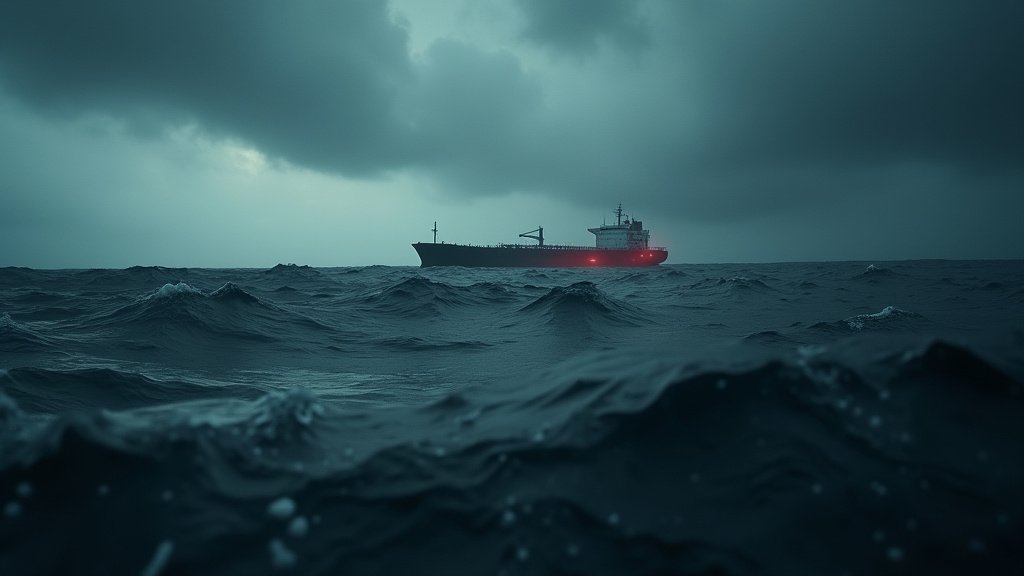
Tensions escalated as the United States reportedly attacked Iranian oil tankers in the Persian Gulf, a move that casts further doubt on the already fragile prospects for reviving the Joint Comprehensive Plan of Action (JCPOA), commonly known as the Iran nuclear deal. The incident, which has not been officially confirmed by either the US or Iran, occurred amid a critical period for international diplomacy, with indirect talks between the US and Iran for a potential return to the deal facing significant hurdles.
Key Highlights:
- US forces allegedly targeted Iranian oil tankers in the Persian Gulf.
- The incident coincides with delicate negotiations to revive the Iran nuclear deal.
- The attack, if confirmed, could significantly derail diplomatic efforts.
- International bodies are monitoring the situation closely for de-escalation.
Escalation in the Gulf: A Blow to Diplomacy
The alleged attacks on Iranian oil tankers represent a serious escalation in the already fraught relationship between the United States and Iran, occurring at a moment when the international community is striving to bring Iran back into compliance with the JCPOA. The deal, aimed at preventing Iran from developing nuclear weapons in exchange for sanctions relief, has been in disarray since the US withdrew under the Trump administration in 2018. Subsequent indirect negotiations to restore the agreement have been protracted and fraught with difficulty, with key sticking points remaining unresolved.
The Strategic Significance of Tanker Attacks
Targeting oil tankers in the Strait of Hormuz, a vital chokepoint for global oil trade, carries significant strategic implications. Such actions can disrupt global energy markets, increase oil prices, and further destabilize an already volatile region. For Iran, its oil exports are a crucial source of revenue, and any disruption to this lifeline can have severe economic consequences. For the United States, such an action, if retaliatory or preemptive, would be aimed at deterring Iran from other actions, but carries immense diplomatic risk.
The Nuclear Deal’s Precarious State
The indirect talks, facilitated by European intermediaries, have reportedly stalled over issues such as the extent of sanctions relief and guarantees for Iran’s future compliance. The JCPOA was designed to ensure Iran’s nuclear program remained peaceful, imposing strict limitations and offering extensive international monitoring. The current impasse raises concerns that Iran might be accelerating its nuclear activities, a prospect that has been a major driver for the US and its allies to seek a diplomatic resolution.
Geopolitical Ramifications and Regional Stability
Beyond the immediate impact on the nuclear deal, the alleged tanker attacks could have broader geopolitical ramifications. They could embolden hardliners in both countries, making compromise more difficult. Regional actors, including Saudi Arabia and Israel, who have long expressed concerns about Iran’s nuclear ambitions and regional influence, will be closely watching the developments. Any perception of increased Iranian aggression, or a strong US military response, could trigger a wider regional conflict, further undermining global security and stability.
FAQ: People Also Ask
What is the Joint Comprehensive Plan of Action (JCPOA)?
The JCPOA is an agreement on Iran’s nuclear program reached in 2015 between Iran and the P5+1 (the five permanent members of the UN Security Council—China, France, Russia, the United Kingdom, the United States—plus Germany) along with the European Union. It aimed to limit Iran’s ability to develop nuclear weapons in exchange for sanctions relief.
Why did the US withdraw from the JCPOA in 2018?
Under the Trump administration, the US withdrew from the JCPOA, citing concerns that the deal did not adequately address Iran’s ballistic missile program, its regional activities, or the