On an historic Sunday in London, the landscape of human endurance was permanently altered. Sabastian Sawe, the 31-year-old Kenyan sensation, crossed the finish line at the 2026 London Marathon in an official time of 1:59:30, becoming the first human in history to break the fabled two-hour barrier in a competitive, record-eligible marathon race. This achievement, which had previously been considered the ‘final frontier’ of distance running, was witnessed by millions, ending years of speculation about the physiological limits of the human body.
Key Highlights
- Historic Milestone: Sabastian Sawe clocked 1:59:30, shattering the previous world record of 2:00:35 held by the late Kelvin Kiptum.
- Elite Competition: Ethiopia’s Yomif Kejelcha, making his marathon debut, also dipped under the two-hour mark, finishing in 1:59:41 in a historic race that saw two men break the barrier simultaneously.
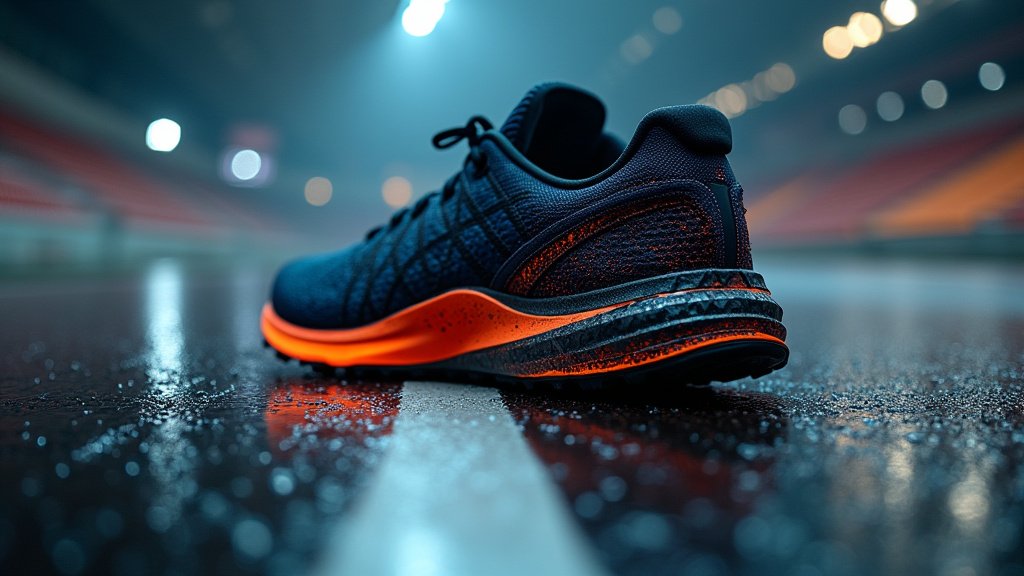
- Technological Edge: Both runners were equipped with the latest Adidas Adizero Pro Evo 3 ‘supershoes,’ highlighting the massive impact of current footwear innovation on elite performance.
- Ratification: Unlike previous exhibition attempts, this performance took place in an open, competitive race, solidifying Sawe’s standing as the outright world record holder.
The New Frontier of Human Endurance
The anticipation leading up to the 2026 London Marathon was unlike any other. For decades, the two-hour barrier in the marathon—a distance of 26.2 miles—was viewed as an impossible psychological and physical threshold. While Eliud Kipchoge’s 2019 INEOS 1:59 Challenge demonstrated that the distance could be covered in under two hours, the lack of official race conditions meant it was never ratified by World Athletics. Sawe’s performance on Sunday removed any asterisks, cementing his legacy in the annals of sporting history.
The Anatomy of the Race
From the start at Blackheath, it was clear that the pace was aggressive. Sawe, who has long been regarded as one of the most consistent and resilient runners in the circuit, maintained a blistering tempo alongside Ethiopia’s Yomif Kejelcha. The pair stayed ahead of the pace setters for the majority of the course. As the race entered the final 10 kilometers, the tension was palpable. The crowd at the Mall roared as it became apparent that the pacing wasn’t just world-record territory—it was into the ‘sub-two’ zone.
Sawe’s ability to maintain his cadence even as his body pushed into extreme anaerobic zones suggests a new level of cardiovascular efficiency. Analysis of his split times reveals a remarkably flat pacing strategy, a hallmark of elite marathoners but executed here at a speed previously reserved for half-marathons. When he broke the tape, the clock read 1:59:30, a time that defies decades of conventional running logic.
The ‘Supershoe’ Controversy and Innovation
Any discussion of modern marathon records is incomplete without mentioning the ‘supershoe’ revolution. Sawe and Kejelcha were both wearing the new Adidas Adizero Pro Evo 3, a shoe that has rapidly become the gold standard for marathon performance. These shoes, featuring proprietary carbon-plate technology and high-rebound PEBA foams, weigh just 97 grams. Critics and fans alike have debated whether the technology is aiding the athletes too much, but the reality is that the combination of elite physiology and advanced engineering has created a symbiotic relationship that is pushing human potential forward. The shoe is designed to maximize energy return with every foot strike, effectively reducing muscle fatigue over the 26.2-mile distance.
Psychological Impact on the Sport
Perhaps the most significant aspect of Sawe’s run is the psychological ‘barrier’ it has broken. Before Roger Bannister ran the four-minute mile in 1954, it was believed that the human heart would explode or the lungs would collapse. Once he did it, dozens of others followed shortly after. The sub-two-hour marathon has occupied a similar space in the public imagination. Now that Sawe has cleared the path, we are likely to see a surge in competitive times. The psychological weight of the ‘two-hour’ number is gone; runners will no longer be racing against an impossible wall, but against one another.
FAQ: People Also Ask
Q: Was Sabastian Sawe’s time officially ratified by World Athletics?
A: Yes. Unlike the 2019 INEOS 1:59 Challenge, which was a time-trial run under controlled conditions, Sawe’s performance occurred in the London Marathon, an open, competitive, and record-eligible race, making it a valid world record.
Q: How does this compare to Eliud Kipchoge’s 1:59:40?
A: Kipchoge’s time was incredible for proving the potential, but it was not an official world record due to the use of rotating pacers and a closed course. Sawe’s 1:59:30 is the official, ratified world record in a competitive marathon.
Q: What shoes was Sabastian Sawe wearing?
A: Sawe wore the Adidas Adizero Pro Evo 3, a high-tech racing shoe known for being exceptionally lightweight and providing superior energy return, which played a significant role in the pace maintained throughout the race.
Q: What does this mean for the future of marathon running?
A: It signals a new era where sub-two-hour marathons may become the standard for elite marathon winners. The psychological barrier is broken, and runners will likely approach races with the belief that under-two-hour finishes are achievable.