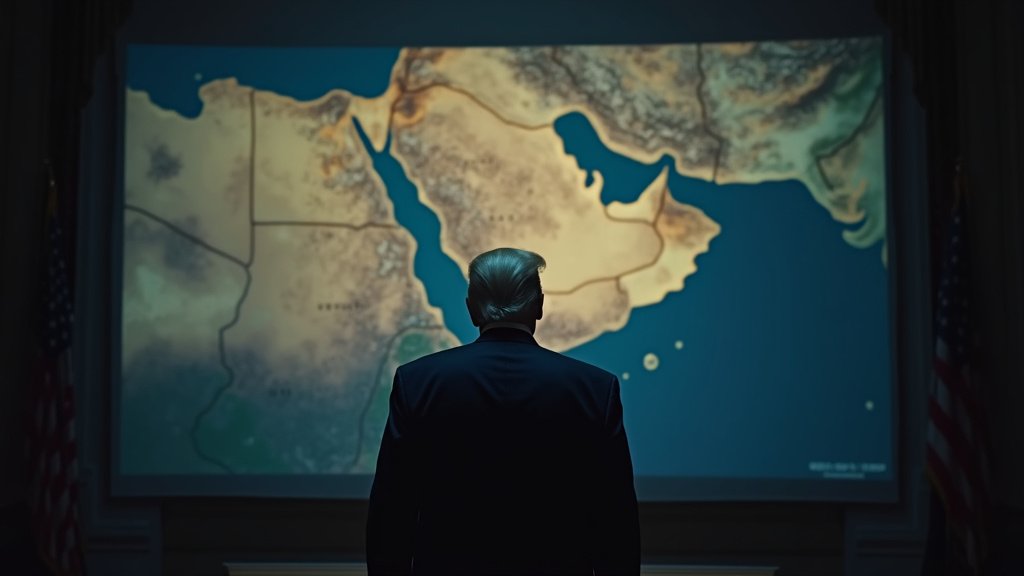
President Donald Trump has announced that a high-level United States delegation will travel to Islamabad, Pakistan, this Monday for a renewed round of critical negotiations with Iranian officials. The announcement comes at a pivotal juncture in the 2026 Iran conflict, as the two-week ceasefire, established earlier this month, inches toward its expiration date. With both Washington and Tehran locked in a tense standoff over the Strait of Hormuz—the world’s most significant maritime chokepoint for oil—the upcoming talks are widely viewed as a last-ditch effort to prevent the collapse of the truce and a return to full-scale regional hostilities.
Key Highlights
- Diplomatic Surge: A U.S. delegation, featuring Vice President JD Vance and envoys Steve Witkoff and Jared Kushner, is set to arrive in Islamabad to pursue a breakthrough.
- The Ultimatum: President Trump has issued stark threats, warning of severe infrastructure strikes—targeting power plants and bridges—should Iran reject the current U.S. peace proposal.
- Strait Standoff: Despite the looming deadline, Iran has re-imposed restrictions on the Strait of Hormuz, citing an ongoing U.S. naval blockade of Iranian ports as a violation of the ceasefire agreement.
- Mediator Role: Pakistan continues to serve as the primary diplomatic bridge, with officials in Islamabad working to narrow the significant gaps in position regarding nuclear enrichment and maritime access.
The Diplomacy of Escalation: Behind the Islamabad Talks
The decision to reconvene in Pakistan signals a shift in the administration’s tactical approach to the 2026 conflict. Following the failure of the initial round of talks—which saw little progress on the core issues of nuclear enrichment and regional proxy support—the White House is doubling down on face-to-face diplomacy while simultaneously utilizing maximalist rhetoric to compel Iranian cooperation. By keeping the venue in Islamabad, Washington is banking on the leverage exerted by the Pakistani government, which has a vested interest in regional stability to avoid the spillover effects of a wider war.
The Delegation’s Objective
Vice President JD Vance, having led the previous, albeit inconclusive, round of negotiations, returns with a team that reflects the Trump administration’s focus on deal-making outside of traditional state department channels. The inclusion of special envoy Steve Witkoff and Jared Kushner suggests that the U.S. is prioritizing business-style negotiation frameworks—often transactional in nature—rather than relying on conventional multilateral treaty structures. The primary hurdle remains the disparity between the U.S. demand for dismantling Iran’s high-enrichment capabilities and Iran’s insistence on the removal of the U.S. naval blockade as a prerequisite for any maritime concessions.
The Strait of Hormuz: An Economic Chokepoint
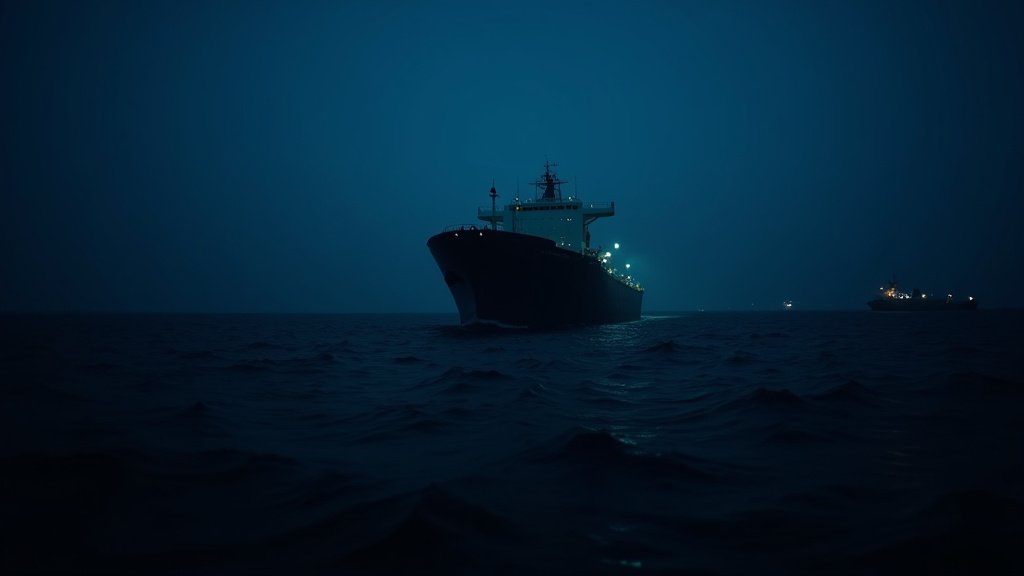
At the heart of the negotiation is the Strait of Hormuz. The waterway, which facilitates roughly 20-30% of global oil consumption, has become the primary theater of the current economic war. Iran’s decision to restrict passage is not merely a strategic military move but an economic counter-offensive against the U.S. blockade. For Tehran, the strait is the only leverage they have to force the U.S. to the table on economic terms. Analysts suggest that the upcoming Monday talks will likely hinge on whether a “middle path” can be found: a gradual lifting of the U.S. blockade in exchange for verifiable, step-by-step Iranian compliance on transit and nuclear transparency.
Geopolitical Stakes: The Future of the 2026 Truce
The atmosphere surrounding these negotiations is heavy with the threat of renewed violence. President Trump’s recent comments on Truth Social, explicitly threatening the destruction of Iranian civil infrastructure, have created a high-stakes environment where the margin for error is non-existent. International observers are closely monitoring whether this rhetoric is intended as a genuine shift in military posture or, more likely, a negotiation tactic designed to force Iran’s hand before the Wednesday ceasefire deadline.
The Role of Regional Mediators
Pakistan’s involvement is significant. As a country with close historical ties to both the U.S. and regional neighbors, Islamabad is uniquely positioned to handle the “shuttle diplomacy” required to keep the talks alive. However, the Pakistani government is walking a tightrope. A failure in these talks would not only lead to renewed conflict but would also complicate Pakistan’s own domestic economic stability, which is highly sensitive to the fluctuations in energy prices that a Hormuz closure would trigger.
Iranian Internal Calculus
The Iranian position, relayed by parliamentary speaker Mohammad Bagher Ghalibaf, remains characteristically firm. Tehran argues that the U.S. cannot demand concessions while simultaneously enforcing an economic blockade that violates the spirit of the ceasefire. This creates a logical impasse: the U.S. demands movement on nuclear and military issues before lifting the blockade, while Iran demands the removal of the blockade before addressing those issues. The Monday talks in Islamabad are designed to test if this circular logic can be broken through a phased, sequential agreement.
FAQ: People Also Ask
1. Why is Pakistan hosting these negotiations?
Pakistan serves as a neutral intermediary with strong diplomatic channels to both the United States and Iran. Its proximity to the conflict zone and its economic reliance on stable trade routes make it a natural choice for managing high-stakes, direct mediation efforts.
2. What are the main obstacles to a deal?
the primary obstacles are the U.S. naval blockade of Iranian ports and the Iranian enrichment of uranium. Both sides are currently using the Strait of Hormuz as leverage, creating an impasse where trade and military concessions are inextricably linked.
3. Is there a genuine risk of military action if talks fail?
Yes. President Trump has publicly and explicitly stated that the U.S. will target Iranian power plants and infrastructure if a deal is not reached. While this may be a negotiation tactic, the proximity of the ceasefire expiration creates a real-world, high-pressure deadline for both sides to find a compromise.
4. Who is leading the U.S. negotiating team?
Vice President JD Vance is leading the U.S. delegation, supported by special envoys Steve Witkoff and Jared Kushner, signaling a focus on high-level, business-oriented diplomatic strategy.