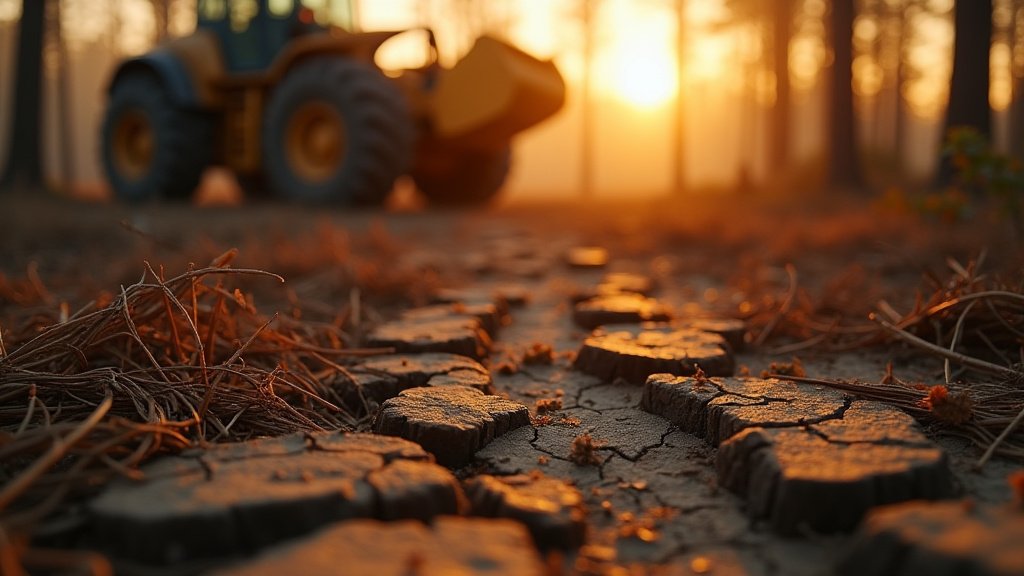
As the spring thaw reveals a parched landscape across the Pacific Northwest, a critical race against time is unfolding in Southern Oregon. Forestry crews, contracted by agencies including the Bureau of Land Management (BLM), are working tirelessly across the region, using chainsaws and heavy machinery to thin overgrown forests. This proactive operation is a desperate attempt to reduce wildfire fuels before the inevitable arrival of a hot, dry summer, a season that meteorologists and regional officials are already flagging as potentially dangerous.
The Dry Winter Paradox
The urgency of these operations stems from a winter that defied traditional Pacific Northwest expectations. While the region is typically synonymous with relentless rain, the winter of 2026 was marked by record-low snowpack—dropping to roughly 11% of normal in areas like Crater Lake. This deficit acts as a massive ‘reservoir’ failure, leaving the forests under-hydrated and the vegetation highly susceptible to combustion. Without the usual springtime moisture saturation that would normally keep fuel moisture levels high, the landscape is essentially drying out weeks earlier than usual. State climatologists and the National Weather Service have issued dire warnings, noting that the combination of warm temperatures and lack of precipitation creates a high-risk environment similar to the catastrophic fire years of the recent past.
On the Front Lines: Mechanical Thinning
At the epicenter of these efforts are teams like Grayback Forestry, which are currently operating in high-priority zones like the Cathedral Hills Trail System near Grants Pass. The strategy is precise and intentional: ‘fuels reduction.’ Workers focus on removing small-diameter trees—typically hardwoods like oak that are under 8 inches in diameter—and thinning dense brush. This work creates defensible space, essential for protecting residential neighborhoods from advancing flames. By stacking this timber into burn piles, crews ensure that the material can be safely disposed of later in the season while preventing it from acting as a ‘ladder fuel’ that could pull fire from the ground into the dangerous heights of the forest canopy. These laborers are effectively the first line of defense, performing the grueling, manual work required to transform a high-risk tinderbox into a resilient landscape.
Community Resilience and Policy
Beyond the immediate physical labor, there is a strategic political and social mobilization underway. U.S. Senator Ron Wyden has met with local fire officials to sound the alarm, emphasizing that this year’s wildfire threat is ‘alarming’ and potentially more intense than anything in recent memory. The focus is shifting from purely reactive firefighting to proactive, year-round mitigation. Programs like the National Fire Protection Association’s ‘Firewise USA’ initiative are becoming vital, bringing residents together to harden their own properties against ember wash and fire encroachment. This community-led approach, paired with federal and state funding, marks a shift toward a ‘whole-of-society’ model for wildfire prevention, acknowledging that government agencies alone cannot manage the scale of the risk.
The Economic and Climate Context
The long-term implications for Southern Oregon are profound. The region faces a dual challenge: the direct threat of wildfire and the economic impact of a potential smoke-filled summer. Tourism, timber, and agricultural sectors are all bracing for disruption. The legislative landscape reflects this tension, with bills—such as Oregon’s proposed insurance mitigation legislation—attempting to create financial incentives for landowners to clear brush and harden structures. The goal is to reshape the economics of wildfire risk, ensuring that long-term safety investments are seen as necessary operational costs rather than optional maintenance.
FAQ: People Also Ask
Q: Why is the snowpack level so critical for wildfire prevention?
A: Snowpack acts as a natural water reservoir. When it melts slowly over the spring, it keeps soil and vegetation moist, significantly delaying the start of the fire season. With record-low snowpack, that moisture buffer is missing, meaning the forest reaches a critical state of dryness much earlier in the year.
Q: What is ‘fuels reduction’ and why does it help?
A: Fuels reduction is the process of removing dead or overgrown vegetation (trees, brush, dry grass) that can feed a fire. By thinning forests and clearing underbrush near homes, crews prevent small fires from turning into ‘crown fires’—massive blazes that climb into the treetops and become virtually uncontrollable.
Q: How can homeowners protect their property from wildfires?
A: Experts recommend creating ‘defensible space’ by clearing flammable material within 30 to 100 feet of a home. This includes pruning tree limbs, removing dry brush, and cleaning gutters. Additionally, joining programs like Firewise USA and keeping emergency kits ready are essential steps for community safety.
Q: Is wildfire season definitely going to be worse this year?
A: While weather is unpredictable, the conditions—low snowpack, drought, and early-season heat—are alarming experts. While it is not guaranteed to be the ‘worst’ year ever, the environmental precursors strongly point to an earlier start and a more active, challenging fire season than recent years.