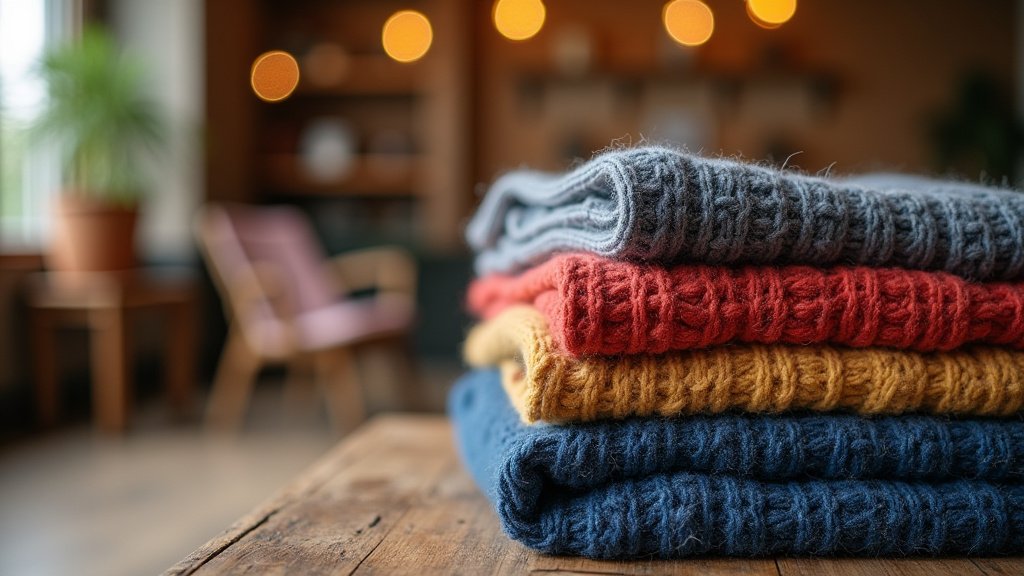
This Saturday, April 18, the Newport Recreation Center transforms into a hub of sustainable commerce, hosting a community-wide clothing swap in honor of Earth Day. Running from 10:00 a.m. to 1:00 p.m., the event encourages residents to embrace a ‘circular’ approach to their wardrobes, trading gently used garments to breathe new life into existing pieces. This initiative not only promotes individual style refreshers but serves as a tangible, local solution to the global crisis of textile waste.
Event Details & Participation Guidelines
- Date & Time: Saturday, April 18, 2026, from 10:00 a.m. to 1:00 p.m.
- Logistics: Attendees may bring up to 15 items to exchange for tickets. The first two hours (10:00 a.m. – 12:00 p.m.) are reserved for ticket holders, while the final hour opens to all for a nominal $1 per item fee.
- Donation Windows: Items can be dropped off Friday, April 17 (12 p.m. – 7 p.m.) and Saturday morning (9 a.m. – 10 a.m.).
- Quality Control: All items must be clean, wearable, and free of major stains or holes. Undergarments and jewelry are excluded from the swap.
The Circular Economy: A Local Response to Global Waste
The decision by the Newport Recreation Center to host a clothing swap is a masterclass in localizing the global circular economy movement. At its core, the circular economy is an economic system aimed at eliminating waste and the continual use of resources. In the fashion industry—often criticized for its linear ‘take-make-dispose’ model—clothing swaps offer a vital, albeit small-scale, intervention. By extending the life of a garment by just nine months, the carbon, water, and waste footprints of that item are reduced by up to 30%.
The Environmental Mandate of Earth Day
Earth Day, which began as a unified response to industrial pollution in 1970, has evolved into a global movement addressing everything from climate change to biodiversity loss. Modern textile production accounts for approximately 10% of global carbon emissions—more than all international flights and maritime shipping combined. Every t-shirt or pair of jeans kept out of a landfill by being transferred to a new owner in Newport is a direct, measurable victory against this trend. When residents gather at the Rec Center this Saturday, they are not just exchanging clothes; they are participating in a grassroots movement to decouple style from environmental degradation.
The Rec Center as a Civic Nexus
Community recreation centers have historically been viewed through the lens of athletics and physical education. However, a shift is occurring. Institutions like the Newport Recreation Center are increasingly functioning as ‘Third Places’—social environments separate from the two usual social environments of home and the workplace. By hosting a clothing swap, the center bridges the gap between civic service and environmental stewardship. It provides a non-commercial space where economic background is secondary to communal participation. This democratization of consumption is essential for building resilient local communities.
The Psychology of the Swap: Why It Works
Beyond the raw statistics of landfill diversion, there is a profound psychological benefit to the clothing swap. Fast fashion has often been criticized for turning clothing into a disposable commodity, leading to a ‘buy-and-toss’ culture that diminishes the intrinsic value we place on our belongings. A swap reverses this. It treats clothing as a shared, durable asset. When you obtain a piece from a neighbor, you are not just acquiring an item; you are inheriting a story.
Building the ‘Capsule Wardrobe’
Many swap attendees use these events to curate a ‘capsule wardrobe’—a limited selection of interchangeable clothing pieces that complement each other. This minimalist approach requires a change in mindset, moving away from constant trend-chasing and toward timelessness and durability. The swap provides the perfect low-stakes environment to experiment with style and silhouette without the financial and environmental cost of retail shopping.
Cultivating Community Resilience
There is a unique social capital generated when community members interact over shared interests. The Newport clothing swap serves as an icebreaker, fostering connections between neighbors who might otherwise never interact. In an era of digital isolation, these physical gatherings are vital for social cohesion. Participants learn about the history of the clothes they pick up, share tips on how to repair minor tears, and build a network of like-minded individuals who prioritize the health of the planet alongside the health of their community.
Future Implications for Municipal Sustainability
If the Newport Rec Center’s event proves successful, it raises questions about the scalability of such initiatives. Could this become a monthly, rather than an annual, occurrence? Could similar models be applied to other household goods, like kitchen appliances or children’s toys? The infrastructure is already there—the community space, the logistics for donation management, and the public interest. The next phase for municipal sustainability may well involve cities and towns institutionalizing these ‘circular hubs’ as a standard service to residents, turning the local recreation center into a permanent node of the circular economy.
FAQ: People Also Ask
Why are undergarments and jewelry excluded from the swap?
Hygiene and quality control are paramount in large-scale clothing swaps. Undergarments pose sanitation concerns, and jewelry often carries sentimental value or fragile craftsmanship that makes it difficult to manage in a general donation and trade format. Focusing on apparel ensures the event remains efficient and manageable for organizers.
How does the ticket system work for the swap?
The ticket system creates a balanced exchange. By bringing in items for donation (up to 15), participants gain a proportional number of ‘tickets’ or credits that allow them to shop during the early, exclusive access period. This encourages participants to contribute quality items to the pool rather than just ‘taking’ without providing.
What happens to the items that are not traded?
In well-organized swaps, any remaining items are typically donated to local charitable organizations, shelters, or textile recycling facilities. This ensures that the event achieves its primary goal: keeping usable materials out of the landfill, even if they don’t find a new owner during the event itself.
Can I participate if I don’t have clothes to donate?
While the specific rules for the Newport event prioritize early access for contributors, the open-door policy during the final hour ensures that everyone has an opportunity to participate. It is an inclusive event designed to maximize the circulation of goods, regardless of one’s initial contribution.